
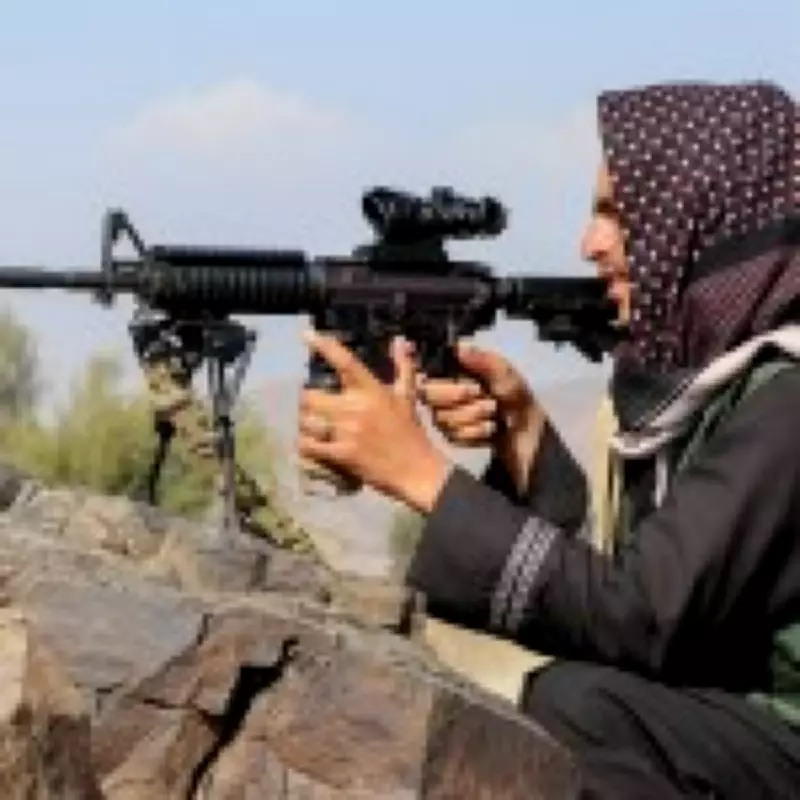
Pakistan and Afghanistan Engage in 'Open War' as Border Tensions Explode
Pakistan's defence minister, Khawaja Mohammad Asif, has declared that his country is now in an 'open war' with neighbouring Afghanistan, following a severe escalation of violence. This announcement came after Afghanistan launched a retaliatory cross-border attack overnight, prompting Pakistan to respond with air strikes on Kabul. In a post on X, Asif expressed Pakistan's initial hopes for peace in Afghanistan after NATO forces withdrew in 2021, expecting cooperation from the Taliban. Instead, he accused the Taliban of transforming Afghanistan into a 'colony of India,' Pakistan's long-standing regional rival, with whom it has had conflicts since independence in 1947.
Where Has the Fighting Occurred?
Afghan authorities in the eastern province of Nangarhar reported ongoing fighting in the Torkham border area on Friday morning. According to the province's information directorate, Pakistani mortar fire struck civilian areas in Torkham, including a refugee camp that had been evacuated overnight. In retaliation, Afghanistan targeted Pakistani army posts across the border, which Pakistan's defence minister labelled as 'exporting terrorism.' Islamabad has consistently accused Afghanistan of supporting terrorism, particularly amid a surge in militant violence in Pakistan, and alleges that Afghanistan backs the Pakistani Taliban (TTP). The TTP, while separate, is closely allied with Afghanistan's Taliban, and Pakistan claims it operates from inside Afghanistan, a charge both the group and Kabul deny.
Pakistan has also frequently accused India of supporting outlawed groups like the Baloch Liberation Army and the TTP, allegations that New Delhi rejects. In recent actions, Pakistan conducted air strikes in Afghanistan's capital, Kabul, as well as in Kandahar and Paktia, citing these as responses to previous Afghan attacks. Afghanistan stated that its military launched an attack late Thursday into Pakistan along the border in six provinces, in retaliation for deadly Pakistani air strikes on Afghan border areas on Sunday. The border, known as the Durand Line and spanning over 1,600 miles, has not been formally recognised by Afghanistan.
Casualties and International Reactions
Afghanistan's Defence Ministry reported overnight that 55 Pakistani soldiers were killed, with some bodies taken into Afghanistan, and 'several others were captured alive.' It also noted that eight Afghan soldiers died and 11 were wounded, with 19 Pakistani army posts and two bases deployed. The fighting reportedly ended around midnight, lasting about four hours. In contrast, Pakistani information minister Attaullah Tarar said that two Pakistani soldiers were killed and three were wounded.
Tensions have been high for months, with deadly border clashes in October killing dozens of soldiers, civilians, and suspected militants. This violence followed explosions in Kabul that Afghan officials blamed on Pakistan, leading to strikes by Islamabad deep inside Afghanistan. A Qatari-mediated ceasefire temporarily halted the fighting, but occasional border skirmishes persisted. Several rounds of peace talks in Istanbul in November failed to yield a formal agreement.
International leaders have urged restraint. UN Secretary-General Antonio Guterres called for both sides to protect civilians as required under international law. Russia demanded an immediate halt to the fighting and a diplomatic resolution, while Iranian foreign minister Abbas Araghchi encouraged dialogue during Ramadan, emphasising it as a time for self-restraint and solidarity in the Islamic world.
Background and Migrant Crisis
The conflict is rooted in longstanding disputes, including Pakistan's crackdown on undocumented migrants starting in October 2023. This initiative urged migrants to leave voluntarily to avoid arrest, with millions crossing into Afghanistan, including individuals who had built lives in Pakistan for decades. According to the UN refugee agency, 2.9 million people returned to Afghanistan last year alone, with nearly 80,000 returning so far this year. Iran also implemented a similar crackdown around the same time, exacerbating regional instability.
As the situation unfolds, the declaration of 'open war' marks a significant deterioration in relations between Pakistan and Afghanistan, with implications for regional security and civilian safety.




