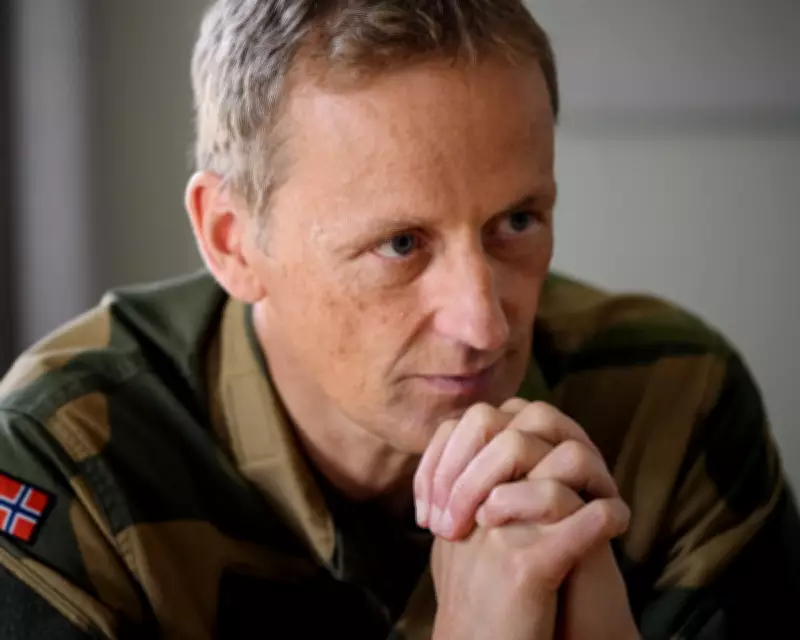
Norway's Top Military Leader Issues Stark Warning About Russian Threat in the North
Norway's chief of defence has delivered a sobering assessment of potential Russian aggression, suggesting Moscow could launch an invasion to safeguard its critical nuclear assets positioned near the Norwegian border. General Eirik Kristoffersen, who has led Norway's armed forces since 2020, stated that while Russia lacks traditional conquest ambitions in Norway, the protection of its nuclear arsenal remains a primary concern that could trigger military action.
Nuclear Capabilities as Potential Flashpoint
General Kristoffersen emphasised that Russia's substantial nuclear forces stationed on the Kola peninsula represent a significant security consideration. This strategic area, located just across from Norway's northern frontier, houses nuclear submarines, land-based missile systems, and aircraft capable of delivering nuclear payloads. The defence chief explained that these assets form Russia's primary deterrent against the United States, making their protection a potential justification for territorial expansion.
"We don't exclude a land grab from Russia as part of their plan to protect their own nuclear capabilities," Kristoffersen stated during an exclusive interview. "That's the only thing they have left that actually threatens the United States."
The military leader clarified that while Russia's objectives in Norway differ from its ambitions in Ukraine or former Soviet territories, the nuclear dimension creates unique security challenges. He confirmed that Norwegian defence planning includes scenarios where Russia might seek to secure additional territory to ensure the protection of its second-strike nuclear capabilities.
Criticism of Trump's Military Comments
In the same wide-ranging discussion, General Kristoffersen offered pointed criticism of former US President Donald Trump's recent remarks about allied military contributions in Afghanistan. The Norwegian defence chief, who served multiple tours in Afghanistan, described Trump's claims that NATO allies avoided frontline positions as "unacceptable" and factually incorrect.
"We were definitely in the frontline," Kristoffersen asserted. "We did all the full spectrum of missions, from arresting Taliban leaders to training Afghans to conducting surveillance operations. We lost ten Norwegians. I lost friends there."
The general expressed particular concern about how such comments might affect Norwegian veterans and families of fallen soldiers, while noting that Trump's lack of firsthand experience in Afghanistan undermined the credibility of his statements.
Current Security Landscape and Russian Relations
Since assuming his role in 2020, General Kristoffersen has overseen a period of dramatic transformation in European security architecture. Russia's full-scale invasion of Ukraine has prompted Norway to reassess its defence posture, particularly along its northern border with Russia. The country has reinforced these frontier areas while welcoming neighbouring Sweden and Finland into the NATO alliance.
Despite heightened tensions, Kristoffersen noted that Norway maintains some operational cooperation with Russia, including:
- Direct communication channels for search and rescue missions in the Barents Sea
- Regular meetings between military representatives at the border
- Professional responses to incidents involving airspace violations
The defence chief has recommended establishing a military hotline between Oslo and Moscow to prevent misunderstandings that could lead to escalation. He observed that Russian behaviour in northern regions has generally been less aggressive than in the Baltic Sea area, with most airspace violations appearing to result from technical issues or pilot inexperience rather than deliberate provocation.
Svalbard and Arctic Security Considerations
Regarding Norway's northern territory of Svalbard, which hosts a Russian settlement under the demilitarisation provisions of a 1920 treaty, Kristoffersen stated that Russia continues to respect the agreement. He dismissed Moscow's accusations of Norwegian stealth militarisation in the region as propaganda lacking genuine belief behind them.
The defence chief also addressed Trump's claims about Chinese and Russian military designs on Greenland, describing them as "very strange" and unsupported by Norwegian intelligence. While acknowledging increased Russian submarine activity in Arctic waters, Kristoffersen clarified that this relates to accessing the Atlantic rather than targeting Greenland specifically.
When questioned about potential US military action against Greenland, Kristoffersen offered a broader warning drawn from recent conflicts: "If Russia is learning something from the war in Ukraine, I think it's that it's never a good idea to occupy a country. If the people don't want it, it's going to cost you a lot of money and a lot of effort and in the end you will actually lose."
This comprehensive assessment from Norway's top military official comes at a critical juncture for European security, highlighting both the specific challenges facing northern nations and the broader implications of great power competition in strategically vital regions.