
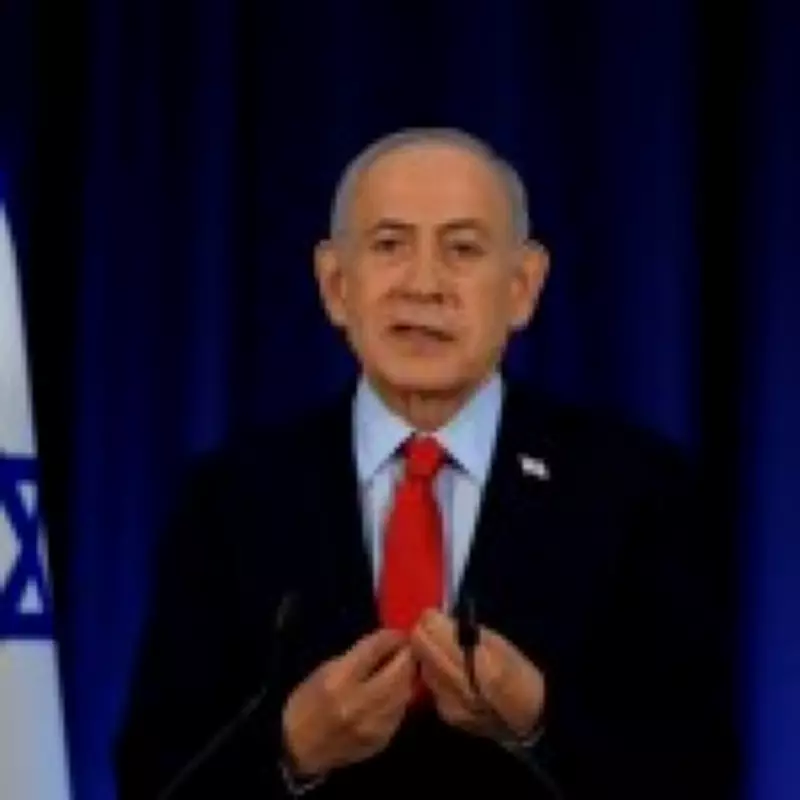
Netanyahu Issues Stark Warning on Iran's Missile Capabilities
Israeli Prime Minister Benjamin Netanyahu has publicly asserted that Iran's missiles possess the capability to strike deep into European territory, following a recent incident involving the Chagos Islands. This statement comes as other sources, including senior UK officials, have labeled his claims as potentially exaggerated, sparking a debate over regional security threats.
Details of the Diego Garcia Strike
Netanyahu's remarks were made in response to Iran targeting Diego Garcia, a joint US-UK base in the Chagos Islands, with two intermediate-range ballistic missiles. He emphasized, 'They fired an intercontinental ballistic missile on Diego Garcia – that's 4,000 kilometres.' The Prime Minister reiterated his longstanding warnings, stating, 'I've been warning all the time. They now have the capacity to reach deep into Europe. They have already fired on a European country, Cyprus. They are putting everyone in their sights.' This event has raised significant concerns about Iran's expanding military reach and its implications for global stability.
UK Government and Expert Responses
In contrast to Netanyahu's alarm, senior ministers in the United Kingdom have downplayed the severity of the threat. Housing Secretary Steve Reed commented that the British military is 'perfectly capable' of safeguarding the nation, suggesting that Israel's warnings might be overstated. Additionally, leading experts in international relations have advised treating these suggestions with caution. Dr. Bamo Nouri, a Senior Lecturer in International Relations at the University of West London, explained, 'What the Diego Garcia strike demonstrates is not an imminent capability or intent to attack the UK mainland, but a calibrated extension of range tied to a specific military target.' He further noted that capability should not be conflated with intent, highlighting the nuanced nature of the situation.
Analysis of Iran's Strategic Intentions
Dr. Katayoun Shahandeh, a Lecturer and Senior Teaching Fellow at SOAS, University of London, provided insight into the significance of the strike. She stated, 'It suggests that Tehran is prepared to demonstrate a reach well beyond its immediate region, which is why questions are now being asked about what that might mean for parts of Europe, including London.' This perspective underscores the strategic messaging behind Iran's actions, rather than an immediate threat to European cities. The debate continues as policymakers and analysts assess the balance between Iran's demonstrated capabilities and its actual intentions in the complex geopolitical landscape.




