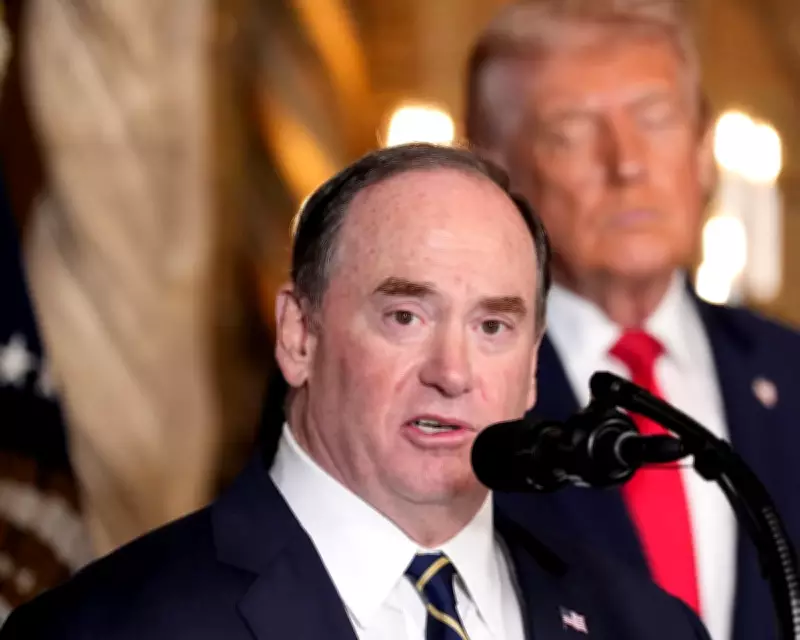
The Pentagon has confirmed the abrupt departure of John Phelan, the Secretary of the Navy, in a move that underscores ongoing leadership upheaval within the US Department of Defense. This announcement, made on Wednesday, follows a series of high-profile firings by Defense Secretary Pete Hegseth, who has been reshaping the military's top ranks since assuming office last year.
Immediate Exit and Succession
In a statement released on social media, Pentagon spokesperson Sean Parnell declared that Phelan was "departing the administration, effective immediately." Parnell further revealed that Hung Cao, the current Navy Undersecretary, will step into the role of Acting Secretary of the Navy. This transition occurs without any official explanation from Pentagon officials, mirroring the opaque nature of previous leadership changes under Hegseth's watch.
Internal Conflicts and Alleged Firing
Sources familiar with the internal dynamics at the Pentagon have disclosed to the Guardian that Phelan was effectively fired. His relationship with Defense Secretary Pete Hegseth and other senior staff had grown increasingly strained, with insiders noting that key figures openly favored Cao for the position. The tensions reportedly stemmed from multiple disagreements over policy and strategy.
Hegseth allegedly held Phelan responsible for not taking a more aggressive stance against Senator Mark Kelly after the senator appeared in a video advising troops to disregard "illegal orders." Additionally, Phelan clashed with Hegseth's deputy, Stephen Feinberg, who, according to reports from the New York Times and CNN, disapproved of Phelan's management of critical shipbuilding initiatives. These conflicts highlight the broader challenges within the Pentagon's leadership structure.
Timing and Context of Departure
Phelan's sudden exit comes just one day after he addressed a large audience of sailors and industry professionals at the Navy's annual conference in Washington DC, where he discussed his agenda with reporters. This timing adds to the abruptness of the departure, which follows closely on the heels of Hegseth's firing of the Army's top officer, General Randy George, just weeks earlier. Since taking office, Hegseth has dismissed several top generals, admirals, and other defense leaders, signaling a significant reshuffling of military command.
The departure occurs at a critical juncture for the US Navy, which has recently imposed a blockade on Iranian ports and is targeting ships linked to Tehran worldwide during a fragile ceasefire in the Iran war. This context underscores the strategic importance of stable leadership within the Navy's civilian hierarchy.
Background of John Phelan
John Phelan brought a unique background to his role as Navy Secretary, having never served in the military nor held a prior civilian leadership position within the service. He was nominated by former President Donald Trump in late 2024, following his role as a major donor to Trump's campaign. Phelan founded the private investment firm Rugger Management LLC, and his primary military exposure came from an advisory position with Spirit of America, a non-profit organization that supported the defense efforts of Ukraine and Taiwan.
The Associated Press reported that it could not immediately reach Phelan's office for comment, leaving questions about his perspective on the departure unanswered.
Profile of Acting Secretary Hung Cao
Hung Cao, who now assumes the role of Acting Secretary of the Navy, is a 25-year Navy veteran with combat zone experience. His biography includes fleeing Vietnam with his family as a child during the 1970s, adding a personal dimension to his service. Cao previously ran an unsuccessful US Senate campaign in Virginia in 2024, aiming to unseat Democratic Senator Tim Kaine. He received Trump's endorsement in a crowded Republican primary, and in a campaign video, he drew comparisons between Vietnam's communist regime during the Cold War and the administration of former President Joe Biden, reflecting his political stance.
This leadership change marks another chapter in the ongoing transformation of the Pentagon's top echelons, with implications for US military strategy and operations in an increasingly complex global landscape.