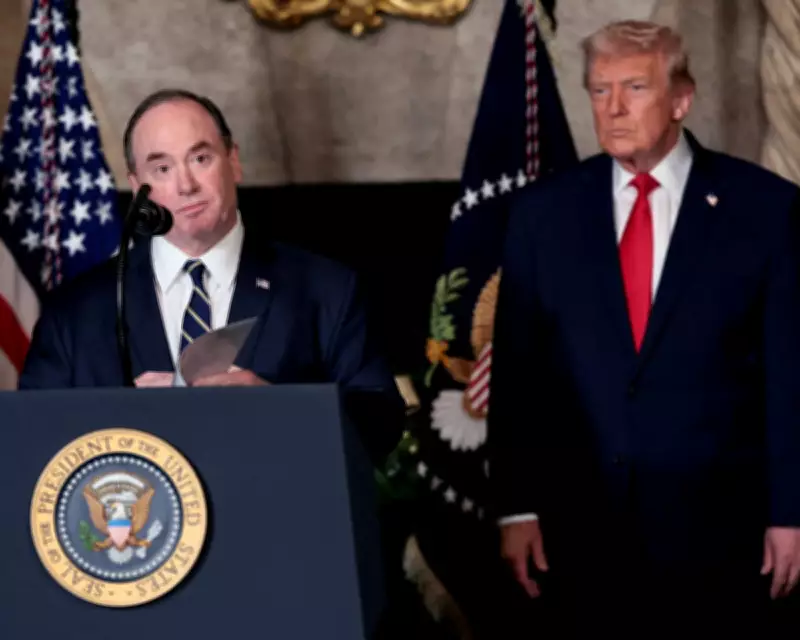
Pentagon Announces Immediate Departure of Navy Secretary John Phelan
The Pentagon confirmed on Wednesday that John Phelan, the Secretary of the Navy, is leaving his position with immediate effect. In a social media statement, Pentagon spokesperson Sean Parnell announced Phelan's departure from the administration, stating that Navy Undersecretary Hung Cao will assume the role of acting Secretary of the Navy.
Reuters, citing an anonymous source, reported that Phelan had been fired by the Pentagon, though officials did not provide a specific reason for his sudden exit. This development follows a pattern of leadership changes under Defense Secretary Pete Hegseth, who has dismissed several top military officials since taking office last year.
Timing Coincides with Critical Naval Operations
Phelan's departure comes at a particularly sensitive moment for the US Navy. Just one day prior, he addressed sailors and industry professionals at the Navy's annual conference in Washington DC, discussing his agenda with reporters. More significantly, his exit occurs as the US Navy enforces a blockade of Iranian ports and targets ships linked to Tehran worldwide during a fragile ceasefire in the Iran conflict.
The timing raises questions about leadership stability during ongoing military operations. Phelan's departure follows the recent firing of Army General Randy George by Defense Secretary Hegseth, continuing a trend of abrupt changes in defense leadership.
Escalating Tensions in the Strait of Hormuz
Simultaneously, Iranian forces seized two ships in the Strait of Hormuz, exacerbating tensions as both the US and Iran maintain separate blockades of this crucial shipping waterway. The strait typically handles approximately 20% of global oil and liquefied fossil gas during peacetime, making the standoff economically significant.
Mohammad Bagher Ghalibaf, Speaker of the Iranian Parliament and lead negotiator, stated that reopening the Strait of Hormuz would be "impossible" while the US and Israel commit what he called "flagrant" breaches of the ceasefire. He specifically cited the US naval blockade as "the hostage-taking of the world's economy" alongside accusations of "Zionist warmongering."
Broader Political Context and Developments
This military and diplomatic tension unfolds against a backdrop of shifting political dynamics. Recent polling indicates declining public approval of Donald Trump's management of key issues including the economy, immigration, and the Iran conflict. Three separate polls show Trump's approval ratings hovering in the mid-30s, near his lowest numbers, potentially impacting Republican candidates ahead of midterm elections.
Meanwhile, House Judiciary Democrats have launched a formal inquiry into FBI Director Kash Patel's alleged drinking habits, demanding he complete a standardized alcohol abuse assessment and submit results to Congress. The White House is also finalizing a financing package of up to $500 million to rescue struggling Spirit Airlines, which faces challenges from soaring fuel costs linked to the Iran war.
Additional developments include a federal judge striking down Trump administration actions that slowed clean energy development, a lawsuit by crypto entrepreneur Justin Sun against Donald Trump's digital currency venture, and intense Senate questioning of Health Secretary Robert F. Kennedy Jr. regarding measles outbreak response. The Pentagon is also seeking to dramatically increase funding for autonomous drone warfare programs, signaling a strategic pivot toward AI-powered military capabilities.