
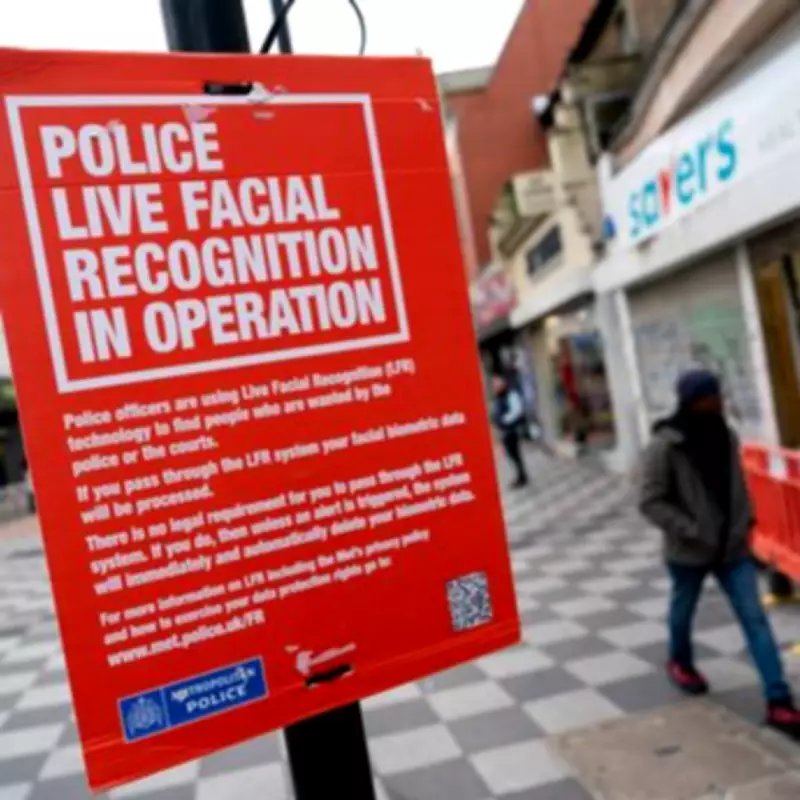
Metropolitan Police to Launch Handheld Facial Recognition Trial in London
The Metropolitan Police Service is set to conduct a groundbreaking six-month trial of handheld facial recognition devices on Londoners, marking the first deployment of such technology in the capital. Mayor of London Sir Sadiq Khan revealed the plans during a City Hall meeting, confirming that officers will be equipped with 100 Operator-Initiated Facial Recognition (OIFR) devices capable of scanning and identifying individuals on the spot.
Mayor's Office and Ethics Panel to Oversee Implementation
Sir Sadiq Khan emphasized that both the Mayor's Office for Policing and Crime (MOPAC) and the London Policing Ethics Panel will closely monitor the use of OIFR technology to ensure its application remains "right and proportionate." The Mayor stated that the pilot would provide the Met with an opportunity to thoroughly test and evaluate the capability, while maintaining transparency for Londoners. Approximately £763,000 has been allocated to fund this controversial programme.
The primary advantage of these handheld devices, according to police officials, is their potential to verify individuals' details during stops without necessitating arrests or transportation to police stations. This could significantly reduce detention times and streamline identification processes. However, Sir Sadiq cautioned that the technology "may not be rolled out" if trial results fail to demonstrate substantial benefits for law enforcement operations.
Civil Liberties Concerns and Political Opposition
The announcement has sparked immediate concern from civil liberties campaigners and some London Assembly Members, particularly given the Metropolitan Police's expanding use of Live Facial Recognition (LFR) technology. Green Party London Assembly Member Zoë Garbett, who extracted the information during the City Hall meeting, expressed alarm at what she described as "a fundamental expansion of police powers."
Ms Garbett highlighted the contradiction between the Met's public statements and their actions, noting that the police website explicitly states they do not use this technology. "In Britain, no one has to identify themselves to police without very good reason and this unregulated technology threatens that fundamental right," she asserted. The Green Party representative has previously called for an immediate halt to all LFR use until proper safeguards and regulations are established.
Legal and Ethical Implications
Jasleen Chaggar, Legal and Policy Officer at privacy organization Big Brother Watch, condemned the pilot as "yet another dangerous expansion of this intrusive software that treats the public like guinea pigs." Chaggar warned that placing such technology in officers' hands creates "a disaster for civil liberties," transforming faces into digital keys that could unlock extensive personal records without proper oversight.
The privacy advocate drew parallels with controversial uses of similar technology in the United States, where Immigration and Customs Enforcement (ICE) agents have employed OIFR to target communities of color. Chaggar urged immediate suspension of the trials until the Home Office establishes clear legal frameworks strictly limiting and safeguarding against everyday use of facial recognition technology.
Police Perspective and Technical Details
Lindsey Chiswick, the Met's lead for facial recognition, defended the initiative as "an innovative tool which will help our officers take photos to help confirm the identities of people quickly and accurately." According to Chiswick, the technology will initially be deployed to a limited number of officers during the testing phase, with strict protocols ensuring that biometric information is "deleted straight away" when no match is found.
The controversy surrounding this trial reflects broader debates about surveillance technology, police powers, and individual rights in public spaces. As London becomes a testing ground for advanced identification systems, the outcomes of this six-month pilot could establish important precedents for how facial recognition technology is regulated and implemented across British law enforcement agencies.




