UK Conducts Largest Parachute Exercise in Over a Decade
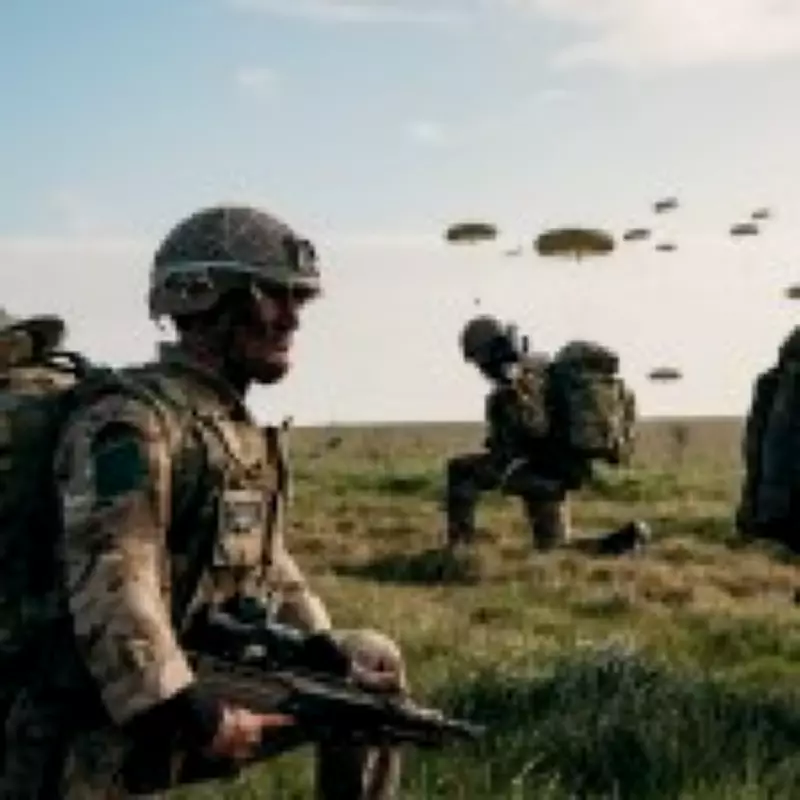
In a dramatic display of military readiness, British forces have executed their most substantial parachute deployment in more than ten years. This extensive training operation involved approximately 270 soldiers from the elite 16 Air Assault Brigade, who leaped from three Royal Air Force A400M Atlas aircraft during a meticulously planned exercise on March 30.
Simulating a NATO Ally Reinforcement Scenario
The exercise, originating from RAF Brize Norton, was designed to rigorously test the capabilities of the UK's Joint Airborne Task Force (JATF). This specialized rapid deployment unit is engineered to respond swiftly to international crises and global emergencies. The training scenario specifically simulated the reinforcement of a NATO ally confronting a potential invasion threat, reflecting current geopolitical tensions.
Amid escalating conflicts in the Middle East, following military strikes by the United States and Israel against Iran, the exercise underscores the UK's preparedness. Prime Minister Sir Keir Starmer has recently affirmed that the nation will not be directly drawn into the conflict, while acknowledging its profound implications for the country's future security landscape.
Operational Details and Strategic Execution
The aircraft flew at a remarkably low altitude of just 800 feet over the historic Salisbury Plain training area. A fourth transport plane accompanied the mission, delivering a substantial 24 tonnes of essential equipment and supplies. This logistical support enabled the paratroopers to become operational immediately upon landing, a critical factor in rapid response effectiveness.
Upon touchdown, soldiers from the 3rd Battalion, The Parachute Regiment (3 PARA) swiftly gathered their gear. They then embarked on a demanding 10-mile tactical march from the drop zone to their designated area. Once positioned, the troops established defensive fortifications and prepared for simulated combat operations.
Modern Warfare Preparedness and Equipment
The exercise incorporated advanced weaponry systems, including Javelin anti-tank missiles and 81mm mortars, to replicate realistic battlefield conditions. Significantly, the training also integrated countermeasures for drone warfare, highlighting the evolving nature of contemporary military engagements and the armed forces' adaptation to new technological threats.
Brigadier Ed Cartwright emphasized the enduring strategic value of parachute insertions, stating they remain the fastest method for deploying forces into crisis zones. He further highlighted that the operation demonstrated the exceptional synergy between the British Army and the Royal Air Force, with air mobility proving indispensable for rapid response missions.
Personnel Perspectives and Historical Context
An RAF squadron commander expressed immense pride in the successful delivery of such a large force package in a single, coordinated aerial drop. Private Hugo Stone of 3 PARA described the experience as the most significant jump of his career, noting the impressive scale and the immediate transition to combat readiness upon landing.
This parachute deployment marks the largest conducted in the United Kingdom since 2015, when approximately 200 troops were dropped onto Salisbury Plain. The exercise also signifies a technological transition, with the RAF's modern A400M Atlas aircraft now fulfilling the role previously handled by the retired C-130 Hercules fleet, enhancing the military's airlift capacity and operational flexibility.