
North Korea's Leader Demonstrates New Military Hardware at Pyongyang Ceremony
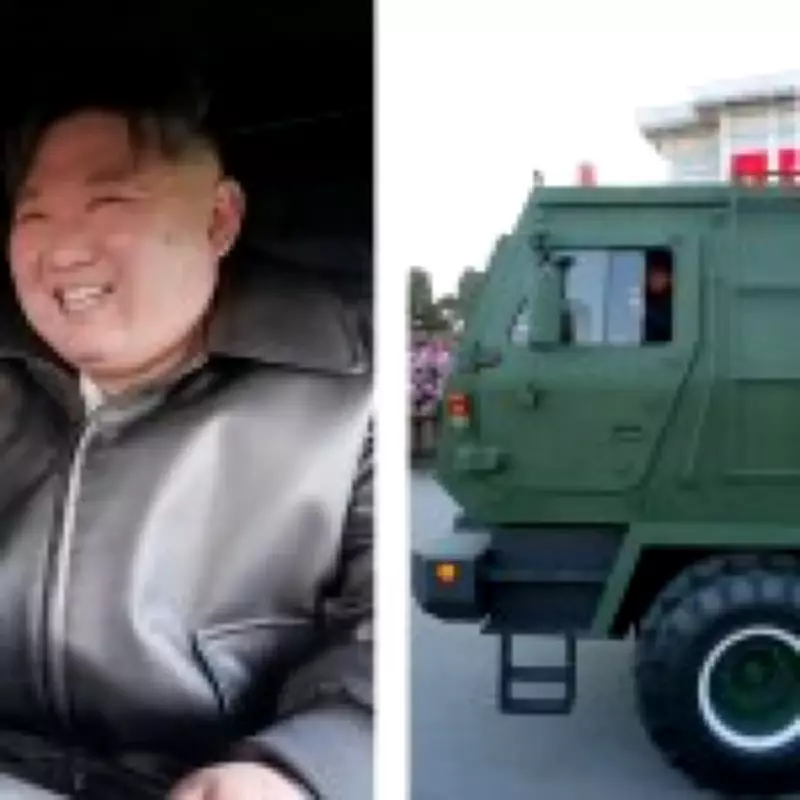
North Korean leader Kim Jong Un personally took the wheel of a nuclear-capable rocket launcher during a high-profile ceremony in Pyongyang, showcasing fifty newly developed 600mm-caliber multiple rocket launchers. The event, held to mark the presentation of these weapons to the Ninth Congress of the ruling Workers' Party, featured Kim praising the "wonderful" armaments, which state media claims are equipped with artificial intelligence and advanced guiding technologies specifically tailored for what he termed "a special attack." This phrase is widely interpreted as a thinly veiled nuclear threat against perceived adversaries.
Strategic Announcements and Military Expansion Plans
In his address, Kim Jong Un declared that the upcoming party congress will issue detailed plans to significantly expand the military's nuclear capabilities, building upon existing systems that already target the United States and its allies in Asia. "The Ninth Congress of our Party will declare the next phase of the self-reliant defence initiative and goal," Kim stated, according to the Korean Central News Agency (KCNA). He emphasized that "the project of constantly renewing our military capabilities that can strongly subdue any threats and challenges from outside forces will accelerate," signaling a continued focus on military modernization.
Photographs from the ceremony reveal rows of launcher trucks meticulously lined up near the April 25th House of Culture, a venue historically used for party congresses in 2016 and 2021. State media reported that these 600mm-caliber multiple rocket launchers were produced in an impressively short timeframe of just two months. Images depict Kim admiring the launchers while surrounded by applauding officials waving flags, highlighting the regime's emphasis on military achievements.
Regional Tensions and Diplomatic Stalemate
In a separate development, Kim's sister, Kim Yo Jong—widely regarded as the second most powerful figure in North Korea—announced that the country is bolstering border security against what she described as the "enemy" South. This statement underscores the deteriorating relations on the Korean Peninsula, which have worsened significantly since 2019 when nuclear diplomacy between Kim Jong Un and former U.S. President Donald Trump collapsed due to U.S.-led sanctions.
North Korea has suspended nearly all talks and cooperation with South Korea, with Kim Jong Un abandoning the long-standing goal of peaceful reunification in favor of declaring a hostile "two-state" system. The South Korean military is closely monitoring North Korea's weapons development activities, as confirmed by a spokesperson for the South Korean Joint Chiefs of Staff. Additionally, South Korea's defence ministry is reviewing a partial and unilateral restoration of a 2018 military agreement with North Korea, potentially suspending some military activities along the border, including self-imposing a no-fly zone, through consultations with the United States.
Political Context and International Observations
The Ninth Congress of the Workers' Party, North Korea's most significant political gathering, is anticipated to commence as early as this Thursday or Friday, according to Hong Min, an analyst at the Korea Institute for National Unification in Seoul. This congress serves to review national performance, establish new policy objectives, and potentially introduce leadership changes. Kim Jong Un has been actively promoting various projects in advance of this event, with the rocket launcher ceremony serving as a prominent display of military progress and strategic intent.
As tensions escalate, the international community remains vigilant regarding North Korea's advancements in weaponry and its implications for regional stability. The combination of AI-equipped rocket launchers, expanded nuclear ambitions, and heightened border security measures paints a picture of a regime prioritizing military strength amid ongoing diplomatic deadlock and geopolitical friction.




