
British Journalist Witnesses Missile Interceptions in Qatar Amid Regional Tensions
Rosie Murray-West, a British financial expert, is among 300,000 UK nationals currently in the Middle East, grappling with the reality of missile strikes across the region. In an exclusive account from Doha, Qatar, she describes life with her husband Paul, the frantic rush for flights back home, and the surprising normalcy for local Qataris.
Alarms and Air Defense Warnings in Doha
"I was at the Museum of Islamic Art when the first alarm sounded," Murray-West recalls. "A yellow warning in Arabic flashed on my phone with a piercing noise. Although I couldn't read the text, the red warning triangle made its purpose clear, prompting an immediate return to our hotel."
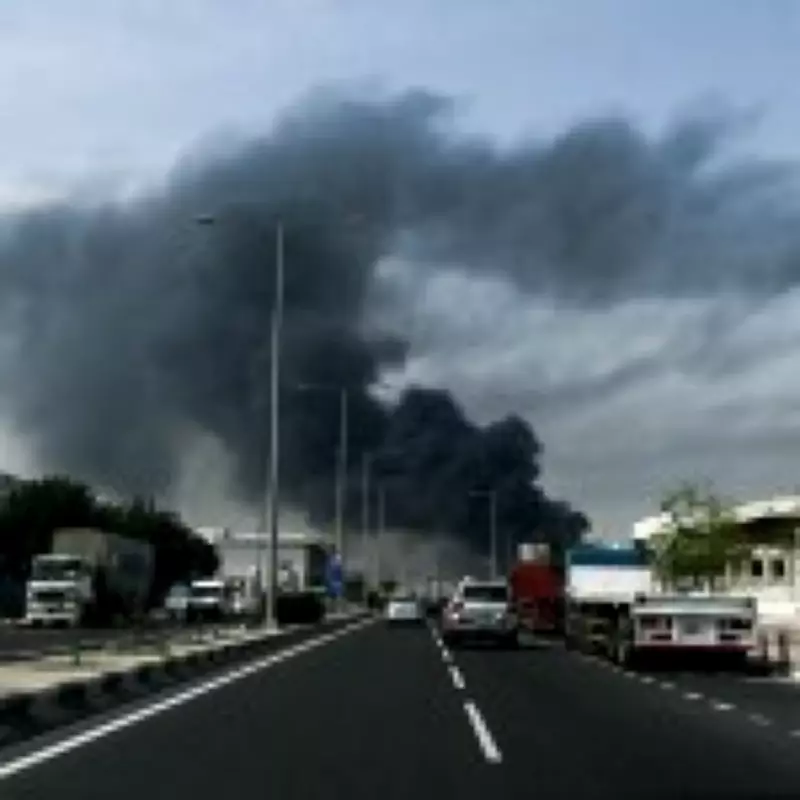
Two days later, she notes how quickly one adapts to such alerts. In the conference center where they are staying, alarms synchronize on everyone's phones, instructing people to avoid windows. These warnings are often followed by distant thuds as missiles are intercepted, visible as puffs of smoke against the blue sky. While nothing has rattled the windows nearby, smoke has been spotted on the horizon.
Local Calm and Expert Reassurances
Staff at the conference center remain composed, assuring guests that Qatar boasts one of the world's most advanced air defense systems. One employee, a former air defense worker, provides credible reassurance. Outside, daily life persists, especially during Ramadan. Streets are quiet in the morning but bustling by sunset, with hypermarkets filled with families shopping for iftar meals to break their fast.
There is no visible panic; children in festive Ramadan attire accompany parents, selecting sweets, dates, and toys. Large public iftar gatherings have been mostly canceled, schools are closed, and civil servants work remotely, shifting celebrations to homes. Despite the tension, the center feels oddly secure, though everyone is focused on returning home.
Flight Chaos and Rebooking Nightmares
Discussions among delegates often turn to the Polish group that managed an overland escape via Riyadh. Rumors suggest that if Abu Dhabi reopens its airspace, Qatar might follow. Murray-West has a flight booked for 1:50 AM, a second rebooking, but doubts it will depart. Rebooking efforts are time-consuming and frustrating.
She spent hours in a British Airways live chat queue, starting at position 702, only to be placed on a via-Abu-Dhabi flight that was canceled minutes later. After another two-hour wait, she secured a flight for the next morning, which now also appears canceled. Airline apps provide inconsistent updates; Qatar Airways fluctuates on whether passengers should head to the airport.
A Sense of Fatalism and Resilience
"A certain fatalism takes over," Murray-West observes. "We'll get home eventually, but no one wants to be on the first flight out after resumptions, having seen missiles in the sky." Currently, the situation feels more inconvenient than terrifying, with more energy spent on airline policies than on fears of building strikes.
Reflecting on her time in Qatar before the crisis, she visited museums and deserts, including a Saturday night trip to the inland sea overlooking Saudi Arabia, the UAE, and Iran. They drove past a gas plant recently hit by a drone and dined in the Souk, watching families celebrate after the iftar cannon fired at sunset.
"Qatar seemed peaceful and prosperous," she says. "Everyone praised its safety, hospitality, and high living standards. Today, that certainty feels more like a desert mirage."




