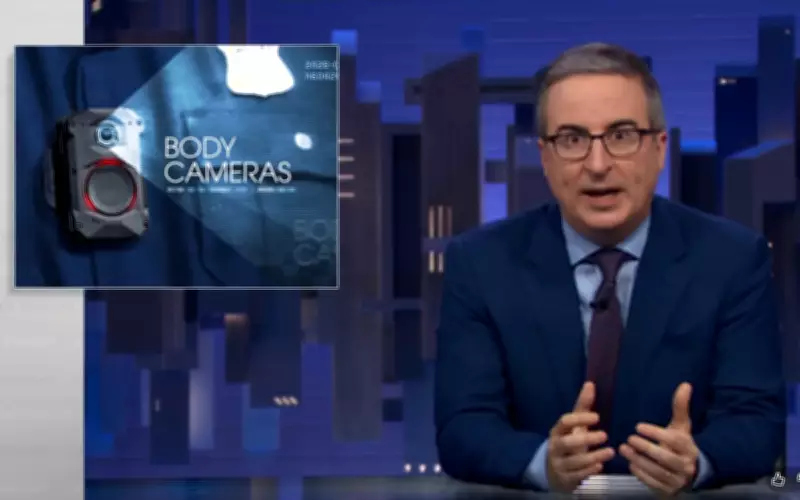
John Oliver Dissects Police Bodycam Shortcomings on Last Week Tonight
In a recent episode of Last Week Tonight, host John Oliver tackled the widespread adoption of police body cameras, devices hailed as a transparency tool but often falling short in practice. Oliver described them as offering a "nipple's-eye view" of law enforcement interactions, yet emphasized that their mere presence does not guarantee accountability.
The Illusion of Transparency in Law Enforcement
Bodycams have become a popular solution among Democratic lawmakers, with calls for "masks off, body cameras on" during negotiations over Immigration and Customs Enforcement (ICE) agents. Oliver noted the appeal of bodycams in calming police interactions, but he quickly debunked this notion. "The more you look into bodycams, the more you realize they are only effective if used properly, and in many cases, they are just not," he stated, setting the stage for a deeper investigation.
Limitations and Misuse of Body Camera Technology
Oliver outlined several critical limitations. Recordings are restricted to the camera's view, which can be incomplete or misleading. Issues worsen when officers mute, obscure, or turn off cameras intentionally. He highlighted a clip from Oklahoma where a police captain requested an officer to disable his camera during a traffic stop. While privacy concerns justify off buttons—such as for breaks or sensitive situations like medical evaluations—Oliver pointed out that critical incidents often go unrecorded, undermining accountability.
The Overwhelming Volume of Unreviewed Footage
Even when cameras are on, the sheer volume of footage poses a problem. Axon, the largest bodycam provider in the U.S., stores over 100 petabytes of data, equivalent to more than 5,000 years of high-definition video. Oliver joked about the term "petabytes," but stressed a serious issue: most footage is never reviewed. Agencies lack the capacity to scrutinize every minute, leading to missed patterns of misconduct. For instance, after George Floyd's murder in 2020, a review of Minneapolis police footage revealed Derek Chauvin had used neck restraints on other civilians, yet supervisors had cleared his conduct despite access to the recordings.
Case Study: The Tragic Death of Ronald Greene
Oliver cited the case of Ronald Greene, a Black man who died after a police encounter in Louisiana in 2019. Authorities initially claimed he died in a car crash, but leaked bodycam footage showed officers wrestling him, using a chokehold, and punching him. Notably, one officer turned off his camera upon being reminded it was on. The department, supported by state officials, withheld the footage for two years. Ultimately, charges against involved officers were diminished or dropped due to "insufficient evidence," partly because microphones were off and cameras were not always active during the arrest.
Calls for Reform and Independent Oversight
Oliver argued that relying on leaks is unsustainable. "Hoping for leaks cannot be the system here," he asserted, advocating for clear, enforceable rules. These should mandate footage retention, routine review, and timely release, especially for critical incidents, overseen by an independent regulatory body. He referenced federal agents withholding footage from the Alex Pretti shooting in Minneapolis, rendering slogans like "masks off, bodycams on" ineffective.
In conclusion, Oliver emphasized that bodycams alone cannot fulfill their promise of transparency. Until significant reforms are implemented, public reliance on cellphone recordings and continued scrutiny will remain essential to expose police misconduct and demand accountability.