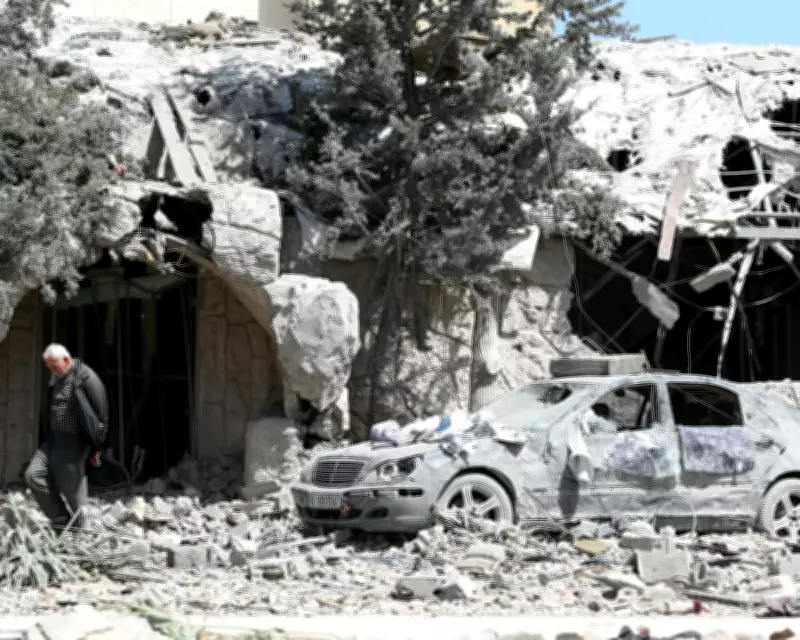
Israel's Devastating Bombing Campaign in Lebanon Following Ceasefire Announcement
Israel's massive bombardment of Lebanon in the immediate aftermath of a US-Iranian ceasefire announcement has triggered widespread international condemnation, casting serious doubt on the viability of the fragile truce. The Israeli military launched strikes with heavy munitions against densely populated areas, resulting in more than 200 confirmed fatalities and drawing sharp criticism from humanitarian organizations worldwide.
Global Outrage Over Civilian Casualties
The International Committee of the Red Cross joined numerous other international humanitarian organizations in expressing outrage at the scale of destruction and loss of civilian life. Israeli Prime Minister Benjamin Netanyahu defended the actions, insisting Lebanon was not included in the Tuesday night ceasefire agreement brokered by former US President Donald Trump. Netanyahu vowed that Israeli forces would continue targeting Hezbollah positions "wherever necessary," claiming his military had eliminated the secretary to Hezbollah's leader, Naim Qassem.
Conflicting Interpretations of Ceasefire Terms
US Vice-President JD Vance supported Netanyahu's position, asserting the United States had never agreed to include Lebanon in the truce arrangement. "I think this comes from a legitimate misunderstanding," Vance stated, while preparing to lead a US delegation to Pakistan for Saturday talks aimed at salvaging the ceasefire and transforming it into a more durable peace agreement.
However, Pakistan, which mediated the ceasefire negotiations after Trump threatened catastrophic military action, maintains that Lebanon was indeed part of the original agreement. Iranian President Masoud Pezeshkian warned that further Israeli strikes on Lebanon would render all negotiations "meaningless," pledging Iran would not abandon the Lebanese people.
Diplomatic Fallout and Regional Implications
Former American envoy Robert Malley, who led previous US-Iranian negotiations, expressed skepticism about the US position. "I would trust the Pakistani mediator that Lebanon was included," Malley said. "They put out a statement that it was included and we did not hear any American correct the Pakistani version for many hours. It looks like a case of the US reneging and giving the Israeli prime minister permission to proceed with bombing for another 24 hours before they are 'restrained.'"
European leaders issued strong condemnations of Israel's actions. EU Foreign Policy Chief Kaja Kallas stated: "Hezbollah dragged Lebanon into the war, but Israel's right to defend itself does not justify inflicting such massive destruction. Israeli strikes killed hundreds last night, making it hard to argue that such heavy-handed actions fall within self-defense."
France's Foreign Minister Jean-Noël Barrot described the Israeli strikes as "unacceptable," while British counterpart Yvette Cooper called them "deeply damaging," warning that failure to include Lebanon in the ceasefire would "destabilize the whole region."
Economic Consequences and Strategic Concerns
The diplomatic crisis has immediate economic implications, particularly regarding the Strait of Hormuz, the critical waterway through which approximately one-fifth of global oil and liquefied natural gas flows. In the 24 hours following the ceasefire announcement, only 11 ships were permitted passage through the strait—less than ten percent of normal prewar traffic—with about 1,400 vessels remaining anchored in the Gulf amid ongoing uncertainty.
Global oil prices, which initially dropped following the ceasefire announcement, began climbing again toward $100 per barrel as the situation deteriorated. Meanwhile, authorities in Islamabad implemented stringent security measures in anticipation of diplomatic delegations arriving for Saturday's crucial peace talks, which now face unprecedented challenges.
Trump issued another ultimatum on social media, threatening a return to US attacks if Iran failed to comply with "the real agreement," demanding Tehran fully reopen the Strait of Hormuz to international shipping and maintain a nuclear weapons-free status—without mentioning Lebanon specifically.