
Islamic State Emerges from Rubble in Northeast Syria to Capitalize on Discontent
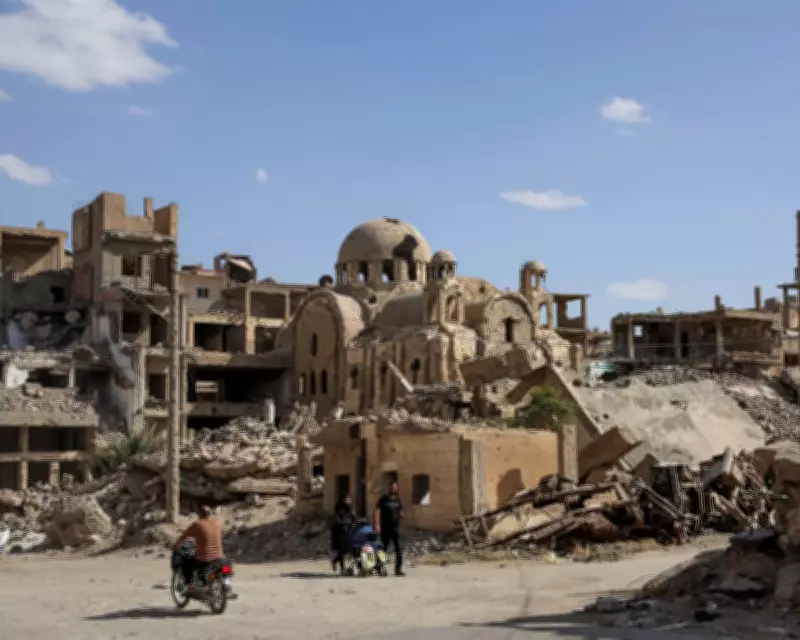
On the surface, the Syrian town of Baghuz appears as nothing more than a barren wasteland littered with remnants of conflict—discarded tubs of whitening cream, spent RPG motors, and children's backpacks concealing old grenades. This was the site where Islamic State made its final stand nearly seven years ago, with its most fervent followers obliterated alongside the blood-soaked caliphate they defended. Bulldozers subsequently buried the area under heavy yellow earth, creating a sterile landscape where nothing grows despite winter rains nurturing nearby fields.
Yet beneath this eerie calm, residents report growing unease as IS stirs once more, its members living covertly among Syrian communities. "They are our neighbors. It's known who in the village is with IS. They feel nostalgic for the days of the caliphate, and for sure they would readily join IS if it came back," revealed an anonymous activist in Baghuz, expressing security concerns.
Strategic Rebranding and Recruitment Efforts
This week marked a significant escalation as IS spokesperson Abu Hudhayfah al-Ansari released a 30-minute speech—the group's first major public address in two years. In it, he denounced President Ahmed al-Sharaa as an apostate and western puppet, declaring opposition to Syria's new government a religious duty for followers. The call was swiftly answered with at least nine attacks on government checkpoints across northeast Syria, including a Raqqa gun battle that killed four security personnel and an assault in Baghuz.
Analysts interpret this activity as part of a deliberate "rebrand" strategy aimed at recruiting a new generation. "They want to change the perception of the group to revive it. They want to cancel the mistakes they committed in 2014, when you would see mass killings and walk through the countryside and see beheaded people," explained Bashar Hassan, a Deir ez-Zor-based IS analyst formerly imprisoned by the group.
Exploiting Societal Discontent and Neglect
IS is strategically targeting radical elements disillusioned with al-Sharaa's government, which despite its Islamist origins has not imposed strict Islamist law and has pivoted toward western alliances. The president, once an al-Qaida commander, has integrated Syria into the global coalition against IS and pursued liberal economic reforms—moves that alienate extremist factions. IS recruitment materials now feature images of al-Sharaa meeting with US Central Command head Brad Cooper, symbolizing this western turn.
The group's resurgence thrives in regions like Deir ez-Zor, where neglect and poverty persist. Infrastructure remains devastated, with cars queuing for hours at the province's sole functioning bridge while others lie collapsed in the Euphrates River. "Education could get young people out of this ideology, but no one is implementing this. The group is not showing its dangerous side yet, and those at a formative age are being radicalized," warned civil society activist Deeban Harwil.
Historical Brutality and Contemporary Threats
During its peak control over parts of Iraq and Syria, IS rule was characterized by extreme brutality—maintaining sex slaves, publishing execution videos, and displaying severed heads in public squares like Raqqa's clock tower. Recognizing that such violence fostered rejection, the group now focuses on winning local support through ideological appeal rather than overt terror.
Yet for communities like Baghuz, where residents avoid disturbing soil for fear of uncovering remnants, memories of IS evoke only dread. "We have a saying here," the Baghuz activist noted. "Nothing can be worse than what has already happened." Despite government vows to defeat IS, experts caution that the socioeconomic conditions enabling its initial rise remain unaddressed, leaving Syria vulnerable to renewed extremist threats.




