
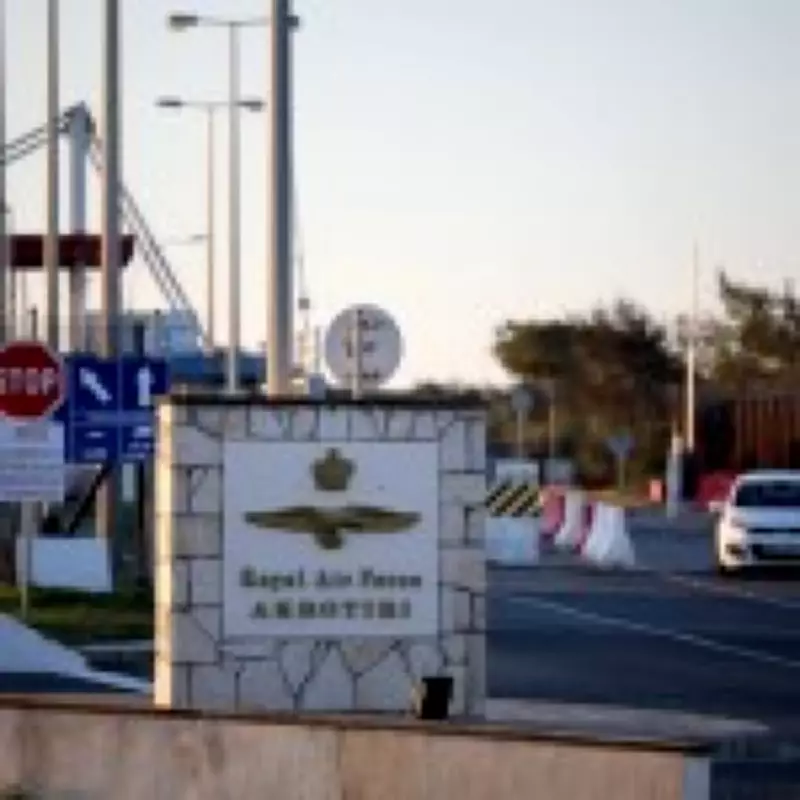
An unmanned Iranian-made Shahed drone struck the Royal Air Force base at Akrotiri in Cyprus overnight, causing minor structural damage but resulting in no casualties, according to Cypriot President Nikos Christodoulides. The incident occurred around midnight local time, which corresponds to 10 p.m. in the United Kingdom, prompting the temporary relocation of non-essential personnel from the strategic military installation.
Immediate Response and Security Measures
A spokesperson for the Ministry of Defence confirmed that armed forces responded swiftly to the suspected drone strike, emphasizing that force protection in the region remains at the highest possible level. The base activated its defensive protocols to safeguard personnel, with the situation described as ongoing and further details expected to be released in due course. This marks the first attack on RAF Akrotiri since Libyan militants targeted it in the mid-1980s, highlighting the escalating tensions in the Eastern Mediterranean.
Political Context and Diplomatic Fallout
The drone strike follows a controversial decision by Prime Minister Sir Keir Starmer to authorize the United States to utilize British military bases for operations against Iranian missile sites. Starmer defended this move as a necessary step to prevent Iran from launching missiles that could endanger innocent civilians, threaten British lives, and impact nations not involved in the conflict. However, President Christodoulides swiftly distanced Cyprus from any military involvement, stating unequivocally that the country does not participate in such operations and has no intention of doing so.
Christodoulides further announced that Cypriot forces are on high alert and operating at full readiness, underscoring the nation's commitment to maintaining stability in the region. Historically, RAF Akrotiri has served as a pivotal hub for UK-led military campaigns in Iraq, Syria, and Yemen, and it is understood that the British government recently bolstered resources at its Cypriot bases amid rising Middle Eastern hostilities.
Regional Implications and Historical Precedents
This incident underscores the volatile security landscape in the Eastern Mediterranean, where geopolitical rivalries are increasingly playing out through asymmetric warfare tactics like drone strikes. The use of an Iranian-made Shahed drone, a model known for its cost-effectiveness and operational range, points to Tehran's expanding capabilities to project power beyond its immediate borders. Analysts note that such attacks could signal a new phase in regional conflicts, with non-state actors and state-sponsored groups leveraging advanced unmanned systems to target strategic assets.
The aftermath of the strike has reignited debates over the UK's military posture and alliance commitments, particularly its role in facilitating US operations against Iran. While the immediate physical damage was limited, the psychological and diplomatic repercussions are likely to resonate across international forums, influencing future defense collaborations and crisis management protocols in the region.




