
Iran Issues Dire Warning Over US Threats to Power Plants
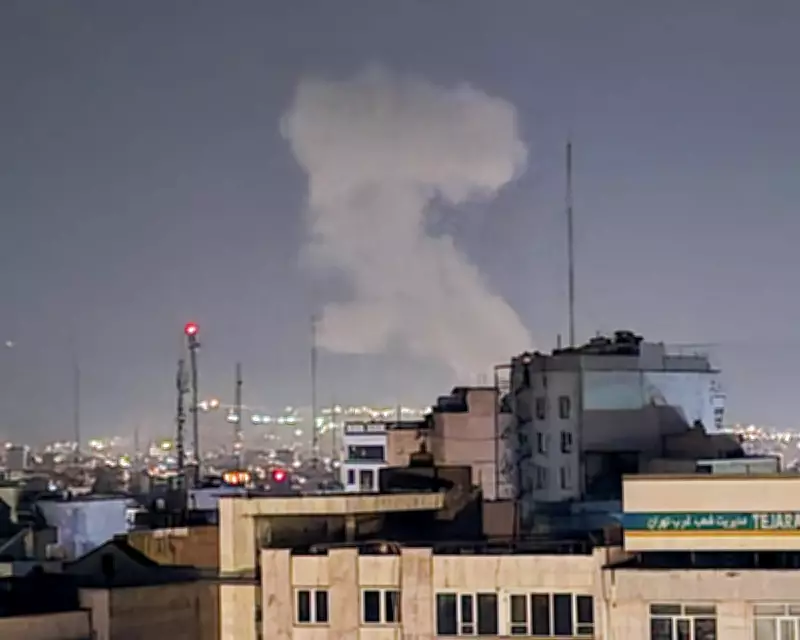
Smoke was seen rising above Tehran following an Israeli airstrike on Sunday evening, as Iran escalated its rhetoric in response to US threats. The Iranian parliament speaker, Mohammad Bagher Ghalibaf, declared that vital regional infrastructure, including energy and desalination facilities, would be considered legitimate targets and "irreversibly destroyed" if Iran's own infrastructure came under attack.
Trump's Ultimatum and Iranian Retaliation
US President Donald Trump issued a 48-hour ultimatum, demanding that Iran fully open the Strait of Hormuz or face the obliteration of its power plants, starting with the largest one. In retaliation, Iran's military command, Khatam al-Anbiya, stated it would strike all energy, information technology, and desalination infrastructure belonging to the US and Israel in the region. Additionally, Iran threatened to completely close the Strait of Hormuz until any destroyed power plants are rebuilt.
Iranian President Masoud Pezeshkian asserted that threats only strengthen national unity, dismissing what he called the "illusion of erasing Iran from the map." Meanwhile, the US ambassador to the UN, Mike Waltz, defended Trump's stance, noting that Iran's Islamic Revolutionary Guard Corps controls much of the country's infrastructure to support its war efforts.
Escalating Military Actions and Civilian Impact
The conflict has intensified, with Iranian missiles striking two southern Israeli cities, Arad and Dimona, injuring dozens, including children. This marks the first time Iranian missiles have penetrated Israel's air defense systems near its nuclear center in the Negev desert. Israel has vowed retaliation, with Prime Minister Benjamin Netanyahu pledging to target IRGC leaders and assets.
Amnesty International has warned that attacks on essential services like electricity and water could violate international law and amount to war crimes due to the potential for widespread civilian harm. The World Health Organization echoed concerns, stating that targeting nuclear sites poses a grave threat to public health and environmental safety.
Regional and Global Repercussions
The closure of the Strait of Hormuz, a critical oil passageway, has triggered a global oil crisis, with European gas prices surging by up to 35%. Only a small fraction of vessels from friendly nations like China and India have been allowed through. In Lebanon, Israel expanded its ground campaign against Hezbollah, while attacks in the occupied West Bank and incidents in Qatar and Bahrain have added to the regional turmoil.
Analysts describe Trump's threat as a "48-hour ticking timebomb" that could lead to financial market chaos and further energy price spikes if not de-escalated. As both sides menace facilities relied on by millions, the war enters a perilous new phase with no immediate resolution in sight.




