Iran Announces Closure of Strait of Hormuz
Iran has declared it is closing the Strait of Hormuz following waves of Israeli airstrikes in Lebanon, a move that threatens to derail the fragile interim peace deal with the United States signed just days ago. The Islamic Revolutionary Guard Corps warned ships not to approach the strategic waterway, which before the war carried a fifth of global oil and liquid gas supplies, citing Israeli crimes in Lebanon and a US violation of commitments to establish a ceasefire there.
Uncertainty Over Threat and Talks
It remained unclear whether the threat had been carried out or if it would jeopardize talks scheduled for Sunday in Switzerland. Those negotiations were intended to start the process of converting the current interim agreement between the US and Iran into a more detailed deal covering Iran's nuclear program. Washington denied that the strait had been closed. “Iran does not control the Strait of Hormuz,” US Central Command spokesperson Navy Capt. Tim Hawkins told Reuters. “Traffic continues to flow, and US forces are monitoring the situation to ensure this remains the case.”
US Vice-President to Attend Talks
Earlier on Saturday, US Vice-President JD Vance told Fox News he expected to travel to Switzerland in “the next couple of days” to participate in negotiations. Pakistan, the key mediator, said the talks would proceed, and reports from Tehran indicated that a delegation of top officials had left Iran to join the negotiations. The continuing hostilities in Lebanon between Hezbollah, which has close ties to Iran, and Israel have emerged as the main challenge to the new deal aimed at ending the war in the Gulf.
Israeli Strikes Kill 16 in Southern Lebanon
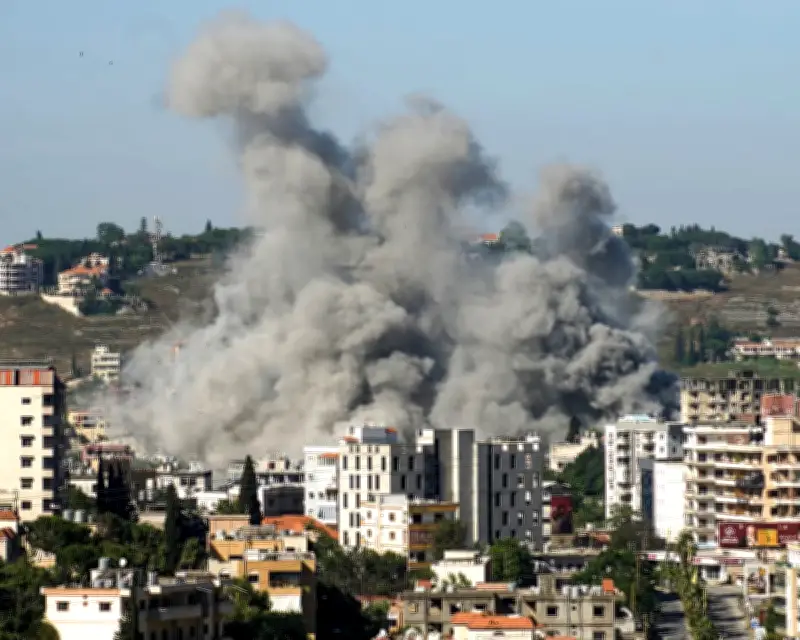
Israeli strikes on southern Lebanon on Saturday killed at least 16 people, according to local authorities, despite reports of a renewed ceasefire. Lebanon’s civil defense agency reported that its personnel transported “16 dead and 12 wounded” to hospital, adding that they had been working “since the early morning hours” in the Nabatieh district. The interim agreement calls for a cessation of hostilities on all fronts, including Lebanon. It has been fiercely criticized by Israeli ministers, officials, and commentators, who argue it stops Israel from countering threats posed by Hezbollah.
The Israeli military said it was striking Hezbollah targets in response to overnight projectile launches from the Lebanese militant organization. Violence flared on Friday after four Israeli soldiers, including a senior officer, were killed when a tank was hit by Hezbollah, which said the strike came after Israel broke a previous ceasefire agreement by advancing. The subsequent Israeli attacks killed 83 people, local authorities said, across southern Lebanon and the Bekaa valley.
Ceasefire Status Unclear
The exact status of the new ceasefire reported to have come into effect locally on Friday evening was unclear. In public statements, Hezbollah has said it will abide by a ceasefire if Israel does, but has not confirmed that a ceasefire is actually in place. Hassan Fadlallah, a Hezbollah parliamentarian in Lebanon, said his group had the right to respond to Israeli attacks. “There is talk of a ceasefire. For us, what concerns us is that the enemy fully … doesn’t attempt to attack our country and villages or seek to occupy any new position,” he said.
Regional War Death Toll Reaches 7,000
The most recent round of war between Hezbollah and Israel began days after the US and Israel launched strikes on Iran on 28 February, with Hezbollah firing rockets and drones at civilian communities in northern Israel, and Israel seizing and occupying large swathes of southern Lebanon to establish a “buffer zone.” The continuing violence and diplomatic back-and-forth over the planned talks have fueled skepticism that a definitive end can be found to a regional war that has killed at least 7,000 people, sent energy prices soaring, and threatened global economic chaos.
The interim US-Iran agreement signed this week called for the US to lift its naval blockade in return for the reopening of the Strait of Hormuz, which was closed to most shipping by Tehran shortly after the beginning of the conflict. Neither Israel nor Hezbollah are signatories to the deal, which calls for a halt to military operations in Lebanon and for the country’s sovereignty to be respected. Israeli Prime Minister Benjamin Netanyahu has vowed to keep Israeli forces in southern Lebanon until any threat to Israel is eliminated. Hezbollah has refused to halt its attacks unless Israel commits to withdrawing from Lebanon, which Iran says is also a condition of the deal.
Vance Confident Ceasefire Will Hold
Despite the violence in Lebanon, Vance said he was confident the ceasefire agreed in Washington’s 14-point deal with Tehran would hold and that he had seen no evidence the strait was closed. “I expect that I will leave some time in the next couple of days, but you know it’s always a delicate coordination dance and the diplomatic protocols,” Vance said. He added that US negotiators Jared Kushner and Steve Witkoff had been in Switzerland “for a few hours, dealing with some of the technical elements of this negotiation.”
Iran’s foreign ministry spokesperson, Esmail Baghaei, however, signaled that little progress would be made until Iran was convinced the US was fulfilling its commitments under the deal. “This trip is therefore about demanding that the other side fulfil its obligations,” Baghaei said. The interim deal gives negotiators 60 days to come up with a nuclear agreement, but that can be extended. Many observers warn that it will be very hard to reach an agreement on such a complex issue within two months. The 2015 nuclear deal, which US President Donald Trump scrapped during his first term, took more than 18 months to negotiate.