
Iran Unleashes Retaliatory Missile Barrage Against Israel and US Bases
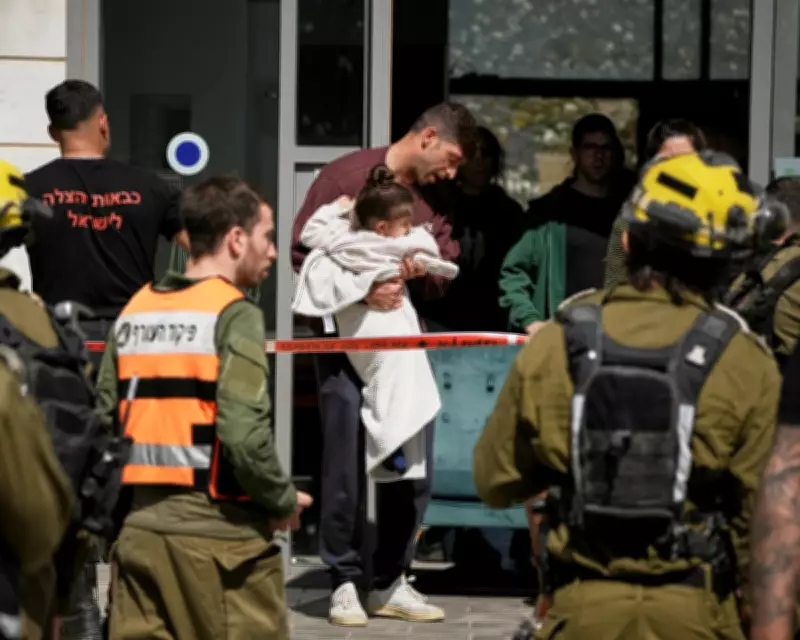
Iran has launched a significant retaliatory missile and drone offensive targeting Israel and multiple United States military installations across the Middle East. This aggressive response comes directly after coordinated US-Israeli airstrikes on Iranian territory, which Tehran has denounced as a blatant violation of the United Nations charter and an act of flagrant aggression.
Diplomatic Breakdown and Escalating Tensions
The Iranian foreign ministry urgently called upon Muslim and non-aligned nations to demand an immediate UN Security Council meeting. Officials highlighted that the weekend's strikes marked the second major attack on Iran within a year, critically disrupting sensitive nuclear negotiations. These talks, mediated by Oman's Foreign Minister Badr Albusaidi, were aimed at establishing a verifiable process to prevent Iran from acquiring nuclear weapons materials. Albusaidi had expressed optimism for peace just days before the violence erupted.
Following the initial wave of Israeli attacks on Tehran, Iranian authorities confirmed the safety of key leadership figures, including Supreme Leader Ayatollah Ali Khamenei and President Masoud Pezeshkian, despite apparent assassination attempts. Satellite imagery revealed severe damage to structures within Khamenei's secured compound in the capital.
Civilian Casualties and Military Targets
The human cost of the initial strikes was severe, with reports indicating at least 40 schoolchildren killed and 48 injured at a girls' elementary school in Minab, Hormozgan province. Ambulances were witnessed transporting the wounded to hospitals in central Tehran. While rumors circulated about the death of army commander Maj Gen Amir Hatami, the scale of leadership targeting did not immediately match the intensity of a previous June attack. However, the status of Revolutionary Guards commander Mohammad Pakpour remained uncertain, and the residence of leading reformist Mir Hossein Mousavi sustained heavy damage.
Photographic evidence showed numerous Revolutionary Guards weapons warehouses and missile sites had been successfully hit during the offensive.
Iran's Stern Warning and Regional Strikes
In a firm statement posted on social media platform X, Iran's foreign ministry declared, "The time has come to defend the homeland and confront the enemy’s military assault," vowing an unwavering response. The national security council advised civilians to relocate from cities under attack, while government information councils attempted to assure the public of no impending shortages.
The Iranian military confirmed launching drones and short-range missiles at several strategic US bases, including al-Udeid air base in Qatar, Ali al-Salem base in Kuwait, al-Dhafra air base in the UAE, Prince Sultan air base in Riyadh, a US base in Erbil (northern Iraq), Muwaffaq Salti air base in Jordan, and the US Fifth Fleet base in Bahrain. In response, Saudi Arabia and the UAE issued statements condemning Iran's violation of their airspace and sovereignty, reserving the right to take retaliatory measures.
Internal and External Political Reactions
The instruction for civilians to leave major cities may reflect governmental concerns about potential protest gatherings. This directive contrasted sharply with messages from Reza Pahlavi, son of the former Shah, who indicated he would soon call for protesters to return to the streets. Former US President Donald Trump, in a speech announcing the US attack, directly addressed Iranian civilians, stating, "Bombs will fall everywhere. When we finish our work take control of your government."
It remains unclear whether Iran's security forces can manage any renewed civil unrest or if the external attacks will foster a renewed sense of national unity amidst existing economic struggles and state repression. The supreme national security council framed the moment as "a test of national resistance for Iranians."
President Pezeshkian's son, Youssef, communicated via Telegram that assassination attempts had failed and other officials were safe, predicting "a longer conflict and it will be a war of attrition." A senior armed forces spokesperson issued a stark warning: "We will give a lesson to [Israel and the US] that they have never experienced in their history... we will show no leniency."
Iranian Foreign Minister Abbas Araghchi contacted counterparts from Saudi Arabia, the UAE, Qatar, Kuwait, Bahrain, and Iraq, arguing that Gulf states bore responsibility for preventing the US from using their bases to launch illegal attacks on Iran. Reza Nasri, a lawyer with foreign ministry ties, delivered a pointed message to the American public, warning of consequences for soldiers' lives, national interests, and global anti-American sentiment.




