
US-Israeli Strikes on Iran's Nuclear Facilities Could Provoke Weaponization, Experts Warn
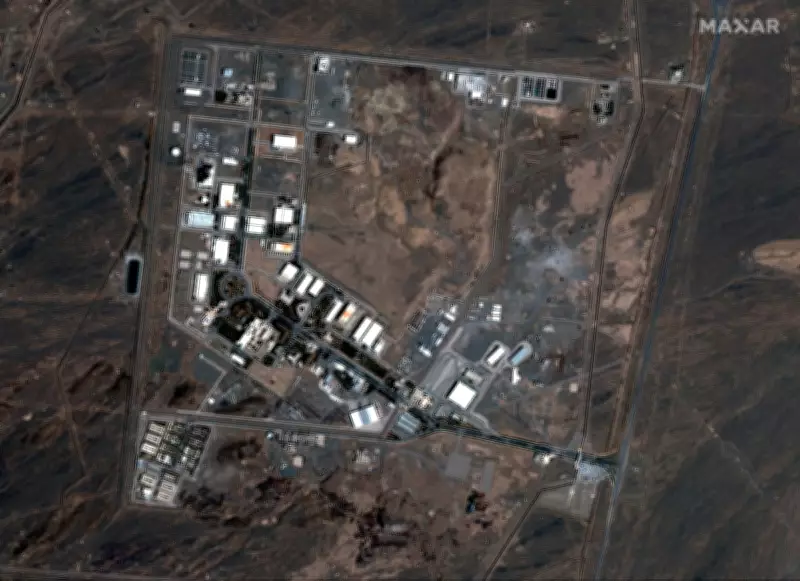
In June 2025, the United States and Israel launched coordinated military strikes against Iran's Natanz uranium enrichment facilities, located approximately 300 kilometers south of Tehran. This aggressive action was intended to resolve a decades-long standoff over Iran's nuclear ambitions, but proliferation experts now warn it could dangerously backfire, potentially pushing the Iranian regime toward developing a secret nuclear weapon.
The Precarious Nuclear Stockpile
The immediate catalyst for the strikes was Iran's accumulation of a highly enriched uranium stockpile. By the summer preceding the attacks, Iran had produced over 440 kilograms of uranium enriched to 60% purity. From a technical perspective, reaching 60% represents the most challenging phase; advancing to 90% weapons-grade uranium for compact warheads becomes significantly easier thereafter.
This substantial stockpile, if further enriched and converted from gas to metal form, could theoretically yield material for more than ten nuclear warheads. The anxiety surrounding this cache, which grew substantially after the collapse of the 2015 nuclear deal, directly motivated the military intervention.
Operation Midnight Hammer and Its Limitations
The American component of the offensive, codenamed Operation Midnight Hammer, focused on deploying bunker-busting bombs against Iran's nuclear infrastructure. While initial claims suggested the programme had been "obliterated," assessments soon revealed a more complex reality. Extensive damage was inflicted, but critical deep-underground facilities, particularly those burrowed beneath mountains at Isfahan and Natanz, proved resilient to complete destruction.
In the aftermath, Iran retaliated by expelling United Nations inspectors from the International Atomic Energy Agency from these and other sensitive sites. This move created a significant intelligence blackout. The IAEA has since conceded in its latest reports that it "cannot verify whether Iran has suspended all enrichment-related activities" or determine the "size of Iran's uranium stockpile at the affected nuclear facilities."
The Risk of a Backfire: Driving Iran Toward the Bomb
Nuclear proliferation analysts express profound concern that the attack, aimed at crippling a regime that has ruled for 47 years and which resulted in the death of Supreme Leader Ali Khamenei, may have the opposite effect. Khamenei had previously issued a religious edict against nuclear weapon development.
"That is what makes this such a tremendous roll of the dice," stated Jeffrey Lewis, a distinguished scholar of global security at the Middlebury Institute. "If the strike does not succeed in removing the regime, there remain thousands in Iran capable of reconstituting this programme. A vengeful Iran that survives is likely to conclude, as North Korea did, that it's a dangerous world and better to go nuclear."
Kelsey Davenport, director for nonproliferation policy at the Arms Control Association, echoed this sentiment. She warned that the nature of the attack creates greater motivation within any surviving regime elements to pursue weaponization, regardless of the conflict's ultimate outcome.
The Specter of Nuclear Terrorism and Diversion
An equally alarming scenario involves regime collapse or internal destabilization leading to civil war. In such chaos, the fate of Iran's 440kg stockpile of highly enriched uranium becomes a paramount global security threat.
Davenport highlighted this critical risk: "If material is diverted or stolen, there will be immense pressure on the United States to put boots on the ground. There's a real nuclear terrorism risk to the regime change objective that the administration has not acknowledged."
While IAEA Director General Rafael Grossi recently stated the agency does not currently see "a structured programme to manufacture nuclear weapons," the experts caution that the post-strike environment is volatile. The US-Israeli onslaught, designed to eliminate a nuclear threat, may have inadvertently set the stage for its more dangerous realization or created new perils of nuclear material falling into non-state hands.




