
Iran Intensifies Assault on Gulf Infrastructure Amid Escalating Conflict
Iran dramatically escalated its military strategy on Wednesday, launching coordinated attacks on civilian infrastructure and transport networks across the Gulf region. The Islamic Republic targeted multiple commercial vessels navigating through strategic waterways while simultaneously striking Dubai's international airport, marking a significant expansion of hostilities in the 12-day-old conflict.
Commercial Shipping Under Fire in Vital Waterways
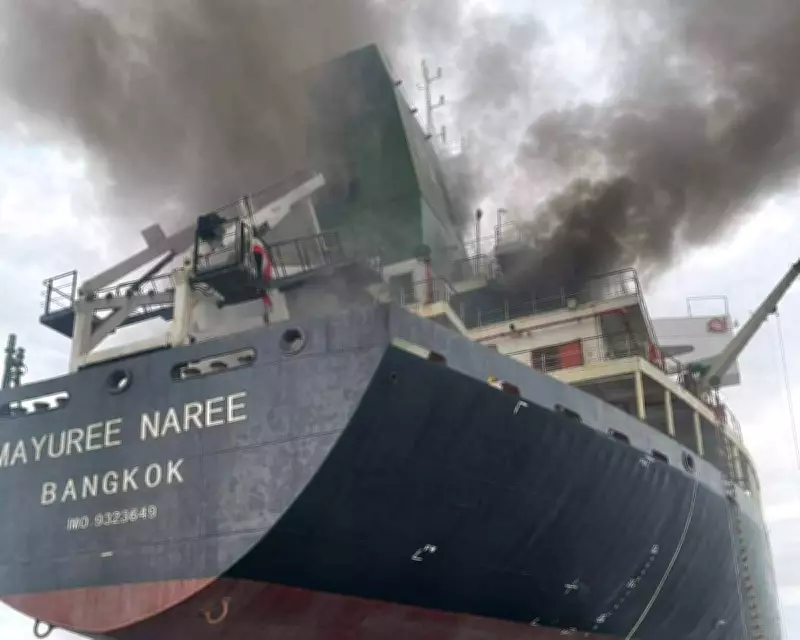
Three additional merchant ships sustained damage from unidentified projectiles in Gulf waters on Wednesday, bringing the total number of vessels reportedly hit since the conflict began to fourteen. Among the affected ships was the Thai-flagged cargo vessel Mayuree Naree, which was attacked while transiting the Strait of Hormuz—a critical chokepoint through which approximately one-fifth of global oil supplies normally flow.
Maritime security agencies reported that crew members were evacuated from a Thai-flagged bulk freighter following an explosion that caused a significant fire. A Japanese-flagged container ship and a Marshall Islands-flagged bulk carrier also sustained substantial damage during the attacks, further disrupting international shipping lanes.
Iranian Officials Warn of Prolonged Economic Warfare
Senior Iranian military commanders adopted a defiant stance, explicitly warning of a protracted "war of attrition" designed to create global economic chaos by throttling energy exports from the oil-rich region. Ebrahim Zolfaqari, spokesperson for Iran's military command, directly addressed the United States, stating: "Get ready for oil to be $200 a barrel, because the oil price depends on regional security which you have destabilised."
The Revolutionary Guard issued a stark declaration that Iran would prevent "a single litre of oil" from passing through the Strait of Hormuz until the United States ceased its bombing campaign against Iranian targets. This blockade has already resulted in hundreds of ships being trapped behind the narrow channel along Iran's coastline, creating the most severe disruption to global energy supplies since the oil shocks of the 1970s.
Regional Defense Systems Activated as Violence Spreads
Neighboring Gulf states activated their air defense networks in response to the escalating threat. Kuwait confirmed that its air defenses successfully intercepted and destroyed eight Iranian drones, while Saudi Arabia reported downing five drones heading toward the kingdom's Shaybah oil field. These defensive actions highlight the expanding geographical scope of the conflict beyond direct US-Iran-Israel engagements.
Iran's military claimed responsibility for attacking key strategic targets in Israel, including military intelligence headquarters, a naval base in Haifa, and critical radar installations. Additionally, Iranian forces targeted US military bases in Kuwait and Bahrain, demonstrating their capacity to strike across multiple theaters simultaneously.
Humanitarian Crisis Deepens Across the Region
The United Nations refugee agency reported alarming displacement figures, with at least 759,000 people internally displaced within Lebanon and more than 92,000 others crossing into neighboring Syria to escape the violence. In Lebanon alone, Israel's offensive against Hezbollah has resulted in 570 fatalities according to the country's health ministry, including 45 women and 86 children.
Iranian authorities acknowledged for the first time on Wednesday that the country's new leader had been wounded in airstrikes that killed his father, mother, wife, and son. Alireza Salarian, Tehran's ambassador to Cyprus, revealed: "I have heard that he was injured in his legs and hand and arm ... I think he is in the hospital because he is injured."
International Response and Economic Countermeasures
The International Energy Agency recommended releasing 400 million barrels of oil from strategic reserves—the largest such intervention in the organization's history—in an attempt to stabilize soaring global oil prices. World leaders expressed growing concern about potential economic turmoil that could anger voters worldwide as energy costs continue to climb.
During a Group of Seven nations meeting focused on the conflict and its economic consequences, US President Donald Trump offered mixed messages about the war's duration, initially calling it a "short-term excursion" that could end soon before proclaiming "we haven't won enough" during a single speech. On Wednesday, Trump told reporters that oil tankers passing through the Strait of Hormuz would "see great safety, and it's going to be very, very quickly," though he provided no specific details about how this security would be achieved.
Technological Warfare and Military Assessments
Admiral Brad Cooper, commander of US Central Command, revealed that American military forces are employing "advanced AI tools" to "sift through vast amounts of data in seconds" during combat operations. He emphasized that these technological systems enable faster decision-making but stressed that "humans will always make final decisions on what to shoot and what not to shoot and when to shoot."
Cooper assessed that US strikes, including one targeting a "large ballistic missile manufacturing facility," have caused Iran's ballistic missile and drone attacks to "drop drastically" in frequency and effectiveness. The US military has targeted more than sixty ships as part of its campaign to degrade Iran's military capabilities.
Civilian Impact and Domestic Repression
Tehran residents described adapting to nightly airstrikes that have driven hundreds of thousands of people to flee urban centers for the relative safety of rural areas. "There were bombings last night but I did not get scared like before. Life goes on," reported Farshid, a 52-year-old resident speaking by phone from the Iranian capital.
Iranian authorities intensified domestic repression in response to calls from US and Israeli officials for Iranians to overthrow the Islamist clerical regime. Ahmadreza Radan, Iran's police chief, warned that any protesters would be treated "as an enemy ... All our security forces have their fingers on the trigger," signaling a harsh crackdown on potential dissent.
The conflict has resulted in significant casualties on all sides, with Iranian officials reporting more than 1,300 civilian deaths since US and Israeli airstrikes began on February 28. In Israel, twelve people have been killed and hundreds injured by Iranian attacks and those launched by Hezbollah from Lebanon.




