
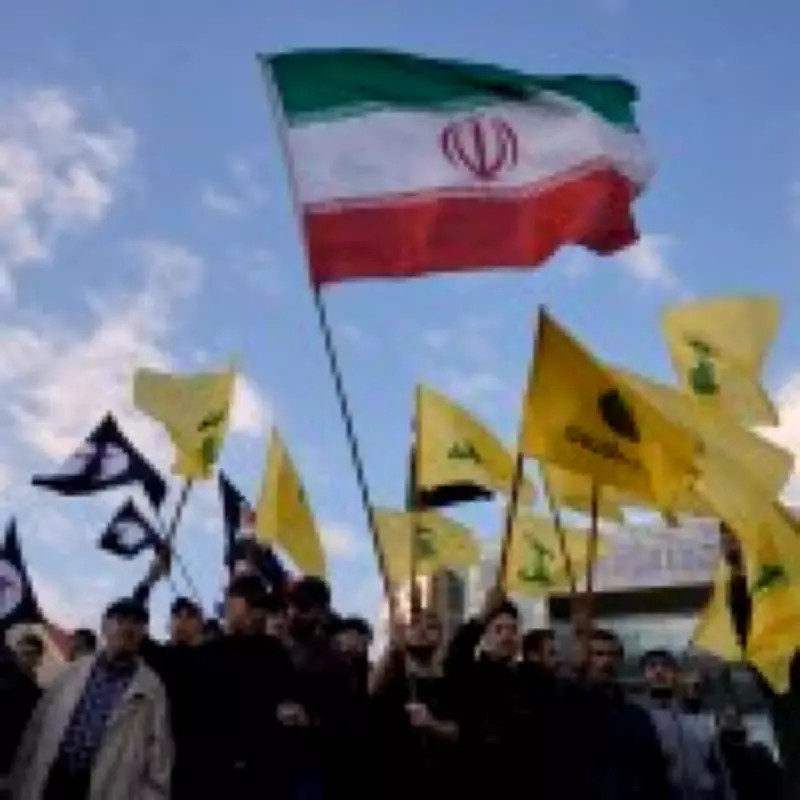
Hezbollah Escalates Regional Conflict with Attacks on Israel
Three days after coordinated US and Israeli strikes targeted Iran, the militant group Hezbollah has entered the fray, launching a significant rocket and drone assault on a military base in Haifa, northern Israel. This aggressive move has dramatically expanded the geographical scope of the ongoing conflict, pulling Lebanon directly into the hostilities.
Retaliation for Khamenei's Death
Hezbollah explicitly stated that today's strike was a direct retaliation for the killing of Ayatollah Ali Khamenei, Iran's supreme leader who held power for nearly four decades. In response, Israeli jets conducted retaliatory bombings on Lebanon's capital, Beirut, resulting in 31 fatalities and 149 injuries, with additional strikes reported in at least 17 southern towns.
Israeli Defence Minister Israel Katz issued a stern warning, declaring that Hezbollah would pay a "heavy price" for its aggression. This exchange raises critical questions about Hezbollah's nature, motivations, and the potential for further regional escalation.
The Origins and Power of Hezbollah
Hezbollah, which translates to "Party of God" in Arabic, is a Shi'ite Muslim militant organization founded in the 1980s with direct support from Iran's Revolutionary Guards. The group originally formed to combat Israeli forces occupying southern Lebanon during the country's prolonged civil war.
Recruiting primarily from Lebanon's Shi'ite communities, Hezbollah engaged in years of guerrilla warfare until Israel's withdrawal in 2000. The group's military capabilities expanded significantly over time, culminating in a 2006 cross-border raid into Israel that resulted in soldier kidnappings and triggered a five-week war.
During that conflict, Hezbollah launched thousands of rockets into Israel, though Lebanon suffered disproportionately with approximately 1,200 casualties compared to 158 Israeli deaths, most of whom were military personnel.
Military Expansion and Regional Involvement
Hezbollah's military influence grew further after intervening in Syria's civil war in 2012 to support President Bashar al-Assad against predominantly Sunni rebels. The organization currently maintains an estimated fighting force of 20,000 to 30,000 militants, with identities carefully protected, and possesses tens of thousands of rockets.
The group entered the Israel-Hamas conflict just one day after the October 7 attacks, bringing the two sides perilously close to all-out war before a fragile 2024 ceasefire. Israel has since eliminated most of Hezbollah's military and political leadership while conducting near-daily strikes on Lebanese territory.
Leadership and Political Influence
Following Israel's assassination of Hassan Nasrallah, Hezbollah appointed veteran political activist Naim Qassem as its new secretary-general. Qassem has been with the organization since 1991 and represents its continued political evolution.
Hezbollah formally entered Lebanese politics in 2005 after Syria's withdrawal from the country following the assassination of former Prime Minister Rafik al-Hariri. Through its political wing, the Loyalty to the Resistance Bloc, the group cultivates support among Shi'ites who view it as Lebanon's defender against Israeli aggression.
The organization achieved significant political influence when its allied Christian politician Michel Aoun became president in 2016. Hezbollah and its allies secured a parliamentary majority two years later, and though this majority was lost in 2022, the group continues to wield substantial power due to its military strength.
Current Involvement in the Iran Conflict
Hezbollah's recent projectile launches from Lebanon into Israel—which caused no casualties—were claimed by the group as justified self-defense. In an official statement, Hezbollah leadership asserted: "The resistance leadership has always affirmed that the continuation of Israeli aggression and the assassination of our leaders, youth and people gives us the right to defend ourselves and respond at the appropriate time and place."
The statement continued: "The Israeli enemy cannot continue its 15-month-long aggression without a warning response to halt this aggression and withdraw from the occupied Lebanese territories."
Lebanese Prime Minister Nawaf Salam has publicly distanced his government from Hezbollah's actions, describing the attacks as "irresponsible" and declaring, "We will not allow the country to be dragged into new adventures," without directly naming the militant group.
Expert Analysis and Regional Implications
Security experts note that Hezbollah's entry into the conflict was largely anticipated, given its status as one of Iran's primary proxy forces capable of fighting on Tehran's behalf. Dr. Katayoun Shahandeh from the University of London warned: "To what extent they will be successful is the real question. If neighbouring countries get fully involved, we are looking at the equivalent of World War III."
Israel's counterstrikes have focused on Dahiya, a residential area and Hezbollah stronghold on the outskirts of Beirut. Early reports indicate at least 20 fatalities in Beirut's suburbs, with 11 additional deaths in southern Lebanon from Israeli airstrikes that have continued throughout the day.
International Designations and Diplomatic Stance
Western nations, including the United States, officially designate Hezbollah as a terrorist organization. This classification is shared by US-allied Gulf Arab states such as Saudi Arabia. The European Union maintains a more nuanced position, classifying only Hezbollah's military wing as a terrorist group while not applying this designation to its political wing.
The escalating conflict raises serious concerns about broader regional destabilization, with Hezbollah's actions potentially drawing multiple nations into a widening confrontation that could have global security implications.




