Gulf States on Brink of Military Action Against Iran Following Attacks
Gulf Cooperation Council (GCC) member states are seriously considering abandoning their neutral stance in the ongoing conflict with Iran, following what they describe as "reckless and indiscriminate" missile and drone attacks on their territories. The United Arab Emirates has emerged as the leading voice advocating for collective self-defense measures against Tehran's repeated assaults.
Diplomatic Efforts Collapse Amid Escalating Violence
Iran had invested significant diplomatic resources over the past two years attempting to persuade Gulf nations that Israel represented the primary destabilizing force in the region. However, this carefully constructed diplomatic outreach has rapidly unraveled following recent attacks on civilian infrastructure across multiple Gulf states.
The GCC foreign ministers held an emergency video conference on Sunday, where they explicitly stated that "the option to respond to Iranian attacks" remains actively under consideration to protect regional security and stability. While the meeting stopped short of announcing specific military plans, the language marked a significant escalation in rhetoric from the traditionally cautious Gulf bloc.
Widespread Infrastructure Damage Across Region
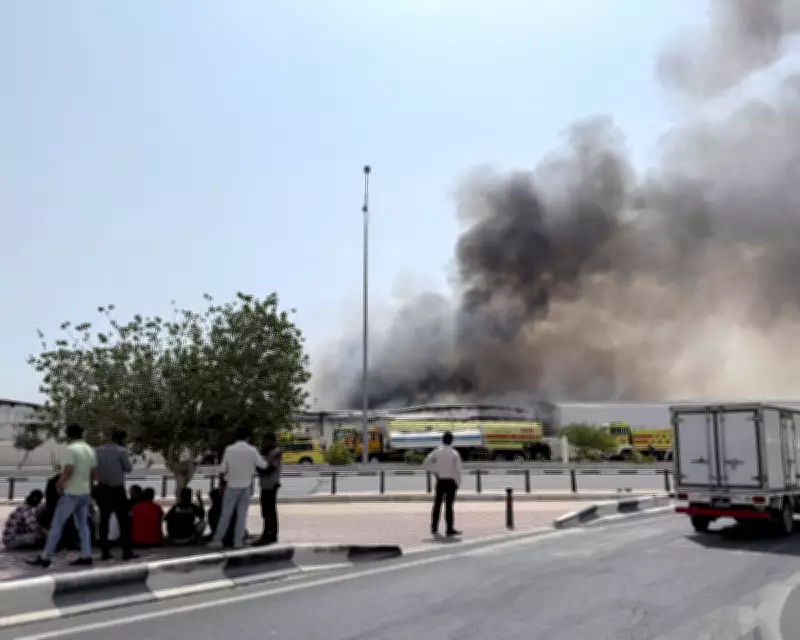
Recent attacks have targeted numerous civilian and economic facilities, including hotels, apartment complexes, and critical oil infrastructure. In Qatar, defense officials reported two drone strikes hitting energy facilities at the industrial city of Ras Laffan. Oman documented an attack on an oil tanker approximately 50 miles off the coast of Muscat, while Saudi Arabia experienced an Iranian drone strike on its Ras Tanura refinery.
Majed al-Ansari, Qatar's foreign ministry spokesperson, emphasized the gravity of the situation, stating: "This cannot go unanswered. A price has to be paid for this attack on our people." Qatar has historically maintained relatively cordial relations with Iran, making this strong statement particularly significant.
Strategic Calculations and Regional Realignments
Analysts suggest Iran's strategic objective appears to be maximizing economic disruption across Gulf states, potentially forcing them to pressure the United States to end hostilities. However, this approach has backfired dramatically, alienating nations that had previously advocated for diplomatic solutions.
Yasmine Fariouk, Gulf and Arabian Peninsula Project Director for the International Crisis Group, observed: "The Gulf countries now are at a point where there's a lot of anger at Iran. Many of them have invested heavily in détente with Iran and in mediation efforts, only to discover that Iran still views them as platforms for its larger conflict with the United States and Israel."
Military Statistics Reveal Scale of Attacks
The United Arab Emirates has provided detailed statistics about the Iranian offensive, reporting 165 ballistic missiles launched, with 152 intercepted and 13 falling into the sea. Additionally, authorities detected two cruise missiles that were destroyed, along with 541 Iranian drones, of which 506 were intercepted while 35 struck Emirati territory.
Kelly Grieco of the Stimson Center has estimated the financial cost to the UAE alone at approximately $2 billion, noting that intercepting drones costs roughly five times more than their deployment. The UAE has withdrawn its ambassador from Tehran in protest, claiming Iran has launched more attacks on its territory than on Israel itself.
Regional Unity and Diplomatic Fallout
In a rare display of regional unity, Bahrain, Iraq (including the Kurdistan region), Jordan, Kuwait, Oman, Qatar, Saudi Arabia, and the United Arab Emirates issued a joint statement condemning the attacks as "reckless and destabilizing," particularly criticizing the targeting of civilians and countries not engaged in active hostilities.
The crisis has even prompted a tentative reconciliation between regional rivals Saudi Arabia and the UAE, whose leaders spoke for the first time in months following their disagreements over conflicts in Sudan and Yemen. Saudi authorities have also vehemently denied reports that they encouraged U.S. and Israeli attacks on Iran, recognizing the domestic political complications such allegations would create given their public criticism of Israeli actions in Gaza.
Iran's Justifications and Internal Dynamics
Iranian officials have attempted to justify their actions as targeting U.S. military facilities within Gulf states. Ali Larijani, secretary of Iran's Supreme National Security Council, stated: "We do not intend to attack you. But when the bases of your country are used against us and the United States operates in the region with its own forces, we target them."
However, this justification has gained little traction among Gulf leaders, who view the attacks as disproportionate and revealing what they characterize as Iranian arrogance toward neighboring states. Iranian Foreign Minister Abbas Araghchi came close to apologizing for one specific attack on a U.S. facility in Oman, a country that has served as mediator in nuclear negotiations.
Rob Geist Pinfold, a defense studies lecturer at King's College London, suggested Iran is deliberately targeting Gulf states because "they're easier to hit than Israel" and because "these countries have less of an appetite for a fight, because at the end of the day, this is not their war."
The situation remains fluid, with Gulf states weighing their response options while Iran appears to have miscalculated the regional reaction to its military strategy. The coming days will likely determine whether diplomatic channels can be reopened or whether the region edges closer to broader military confrontation.