
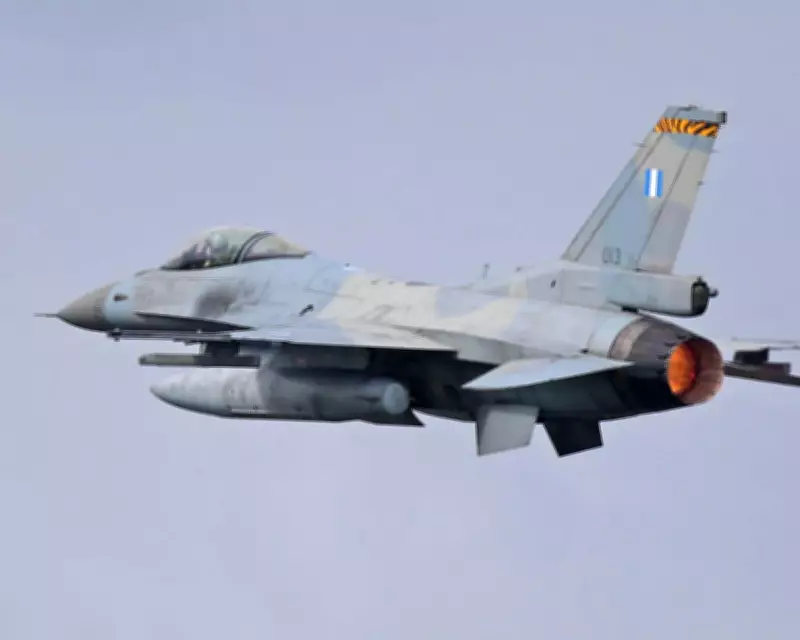
Greek Air Force Officer Detained on Espionage Charges for China
A senior Greek air force officer has been arrested and detained pending trial on suspicion of spying for China, in a case that highlights Beijing's alleged efforts to infiltrate Western military and security services. Squadron leader Christos Flessas, 54, appeared before a military judge on Tuesday, giving testimony for over eight hours before emerging from court surrounded by armed escorts.
Serious Charges and Alleged Activities
The officer faces a potential life sentence if found guilty of charges that include transmitting top-secret military information to Chinese intelligence. According to reports, Flessas had access to sensitive military data, including details about armed forces technologies currently under development. Greek media sources indicate he allegedly photographed and transmitted classified NATO documents using specialised encryption software provided by Chinese intelligence operatives.
Military sources suggest Flessas was recruited by Beijing last year, following an undeclared trip to China where he reportedly received tradecraft training. The recruitment is believed to have occurred after initial online contact, with the relationship developing further during a NATO conference in an unidentified European country.
Financial Motivations and Legal Proceedings
Flessas has reportedly stated that Chinese agents lured him with promises of financial rewards, offering between €5,000 and €15,000 for each transmission of information, with payments made in foreign currencies and through digital channels. Contact with the agents that would eventually lead to his handler was first established via the professional networking platform LinkedIn.
Following his court appearance, Flessas released a statement through his lawyer, saying: "Unknowingly and without intent, I became involved in something that developed in a way that became nightmarish, dangerous and illegal. In my testimony I did not try to justify myself or, in reality, even defend myself [...] I ask to be punished with a fair punishment."
International Intelligence Concerns
The case has drawn significant attention from international security experts. Nicholas Eftimiades, a retired US senior intelligence officer with considerable expertise in Chinese espionage operations, described the situation as "a wake-up call" to the Greek government and military. He emphasised that the case demonstrates China's desire and capability to penetrate the military communications infrastructure of Greece and other NATO member states.
"Nations spy against other militaries to give them an advantage in war," Eftimiades noted. "Despite all the proclamations of friendship and economic engagement, China continues to evolve as a threat to democracies worldwide." The expert, who authored the book "Chinese Espionage Operations and Tactics," highlighted that Chinese citizens are "required by law" to support their country's espionage efforts, making Western nations increasingly vulnerable to Beijing's intelligence operations.
Broader Context and Implications
This arrest follows similar espionage concerns across Europe. Last week, four individuals, including two Chinese nationals, were arrested in France on suspicion of intercepting and collecting military intelligence. In September, a former aide to a member of parliament for Germany's far-right Alternative für Deutschland party received a nearly five-year prison sentence for spying on behalf of China.
Plamen Tonchev, an expert in Sino-Greek affairs, described the situation as unprecedented, noting that Greece has traditionally been viewed as relatively China-friendly. "This is the very first time that China is so openly implicated in an espionage case of this kind," Tonchev observed, suggesting the episode is likely to damage Beijing's image in a country where it controls significant portions of the port of Piraeus.
Approximately 24% of imports to Europe from China are shipped through Piraeus' container terminals, representing a source of considerable pride for Beijing according to analysts. The Greek general staff issued a highly unusual statement following Flessas's arrest on 5th February, confirming there was "clear evidence of criminal offences under the military penal code." Greek authorities were reportedly alerted to the security breach by the CIA regarding the extent of the information leak.
Military Background and Current Situation
At the time of his arrest, Flessas commanded a battalion in the Athenian suburb of Kavouri that specialised in telecommunications training. He had previously served as a NATO evaluator in information systems, giving him access to sensitive military communications infrastructure. Media reports suggest the Hellenic air force officer is cooperating fully with authorities, though well-placed insiders express concerns that other military officials might be implicated in the espionage network.
One source indicated that the armed forces are publicising the case so prominently as a warning to others who might consider similar activities. The situation represents a significant security challenge for Greece and its NATO allies, highlighting the ongoing threat posed by state-sponsored espionage activities targeting Western military and intelligence capabilities.




