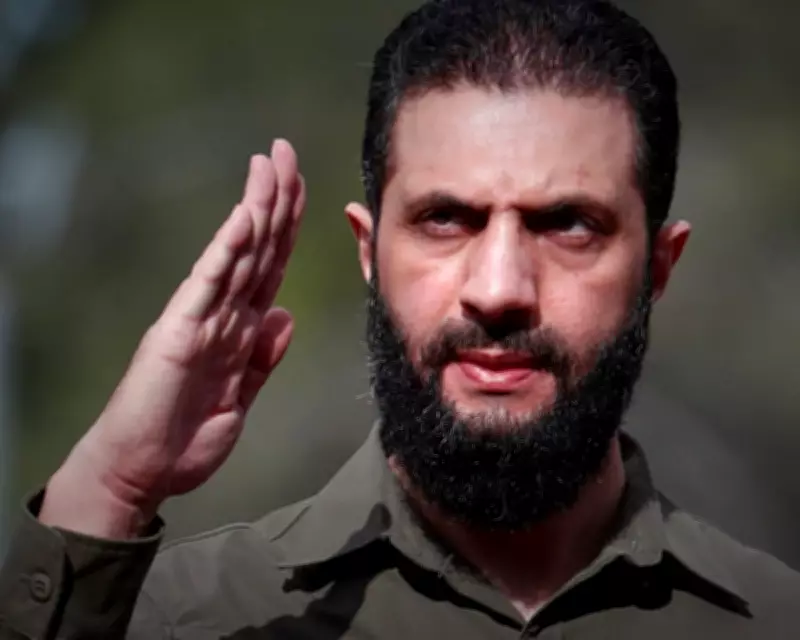
A United Nations report released on Wednesday has revealed that five separate plots to assassinate Syria's President Ahmed al-Sharaa and top government ministers were successfully foiled last year. The detailed document, which focuses on the activities of the Islamic State (IS), highlights the ongoing security threats facing the new Syrian leadership following the ousting of Bashar al-Assad in December 2024.
Targeted Attacks by IS Front Groups
According to the UN findings, President Sharaa was specifically targeted in two distinct assassination attempts. These plots were orchestrated by Saraya Ansar al-Sunnah, an IS front group that was also responsible for a devastating bombing at a church in Damascus last summer. The first attempt occurred in northern Aleppo, while the second took place in southern Daraa, demonstrating the group's operational reach across different regions of Syria.
A separate regional intelligence official confirmed last autumn that Sharaa had faced multiple assassination attempts. These plots were thwarted after Syria's security establishment received crucial intelligence from a neighboring country, enabling them to intervene before the attacks could be executed.
IS Recruitment and Propaganda Efforts
The UN report notes that IS has significantly intensified its recruitment efforts since the fall of the Assad regime. The group has been actively styling President Sharaa, who previously led an Islamist rebel faction, as an apostate. As part of this propaganda campaign, IS published photographs showing Sharaa meeting with former US President Donald Trump at the White House in November. These images were presented as evidence that Sharaa had abandoned his Islamist roots and turned toward Western influences.
The report emphasizes that IS is "actively exploiting security vacuums and uncertainty" within Syria, with the primary objective of destabilizing the new government in Damascus. The terrorist organization operates through various front groups throughout the country, providing them with greater flexibility and operational capacity.
Ongoing Security Challenges
Islamic State continues to present a significant security challenge in both Iraq and Syria. Analysts have observed that the group has regrouped in recent months, benefiting from security vacuums and an abundance of weaponry that flooded Syria after Assad's army abandoned its positions. The UN estimates that IS currently maintains approximately 3,000 fighters across the two countries, with the majority operating within Syrian territory.
In response to these threats, Damascus joined the international coalition to defeat IS in November. The Syrian government has recently assumed control of several prisons and camps holding suspected IS fighters and their relatives in north-east Syria. Among these facilities is the al-Hawl camp, which houses nearly 25,000 relatives of suspected IS fighters. Security analysts have warned that this camp represents a "ticking timebomb" for radicalization and future terrorist activities.
Recent Attacks and Regional Implications
Since the fall of the Assad regime, IS has carried out numerous attacks within Syria. One particularly notable incident occurred in mid-December, when an attack targeting both US and Syrian soldiers resulted in the deaths of three Americans and left three Syrians wounded. These ongoing security incidents underscore the persistent threat that terrorist organizations pose to regional stability and international security interests.
The UN report concludes that while the foiled assassination plots represent significant security successes for the Syrian government, the underlying conditions that enable terrorist recruitment and operations remain largely unaddressed. The international community continues to monitor the situation closely as Syria navigates its post-Assad political landscape while confronting persistent security threats from extremist organizations.