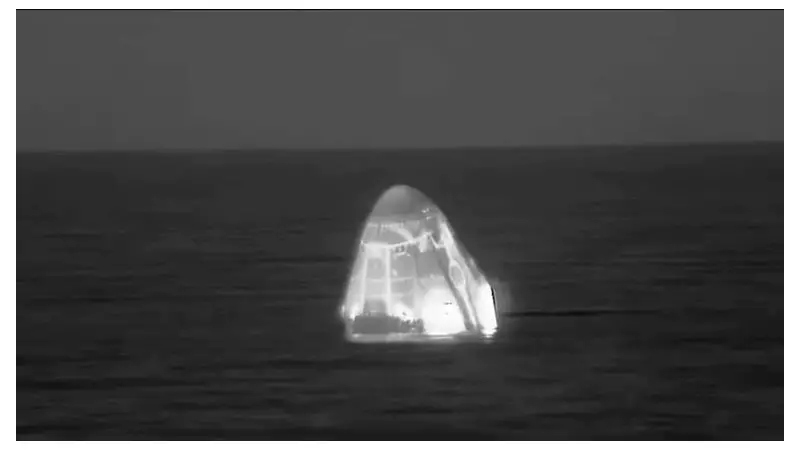
In an unprecedented move for orbital operations, NASA has executed the first-ever medical evacuation from the International Space Station (ISS), cutting a mission short by a month to bring a crew member with a "serious medical condition" back to Earth.
Emergency Splashdown in the Pacific
The four astronauts of the Crew-11 mission made a dramatic, middle-of-the-night return, with their SpaceX Crew Dragon capsule, Endeavour, parachuting into calm seas off the coast of San Diego. The splashdown occurred at approximately 12.45am Eastern Time (8.45am UK time) on Thursday, 15 January 2026.
The decision to return early was taken only about a week prior, after the unidentified astronaut developed the medical issue on 7 January 2026. The situation was deemed serious enough to cancel a planned spacewalk and initiate a rapid departure. The crew undocked from the ISS and made it back to Earth in less than 11 hours with assistance from SpaceX.
Following the successful splashdown, the crew were transported to a hospital for standard overnight medical checks. NASA Administrator Jared Isaacman confirmed the four were "safe" and in "good spirits", while emphasising that the "crew member of concern is doing fine".
Privacy and Precision in the Response
Officials have steadfastly refused to identify which astronaut required evacuation or to detail the nature of the medical condition, citing strict medical privacy protocols. The affected individual is one of the four Crew-11 members: NASA astronauts Zena Cardman and Mike Fincke, Japan's Kimiya Yui, and Russia's Oleg Platonov.
NASA's Joel Montalbano highlighted the meticulous planning behind the emergency return, stating the team "meticulously went through all the processes". He also noted that despite the abbreviated mission, the crew managed to complete 140 experiments during their time aboard the orbiting laboratory.
NASA's Chief Health and Medical Officer, James Polk, provided a crucial detail, indicating the emergency did not involve "an injury that occurred in the pursuit of operations", ruling out an accident during a spacewalk or other station activity.
Implications for the International Space Station
The early departure has left the ISS operating with a reduced crew. A skeleton crew of three – NASA astronaut Christopher Williams and two Russian cosmonauts – will maintain essential services until reinforcements arrive.
The next crew, designated Crew-12, is scheduled for launch in mid-February 2026 to begin a standard six-month term. This historic medical evacuation marks a significant moment in the two-decade history of continuous human habitation on the ISS, proving the capability for rapid emergency response in space.