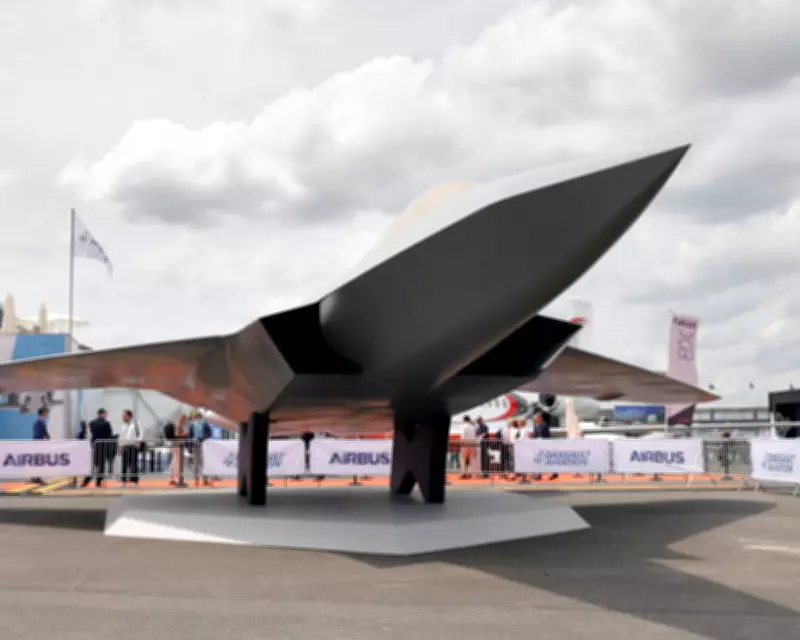
Europe's Next-Generation Fighter Jet Project on the Brink of Collapse
The €100 billion Future Combat Air System (FCAS), Europe's flagship defense initiative, is teetering on the edge of failure due to an escalating corporate dispute between Dassault Aviation and Airbus. Dassault's chief executive, Éric Trappier, issued a stark warning that the project may soon be "dead" if Airbus's defense arm, representing Germany and Spain, does not agree to cooperate on workload sharing.
A Deepening Rift Over Leadership and Workload
During a presentation of Dassault's financial results, Trappier emphasized via an interpreter that Airbus appears unwilling to work with the French warplane maker. "Airbus doesn't want to work with Dassault, full stop. I take note. I never said I didn't want to work with Airbus or with the Germans," he stated. He added firmly, "If Airbus maintains its position of not wanting to work with Dassault, the matter is dead."
The core of the conflict revolves around who will lead the development of the jet component within FCAS. Dassault asserts it should take the primary role, with Airbus assuming a secondary position. This disagreement highlights broader challenges in European defense cooperation, as the region seeks to rearm amidst global tensions.
Political and Technical Divisions Complicate Matters
German Chancellor Friedrich Merz recently commented that the planned warplane might not meet Germany's needs, noting that Germany does not require a nuclear-capable fighter like France does. Merz framed this as a technical rather than political issue. Trappier responded by acknowledging Merz's statements but pointed out that French authorities believe operational needs between the two nations are similar and that agreement exists at an operational level.
Airbus's chief executive, Guillaume Faury, has proposed splitting the scheme into two separate warplanes to salvage other components of FCAS. This suggestion adds another layer of complexity to the already fraught negotiations.
Imminent Decisions and Alternative Options
France, Germany, and Spain are poised to make a critical decision soon: either advance to the next phase of FCAS or abandon the jet component while proceeding with other elements like autonomous drones and a combat communications cloud. There is speculation that Germany might exit FCAS entirely in favor of Britain's rival Global Combat Aircraft Programme (GCAP), also known as Tempest.
GCAP, developed with Italy and Japan, is scheduled to debut in 2035, five years earlier than FCAS. Tufan Erginbilgiç, CEO of Rolls-Royce, which is building engines for the British jet, expressed openness to Germany joining their initiative, potentially offering an alternative path for German involvement in next-generation air combat systems.
The Broader Implications for European Defense
Announced nearly nine years ago, FCAS was intended to showcase European unity and technological prowess in defense. However, the ongoing dispute between Dassault and Airbus underscores persistent difficulties in achieving effective collaboration across national borders. As deadlines loom and tensions rise, the future of this ambitious project remains uncertain, with significant implications for Europe's strategic autonomy and defense capabilities in an increasingly volatile global landscape.