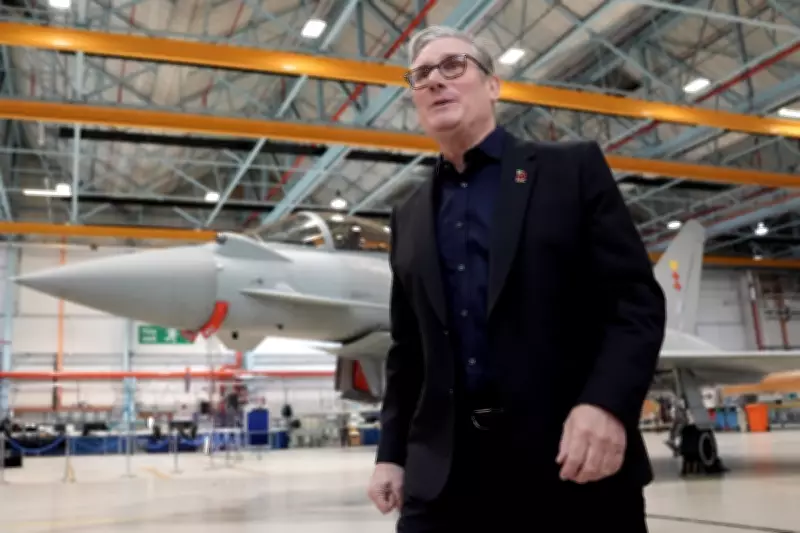
Defence Stocks Rally as Starmer Calls for European Military Spending Acceleration
Shares in Britain's leading defence companies experienced significant gains on Monday morning following Prime Minister Sir Keir Starmer's call for Europe to "step up" defence spending commitments. The market movement came amid growing speculation about potential acceleration of the government's defence investment timeline.
Defence Contractors See Substantial Gains
Babcock International Group, which provides critical support for the UK's nuclear submarine fleet along with naval, land, and air operations, surged nearly four percent in early trading to reach 1,346.00p. The company's substantial role in national defence infrastructure made it particularly responsive to the Prime Minister's statements.
Other major defence and aerospace suppliers followed this upward trend. Melrose Industries, a key aerospace supplier, soared 3.5 percent to 664.60p, while defence giant BAE Systems climbed nearly three percent to 2,023.00p. Even Rolls-Royce Holdings, with its significant defence aerospace division, jumped just below one percent to 1,280.00p.
Potential Acceleration of Defence Spending Timeline
The market reaction followed reports suggesting Downing Street is considering a substantial increase to defence spending commitments. Prime Minister Starmer had previously established defence spending targets last year, responding to pressure from former US President Donald Trump for NATO members to increase their contributions.
The government had committed to spending 2.5 percent of GDP on core defence by April 2027, with plans to increase this figure to three percent by the end of the next Parliament. However, recent reports from the BBC indicate the Prime Minister is exploring proposals to reach the three percent target much sooner, potentially by the end of the current Parliament, which could extend until 2029.
Starmer Emphasises Russian Threat and European Responsibility
When questioned about these reports on Monday, Prime Minister Starmer stated: "We want a just and lasting peace, but that will not extinguish the Russian threat, and we need to be alert to that, because that's going to affect every single person in this room, every single person in this country, so we need to step up."
The Prime Minister continued: "That means on defence spending, we need to go faster." While not confirming specific spending increases, Starmer emphasised that Europe needs to "step up when it comes to defence and security."
Political and Military Pressure for Increased Defence Investment
The government's comprehensive 'defence investment plan,' which outlines detailed spending increases for defence, remains unpublished after its initial announcement in June 2025. This delay has occurred alongside growing financial pressures within the Ministry of Defence.
Last month, reports from The Times and The Sun suggested the Ministry of Defence faces a substantial funding gap of £28 billion over the next four years. Political pressure has intensified from multiple directions, with Conservative leader Kemi Badenoch and Liberal Democrat leader Ed Davey both demanding the government accelerate its deadline for increasing defence expenditure to three percent of GDP.
Military Leaders Issue Joint Warning on European Security
Over the weekend, Sir Richard Knighton, the Chief of the Defence Staff and Air Chief Marshal, joined his German counterpart in issuing a powerful joint statement calling for a "step change in our defence and security." The senior military leaders warned that Europe "must now confront uncomfortable truths about its security" following Russia's "decisive shift westward."
In their published statement in The Guardian, the military leaders wrote: "There is a moral dimension to this endeavour. Rearmament is not warmongering; it is the responsible action of nations determined to protect their people and preserve peace." They concluded with a stark warning: "Strength deters aggression. Weakness invites it."
The combination of political statements, military warnings, and market reactions creates a complex picture of growing pressure for increased defence investment across Europe, with the UK positioned at the centre of these discussions about security priorities and financial commitments.