Cypriot Village on Edge After RAF Base Drone Strike Raises Safety Concerns
For generations, residents of Akrotiri village in Cyprus have coexisted with the nearby RAF Akrotiri military base, enduring the constant roar of aircraft, military vehicle traffic, and routine war exercises. However, the events of the past two days have shattered that uneasy peace, plunging the community into fear and uncertainty following a drone strike on the base.
"We Never Imagined This": Village Vice-Mayor Expresses Shock
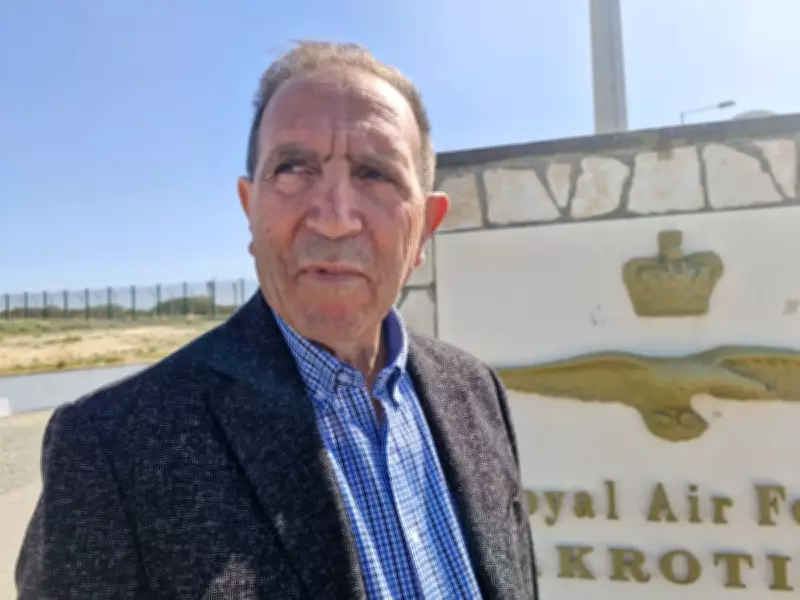
Giorgos Konstantinos, Akrotiri's vice-mayor and a retired lawyer, stood before the main gate of RAF Akrotiri on Tuesday, expressing disbelief at the unprecedented situation. "We live here, we've got used to all the exercises, we've got used to all the planes, but what we never imagined is this," he stated. "Who would have thought of a drone flying through our skies, exploding on the other side of that fence and forcing all of us to leave?"
The danger of residing adjacent to a British military installation during regional conflict became starkly real when an unmanned one-way attack drone crashed into the base's runway in the early hours of Monday, triggering emergency sirens.
Deserted Streets and Government-Ordered Evacuation
By Tuesday, the village of low-level villas and houses appeared almost completely abandoned. Police vehicles were stationed in front of the local church, streets stood eerily empty, and the school remained locked—clear evidence of a government-mandated evacuation overseen by civil defense forces.
"There are over 1,000 of us in our community, but today not more than 30 have remained," Konstantinos revealed. "They've all gone, either to hotels, the nearby monastery or relatives in Limassol. People don't feel safe when there's so much uncertainty."
The vice-mayor raised a critical question shared by many residents: "Even the British can't answer the question everyone here is asking: why, when there are so many air defense systems on that base, was the drone not detected earlier?"
Geopolitical Tensions and Regional Proximity
Cyprus, the European Union's easternmost member state, lies merely a 20-minute flight from Lebanon, where Cypriot officials believe the Shia militia group Hezbollah launched the Shahed-type drone along with two others intercepted later on Monday morning.
Michalis Georgiou, a 25-year-old local who works on the bases, described the terrifying experience: "What happened on Sunday was terrifying. I was asleep, then I heard the sirens, then suddenly my parents and I were packing and fleeing. I'm not at all sure I am going to stay. The same thing could happen again, right?"
Georgiou acknowledged the peculiarity of the British base's presence on soil retained by Britain after Cyprus gained independence in 1960. The British-controlled territory spans 99 square miles in southern Cyprus, featuring rugged fields and antennas that signal its function as a listening post and spy station.
Growing Protests and Calls for Neutrality
As sunset approached on Tuesday, hundreds gathered on Limassol's seafront to protest against the US-Israeli offensive against Iran and demand the removal of military installations increasingly viewed as hazardous for Cyprus.
Tasos Kosteas, head of the Pancyprian Peace Council that organized the demonstration, emphasized: "Ours is a small country that must remain neutral. The bases are clearly a danger to Cyprus, because it is the bases that Iran is targeting. Our basic message tonight is that the interests of the US and Israel are not the same as ours."
Kosteas added pointedly: "The big powers only care about Cyprus because of its geostrategic importance, they don't care about its people."
Historical Context and Diplomatic Tensions
This week's strike marks the first attack on a British military installation in Cyprus since 1986. Some Cypriot officials link it to UK Prime Minister Keir Starmer's decision to permit the facilities to be used defensively by the United States, though the UK maintains the attack occurred before this policy announcement.
On Monday, Nicosia took the unusual step of openly criticizing London for what it perceived as a failure to clarify the base's role. President Nikos Christodoulides stated clearly that Cyprus has no intention of participating in any military operations.
Military Buildup and Extended Evacuation
Concerns that Cyprus could be drawn into a widening regional conflict—while simultaneously holding the EU presidency—have prompted increased military deployments to the island. France followed Greece this week in sending military support, including state-of-the-art frigates, F-16 fighter jets, and anti-missile and anti-drone systems.
This military reinforcement coincides with announcements that Akrotiri and several other areas would remain under evacuation orders for several additional days.
Demands for Permanent Safety Measures
Vice-Mayor Konstantinos concluded with a new demand from the village: "We think there should be a permanent shelter here. A refuge point where we would feel safe. It's not a demand that we've had before, but now I think everyone would agree it's become a priority."
The drone strike has fundamentally altered the relationship between Akrotiri village and the military base that has been its neighbor for generations, raising urgent questions about security, sovereignty, and the risks of hosting foreign military installations in an increasingly volatile region.