The Guardian's business and Toronto correspondents have detailed the high-octane experience of covering Donald Trump's tumultuous trade wars, which have been marked by erratic escalations and sudden climbdowns over the past 15 months. The reporting effort has focused on helping audiences understand both the mechanics of tariffs and their real-world consequences, from mortgage costs to grocery prices.
Navigating a 'Whipsaw' Policy Environment
Leyland Cecco, the Guardian's reporter in Toronto, has been at the forefront of the Canada-US trade saga. "We've been trying to help people understand the mechanics of how the tariffs work, but there's also been the whipsaw nature of it all," Cecco said. "We've had to shelve so many stories because US trade policy has changed within a couple of hours."
Richard Partington, the Guardian's senior economics correspondent in London, noted the multi-speed nature of the story. "You're operating in a multi-speed world and you have to be as fleet-footed as possible," Partington said. Each policy shift triggers immediate reactions in financial markets, while the impact on businesses and livelihoods takes longer to become clear.

Keeping Audiences Informed Amid Constant Change
Dominic Rushe, the Guardian's US business editor in New York, emphasized the uncertainty reporters face. "We never know whether President Trump is going to follow through with these things or not, so we just have to be open to the fact that the story is constantly evolving," Rushe said. "But we've also shown readers that they need to pay attention to these things. Some people might have previously thought of economics and business stories as potentially being a bit dry, but they have a material impact on everyone."
The reporting has aimed to ground abstract trade concepts in lived experience. "We've tried to unpack what it all means for people's mortgages or business borrowing costs, or whether it's likely to lead to job losses or higher costs of a weekly shop," Partington said. An example was a recent article by Rachel Leingang about residents and business owners along the US-Canada border.
Canada's Patriotic Response and Political Shift
Trump's attacks on Canada have triggered a patriotic response from Canadian businesses and consumers, adding a cultural dimension to the coverage. "The sense of national unity we've had here is profound," Cecco said. "As is the sense of Canadian identity and patriotism. So business stories are intersecting with the political and cultural in ways I've never seen before."
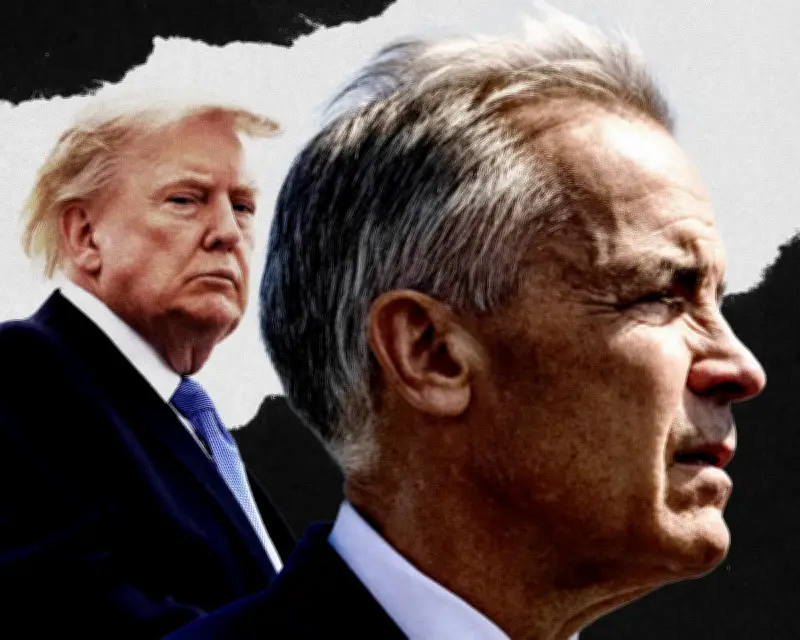
Prime Minister Mark Carney has emerged as one of the few global leaders willing to stand up to Trump, and the trade war has reshaped Canada's political landscape. "I don't think there's ever been such a dramatic shift in the political fortunes of the two main parties in this country's history in such a short period of time," Cecco added.
Balancing Newsworthy Antics and Real Impacts
Trump's insults and stunts, such as signing an order to rename Lake Ontario as Lake America, have required careful handling. "That's something that we wrestle with constantly," Rushe said. "The fact of the matter is that he's the president of the United States, so when he does this name-calling it's newsworthy and we have to report it. But at the same time it's obvious that he's trying to distract us from bigger issues."
The coverage also addresses broader critiques of globalisation. "There are issues with globalisation as it has developed and there are winners and losers from it," Partington said. "It has enabled the growth of multinational corporations and the hollowing out of middle-class and blue-collar manufacturing jobs. So we're alive to those issues, too."
The Guardian's global network has enabled real-time coverage of tariff ripple effects worldwide. "Our colleagues in the US will take the lead writing about an initial announcement from the White House, then our colleagues in Australia and Asia will write about the repercussions for Asian financial markets, which are the first to respond," Partington said. "And then we'll take over in London when it comes to the repercussions in Europe, and we pass the baton back across the Atlantic again – the story just keeps running."