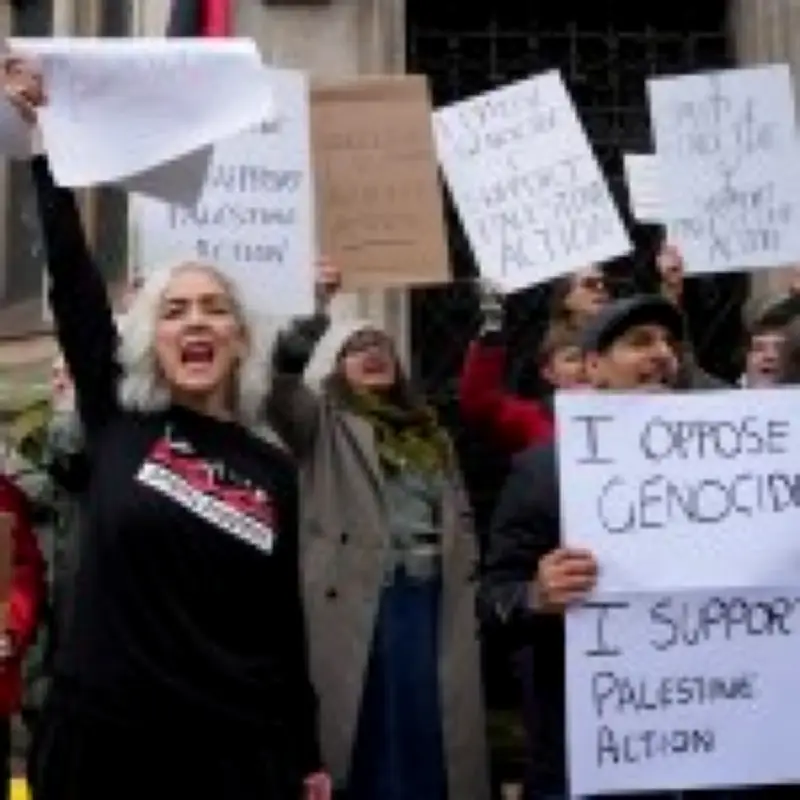
The Court of Appeal has ruled that the government's decision to proscribe Palestine Action as a terrorist organisation is lawful, overturning a previous High Court ruling. Then-Home Secretary Yvette Cooper announced the proscription in June last year after two planes at an RAF base in Oxfordshire were damaged with red paint.
Legal Challenge Overturned
The group's co-founder, Huda Ammori, challenged the decision, and the High Court ruled in February that it was unlawful. However, the Court of Appeal's five judges disagreed, stating that the government 'struck a fair balance' with its action. Lady Chief Justice Baroness Carr emphasised that Palestine Action 'overtly promotes unlawful violence amounting to terrorism' and operates covertly with secret cells, unlike civil disobedience groups like the suffragettes.
Plans for Further Appeal
Ms Ammori announced plans to take the case to the UK Supreme Court and the European Court of Human Rights if necessary, arguing that the proscription criminalises peaceful political protest and violates fundamental rights protected under the Human Rights Act.
Government Response
Home Secretary Shabana Mahmood, who succeeded Cooper last September, stated that Palestine Action is not an ordinary protest group and that its actions are inconsistent with democratic values. She stressed that lawful protest for the Palestinian cause remains a fundamental right, but supporting a proscribed terrorist group is a criminal offence.
Related Convictions
The Court of Appeal decision follows the jailing of four activists from the group for a raid on Elbit defence firm's factory in Bristol, causing £1.2 million in damage. Mr Justice Johnson described the raid as an 'act of terrorism'. Samuel Corner received eight years and eight months for injuring a police officer, while Charlotte Head, Leona Kamio, and Fatema Rajwani received sentences of six years, six years, and five years and eight months, respectively.