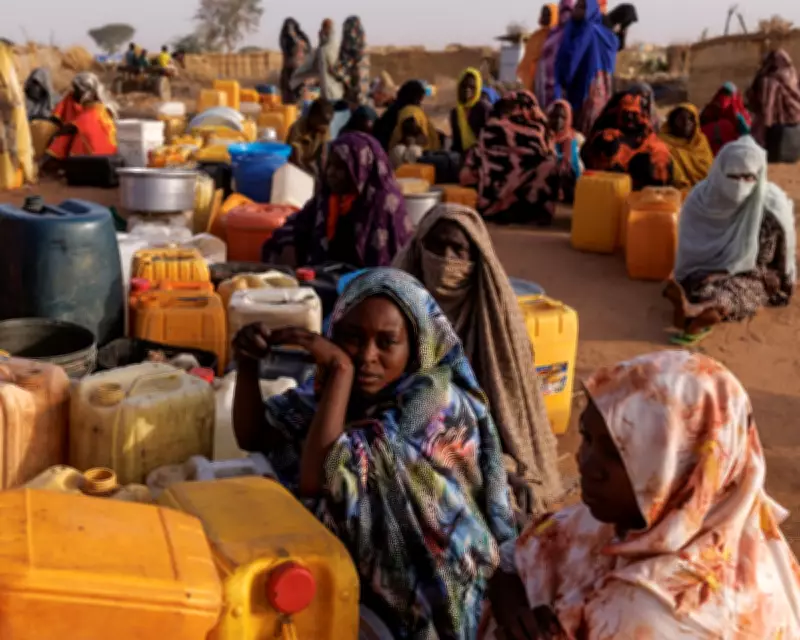
Internal displacements caused by conflict or violence reached a record high in 2025, surpassing disaster-driven displacements for the first time, according to a report by the Internal Displacement Monitoring Centre (IDMC).
Record Numbers of Conflict-Driven Displacements
The IDMC report reveals that by the end of 2025, there were 32.3 million conflict-driven internal displacements worldwide. This figure is 60% higher than the previous year and, for the first time since data collection began in 2008, exceeds displacements caused by natural disasters, which totaled 29.9 million in 2025.
Jan Egeland, secretary general of the Norwegian Refugee Council, described the figures as a “sign of a global collapse” in the basic protection of civilians. “Countless families are returning to destroyed homes and disappearing services – or cannot return at all. From DR Congo and Sudan to Iran and Lebanon, we see millions more displaced on top of the previous record numbers driven out of their homes,” he added.
Understanding Internal Displacements
Internal displacements refer to each new instance where a person is forced to flee within their own country. The same individual can be displaced multiple times. The IDMC’s Global Report on Internal Displacement also shows that the number of people displaced during 2025 or earlier who remain displaced is still high.
In total, 82.2 million people were displaced in 2025, the second-highest figure after the historical peak of 83.5 million in 2024. This marks the first decrease in the number of people forced to flee since data collection began 20 years ago. The total number of internal displacements was 62.2 million in 2025.
The decline in the number of displaced people is attributed to returns in parts of Sudan, the Democratic Republic of the Congo (DRC), and Syria, as well as a lack of data availability. However, the report warns that this decline “should not be mistaken for progress,” as behind the numbers “lie hundreds of thousands of forced returns, destroyed infrastructure and deepening social and environmental pressures” that make permanent solutions unrealistic.
Conflict and Violence as Primary Drivers
More than 83% of people displaced in 2025 were forced to flee due to conflict and violence, with the remainder displaced by natural disasters. Nearly half of all conflict-driven displacements occurred in Sudan, Colombia, Syria, Yemen, and Afghanistan. Sudan accounted for the largest number of internally displaced people for the third consecutive year.
The record number of conflict-driven displacements results from new international conflicts and intensified existing ones, making it impossible for people to return home. In 2025, 46% of violence-induced internal displacements were linked to international armed conflicts, nearly double the figure recorded in 2024. Iran and the DRC accounted for two-thirds of all conflict-driven internal displacements in 2025.
Tracy Lucas, director of the IDMC, emphasized: “When you’re talking about the displacements themselves – the movements of people – we have to recognise that in some cases, people are continually displaced. They’re not just displaced once, they could be displaced two or three times … Yet the systems meant to protect them are being dismantled.”