
Chilean Court's Controversial Acquittal in Police Brutality Case
In a decision that has sent shockwaves through Chilean society, a Santiago court has unanimously acquitted Lieutenant Colonel Claudio Crespo, the riot police officer who fired the rubber-coated bullets that permanently blinded psychology student Gustavo Gatica during nationwide protests in November 2019. The verdict, delivered after a fourteen-month trial, invoked the principle of legitimate defense to absolve Crespo of any wrongdoing, despite the court acknowledging that his shots directly caused Gatica's blindness.
A Life-Altering Moment in Plaza Italia
On the evening of November 8, 2019, as Chile's capital Santiago was engulfed in massive demonstrations against social inequality, twenty-one-year-old University of Chile student Gustavo Gatica participated in protests at Plaza Italia. While thousands demonstrated peacefully, violence erupted on a side street where riot police confronted protesters. Gatica, who had thrown a stone toward police and was bending to pick up another, was struck in the face by two rubber-coated bullets fired by Lt Col Crespo. After nearly two weeks of surgeries, doctors confirmed the devastating outcome: Gatica would never regain his eyesight.
Divergent Reactions to the Verdict
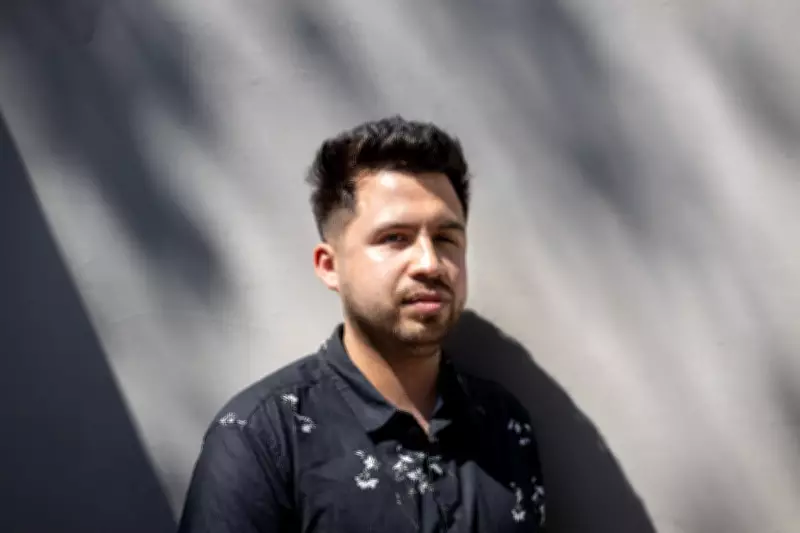
Outside the courthouse, a visibly disappointed Gatica told reporters, "I am not happy with the outcome. I think it is relevant for the good of democracy that these cases do not result in impunity." The recently elected congressman vowed to appeal the decision to international courts if necessary and raise the issue in Chile's legislative body.
In stark contrast, Crespo emerged from the courtroom grinning behind dark sunglasses, raising his fists triumphantly. He subsequently used social media to mock Gatica, provoking widespread condemnation. The former carabinero, who was stood down from the force in June 2020 for breaking protocols and arrested two months later, has become a symbol for Chile's far-right movement.
Broader Implications for Human Rights
Human rights organizations have expressed grave concerns about the verdict's implications. Rodrigo Bustos, director of Amnesty International in Chile, warned, "This doesn't just affect Gatica, his family and those close to him; it sends the signal that when these acts are perpetrated, nothing will happen – and that this will be legitimized by the justice system. When there is impunity, it allows more human rights violations to occur in the future."
Evidence presented during the trial revealed disturbing details about Crespo's conduct that evening. Audio from body cameras worn by his colleagues captured him taunting protesters, including telling one young man, "We'll take your eyes out ... you hear me?" When informed a protester was on fire, Crespo responded, "Let him burn." That night alone, he fired more than two thousand rubber-coated bullets into crowds of demonstrators.
Political Context and Changing Public Perception
The verdict arrives as Chile prepares to inaugurate its most conservative president since General Augusto Pinochet – far-right leader José Antonio Kast, who takes office in March. Kast has maintained a vitriolic stance toward the 2019 protests, dismissing them as "an outburst of violence against the poorest in Chile" and a "great economic disaster," while largely ignoring the peaceful demands that seventy-two percent of Chileans believe remain unaddressed.
Public perception of the 2019 protests has shifted dramatically. While polling in July 2020 indicated two-thirds of Chileans viewed the protests positively for the country, by October 2023, sixty-three percent of respondents considered them negative. Crespo has been embraced by Chile's far-right as a martyr for public order, receiving rapturous applause when brought on stage during a presidential campaign event just three months ago.
Systemic Failures and Legal Erosion
The Gatica case represents just one of more than eleven thousand five hundred cases brought for human rights violations during the 2019 protests, of which only two hundred nineteen have resulted in prosecutions. According to Chile's public prosecutor, four hundred sixty-four Chileans suffered eye injuries during the unrest, with additional cases of homicides, beatings, torture, and sexual violence committed by security forces. Tragically, nine victims have taken their own lives as reparations and psychological support have been slow or nonexistent.
Legal experts note that legislation governing protests has been significantly eroded since 2019. Despite President Gabriel Boric's 2022 manifesto commitment to address laws hindering assembly rights, a 2023 bill was passed that weights the law in favor of security officers in cases of legitimate use of force – legislation applied retrospectively to absolve Crespo.
Judith Schönsteiner, a researcher at Universidad Diego Portales's human rights center, observed, "Only in about ten percent of the cases did we even have an identified aggressor. Yet we still don't have anyone found guilty in this case. It seems curious that legitimate defense has been applied here in favor of the officer."
As Chile stands at a political crossroads with the impending inauguration of a far-right government, human rights advocates fear the Crespo verdict establishes a dangerous precedent. Bustos concluded grimly, "If people decide to protest peacefully in Chile for any legitimate reason, there could be violations of their human rights as the legal framework is in a worse state than in 2019. The outlook is not good."




