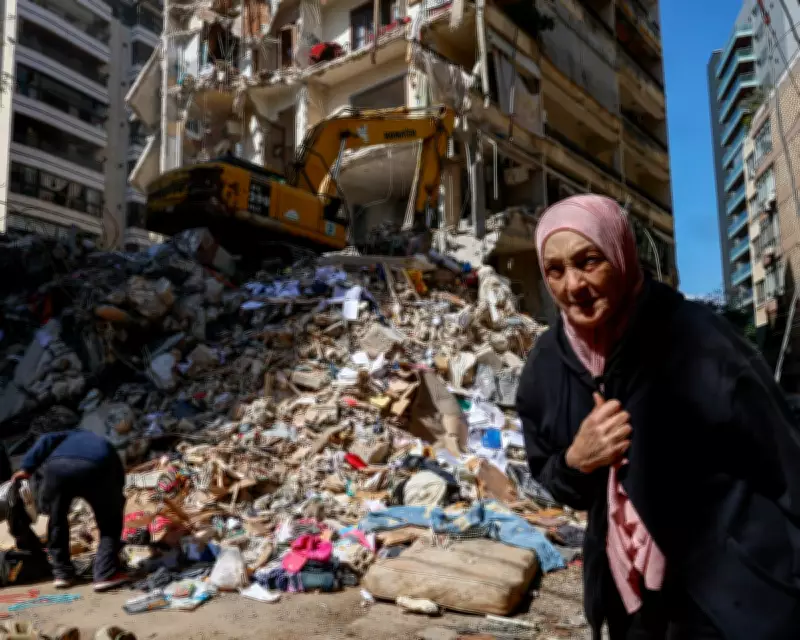
Ceasefire in Peril Amid Escalating Middle East Tensions
The fragile two-week ceasefire in the Iran conflict is teetering on the brink of collapse as Israel launched a massive assault on Lebanon and Iran blocked the passage of oil tankers, citing alleged Israeli violations of the truce. Both sides have presented starkly different interpretations of what was agreed upon, plunging the region into renewed uncertainty and violence.
Divergent Claims Over Ceasefire Terms
Iran and Pakistan, which mediated the last-minute truce, have firmly asserted that the ceasefire agreement explicitly includes Lebanon. However, Israeli Prime Minister Benjamin Netanyahu has rejected this interpretation, arguing that Lebanon constitutes a separate conflict. In response, Israeli forces unleashed their most intense bombardment of the war so far, targeting over 100 sites in Lebanon and resulting in at least 254 fatalities.
United Nations human rights chief Volker Türk condemned the scale of Israel's attacks as "horrific", highlighting the devastating humanitarian impact. Iran's parliament speaker, Mohammad Bagher Ghalibaf, issued a sharply worded statement accusing Israel and the United States of violating multiple clauses of the provisional ceasefire. He specifically denounced Israel's aggressive bombing campaign in Lebanon and a US demand that Iran relinquish its right to enrich uranium.
US Stance and Regional Fallout
Former US President Donald Trump, after an initial period of silence, weighed in by describing the Lebanon conflict as "a separate skirmish" unrelated to the broader ceasefire deal. This stance aligns with Israel's position but contrasts sharply with the views of Iran and Pakistan, further complicating diplomatic efforts to salvage the truce.
The escalating tensions have sent shockwaves through global markets. Oil and gas prices surged, with Brent crude rising 3.8% to $98.31 per barrel and New York light crude climbing 4.8% to $99 per barrel. Stock markets across Asia and Europe retreated as investors reacted to the deteriorating security situation. South Korea's Kospi index fell 1.7%, while Japan's Nikkei dropped 0.7%, reversing gains from the previous day.
Broader Security and Legal Developments
In a separate but related development, a man linked to the extremist group JDL 613 Brotherhood has been charged with plotting to firebomb the home of a pro-Palestine activist in New York. Alexander Heifler, identified by law enforcement as a member of the group, was arrested last month after FBI and New York Police Department agents foiled the alleged attack. The group's leaders have expressed virulent anti-Muslim sentiments and platformed a convicted terrorist who fundraises for violent settler movements in the occupied West Bank.
Meanwhile, in Hawaii, anesthesiologist Gerhardt Konig was convicted of attempted manslaughter after being accused of trying to murder his wife during a cliffside hike. Prosecutors argued that Konig had meticulously planned the attack, while the defense claimed self-defense. The case has drawn significant attention due to its dramatic circumstances and the defendant's professional background.
Environmental and Public Health Concerns
On the environmental front, the International Union for Conservation of Nature has declared emperor penguins officially in danger of extinction due to mass drownings of chicks caused by melting sea ice. This tragic consequence of the climate crisis underscores the urgent need for global action to mitigate environmental degradation.
In public health, Mississippi is grappling with a resurgence of whooping cough following a court-ordered rollback of strict school vaccine rules. The state recorded its first whooping cough death in 13 years, highlighting the potential dangers of relaxing vaccination requirements and the importance of maintaining robust public health measures.
As the situation in the Middle East remains fluid, with the ceasefire hanging by a thread, international observers are closely monitoring developments. The conflicting narratives and escalating military actions suggest that a swift resolution is unlikely, posing significant risks to regional stability and global security.