
Bulgaria is currently captivated by a chilling and perplexing case involving the mysterious deaths of six individuals in remote mountain regions, a situation that has drawn comparisons to the surreal television drama Twin Peaks. The investigation, described by authorities as unprecedented in the country, has sparked intense speculation and conspiracy theories, further eroding public trust in institutions amidst a political vacuum.
A Case Without Comparison
Zahari Vasko, the director of Bulgaria's national police general directorate, stated at a press conference that these deaths represent "a case without comparison in our country". The general prosecutor, Borislav Sarafov, echoed this sentiment, remarking that "life has given us more shocking details here than in the Twin Peaks series", highlighting the bizarre and sensational nature of the unfolding events.
The Initial Discovery at Petrohan Pass
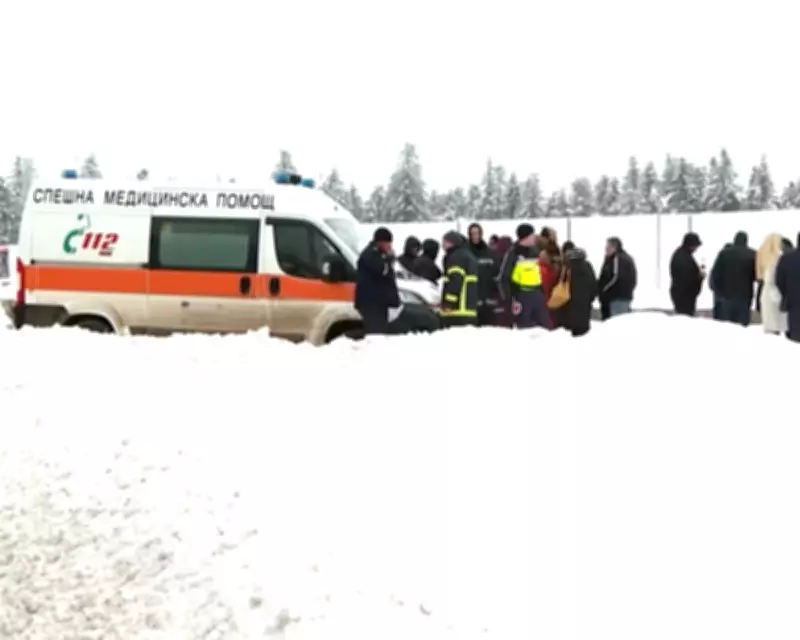
The grim saga began in early February when emergency services were called to the Petrohan pass, a mountain route connecting Sofia province with Montana province. There, they discovered the burned-out remains of a lodge containing three men, aged 45, 49, and 51, all with gunshot wounds to the head.
Forensic experts initially indicated that these wounds appeared to be self-inflicted, either point-blank or at close range, with DNA traces on the firearms belonging solely to the deceased. This finding, however, has not quelled public doubt or curiosity.
A Second Gruesome Find
The plot thickened on Sunday when police located three more bodies in a campervan near Okolchitsa Peak, approximately 62 miles north of Sofia. The victims included two men, aged 51 and 22, and a 15-year-old boy. Law enforcement had been tracking this trio due to suspected links to the Petrohan pass deaths.
According to the prosecutors' office, autopsy data suggests a harrowing scenario: "probably two murders committed successively and one suicide" among this group. This revelation has only deepened the mystery surrounding the entire case.
Victims and Speculation
Investigations reveal that five of the deceased were members of the National Protected Areas Control Agency, a non-governmental organisation dedicated to nature protection. The group used the Petrohan pass lodge as a headquarters and organised rural holiday camps for young people.
Some accounts describe these individuals as "forest rangers" who patrolled areas near the Serbian border, assisting border police. Law enforcement sources have also noted their involvement in Tibetan Buddhism, with a relative mentioning "exceptional psychological instability" within the group.
Theories and Denials
Friends and family of the victims have proposed alternative theories, suggesting the men may have been killed because they witnessed criminal activities, such as people smuggling or illegal logging, which are not uncommon along the Bulgarian-Serbian border.
Ralitsa Asenova, mother of one of the campervan victims, firmly dismissed reports of internal tensions, stating in a television interview: "They obviously witnessed something. For me, this is a professionally committed murder." Her words reflect a growing public scepticism towards official narratives.
Political and Social Context
The lack of detailed official information has fuelled rampant and often baseless speculation online, exacerbating Bulgarians' already low trust in their authorities. The country is currently without a stable government, heading towards its eighth parliamentary election in five years, adding to the sense of instability.
Former president Rumen Radev described the case as "a political shock and a sign of the country's condition", offering condolences to the families and urging authorities to resolve the matter swiftly. He emphasised that "the public expects answers", underscoring the demand for transparency.
A Post-Truth Environment
This incident occurs against a backdrop where conspiracy theories thrive in Bulgaria. A 2024 survey found that 70% of Bulgarians believe in conspiracy theories, with 37% having been misled by misinformation. Researchers from the Centre for the Study of Democracy and the Bulgarian-Romanian Observatory of Digital Media have described Bulgaria as living in a "post-truth" situation, where facts are often overshadowed by speculation.
As the investigation continues, the nation remains on edge, grappling with a mystery that blends tragedy, intrigue, and the unsettling echoes of a fictional television series, all set against the stark beauty of Bulgaria's mountainous landscapes.




