Israeli Airstrikes Devastate Beirut Neighborhoods in Rapid Bombing Campaign
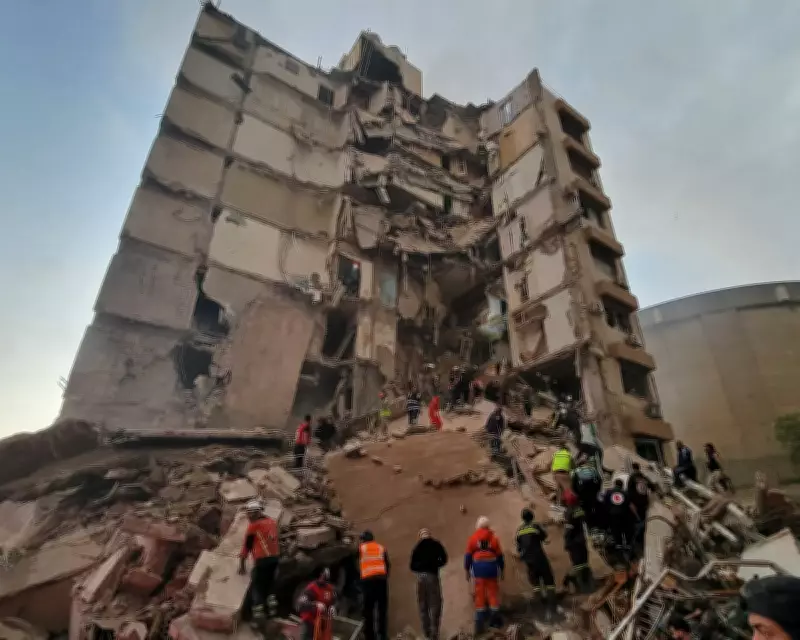
First responders and residents gathered at the site of an Israeli airstrike in Beirut's Tallet al-Khayyat neighborhood, witnessing one of the worst mass-killings in Lebanon since the end of the country's civil war in 1990. The operation, which bombed more than 100 targets in just 10 minutes, resulted in at least 254 fatalities and 1,165 injuries according to Lebanon's civil defense initial count.
Survivors Describe Chaotic Scenes and Civilian Casualties
Omar Rakha, a 38-year-old supermarket owner, heard war planes but didn't feel the explosions until he woke up face down on the street, bleeding. The building next to his in the Barbour neighborhood of central Beirut had been destroyed by two Israeli bombs. "I really didn't think something like this would happen here," Rakha said, his head wrapped in a blood-stained bandage. "Nothing like this happened in the last war, and because of that all of the refugees came here for safety."
Shaden Fakih, a 24-year-old calisthenics trainer, ran toward the impact site searching for his friend Mahmoud who was inside the struck building. He could only get so close as the multistorey building had become a pile of burning rubble. Fakih began pulling people from nearby apartments, carrying an old woman who couldn't walk. "It's getting ridiculous," Fakih said. "There's no Hezbollah here, the Israelis are just getting happy when they bomb people. Just stop bombing us. If you want to kill Hezbollah, go for it, but don't kill civilians."

Medical System Overwhelmed with Critical Injuries
Dr. Ghassan Abu-Sittah was in the emergency room when casualties began arriving at the American University of Beirut Medical College. Among the wounded were children pulled from under rubble, many arriving alone without parents. "The youngest was an 11-month-old. I had to operate on him just to relieve some pressure in the head," said Abu-Sittah, who compared the aftermath to mass casualty events he witnessed while working in Gaza.
The hospital received about 70 wounded people simultaneously, many critically injured according to Dr. Firass Abiad, a surgeon and Lebanon's former health minister. "There was a 90-year-old who I just left a bit ago. He passed away from his wounds," Abiad said in a tired voice. "These are civilians who, without any warning, their whole apartment building was flattened. So you can imagine the severity of injuries that we're getting."
Israel Claims Targeting Hezbollah, Residents Dispute Account
The Israeli military stated it had hit Hezbollah "command and control centers" in the bombing campaign dubbed "Operation Eternal Darkness." Israel's Arabic language spokesperson Avichay Adraee claimed: "Recently, the IDF observed the terrorist group Hezbollah began leaving the Shiite strongholds in the suburbs and repositioning itself toward northern Beirut and the mixed areas of the city."
However, residents and Lebanese officials said the strikes, which used 1,000lb bombs in densely packed residential areas, mainly killed civilians. Lebanon's Prime Minister Nawaf Salam accused Israel of targeting "densely populated residential neighborhoods" and killing unarmed civilians in breach of international law. Barbour, like many areas struck, is a mixed neighborhood where Hezbollah enjoys little support that had previously been considered outside Israel's war scope.
Search and Recovery Efforts Continue Amid Destruction
First responders in Barbour worked to find people trapped under rubble as firefighters sprayed water on smouldering remains and forklifts lifted crumpled cars to clear roads for ambulances. An emergency worker on scene said they hadn't yet found any survivors, only pieces of people. The death toll was expected to rise as more bodies were discovered, already surpassing Beirut's 2020 port explosion in casualties.

As night fell, people took stock of the dizzying, bloody day. Pictures of dust-covered babies pulled from rubble circulated on WhatsApp groups as people searched for relatives. A selfie of missing elderly couple Mohammed and Khatoun Karshat was shared desperately before their bodies were found under rubble late at night. Fakih lingered by the impact site in Barbour as rescuers worked, still without word from his friend Mahmoud. "It's been the worst day since the war started," Fakih said. "And what I'm most sad about is that my pretty Lebanon, our beautiful Lebanon, soon it will all be brought down to the ground."