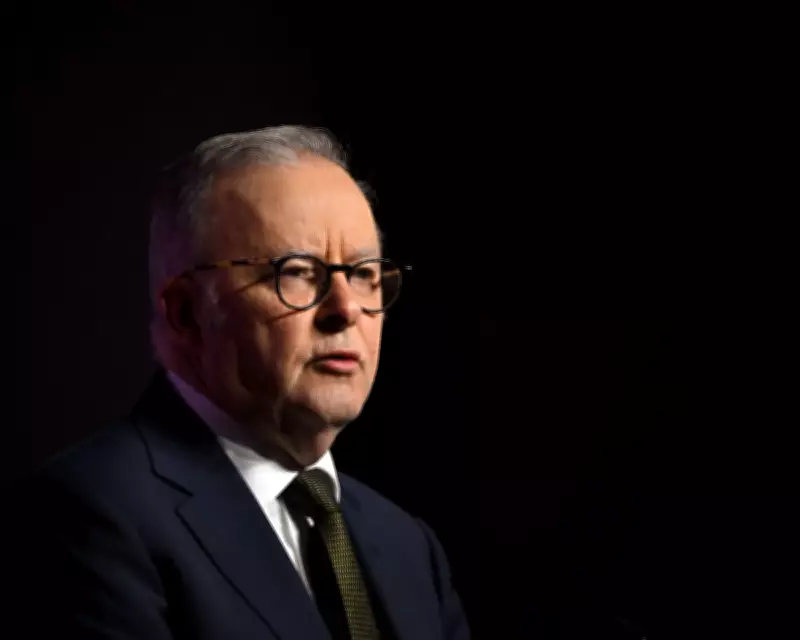
Prime Minister Anthony Albanese has unveiled a monumental $30 billion investment to establish a state-of-the-art submarine construction yard in Adelaide, dedicated to building nuclear-powered vessels under the Aukus security pact. The announcement, made on Sunday, includes an initial $3.9 billion "down payment" to secure the facility's future in the northern suburb of Osborne.
A Massive Infrastructure Project
The sheer scale of the project is staggering. The 420-meter-long fabrication hall alone will require enough steel to construct 17 Eiffel Towers and 710,000 cubic meters of structural concrete. This facility is designed not only for construction but also for testing and commissioning nuclear submarines, positioning Australia as a key player in advanced naval defense.
Job Creation and Economic Impact
The government projects that the shipyard will generate 10,000 jobs in design and construction phases, with an additional 1,000 apprentices trained annually at an onsite facility. South Australian Premier Peter Malinauskas emphasized the transformative economic impact, noting that 4,000 workers will be needed just to build the facility, compared to the 1,200 employed at Holden before its closure.
"This is in the interests of the United States, in the interests of the UK and in the interests of Australia," Albanese stated, dismissing ongoing concerns about the Aukus agreement's stability following recent US reviews. He reaffirmed the strategic importance of the partnership, despite critics questioning the feasibility of the US ever selling nuclear submarines to Australia.
Defense Industry Boom in South Australia
This announcement cements South Australia's status as a defense industry hub. Osborne already hosts facilities for Collins-class and Hunter-class submarines, and the country's first missile factory recently opened in Port Wakefield. The $30 billion estimate, provided by government-appointed Australian Naval Infrastructure, underscores the long-term commitment to bolstering national security capabilities.
No timeline for completion or potential cost overruns was confirmed, but the project represents a decades-long infrastructure investment. The timing is politically significant, coming just over a month before the South Australian state election, where recent polls show Labor leading the Liberals 61-39 on two-party-preferred terms.