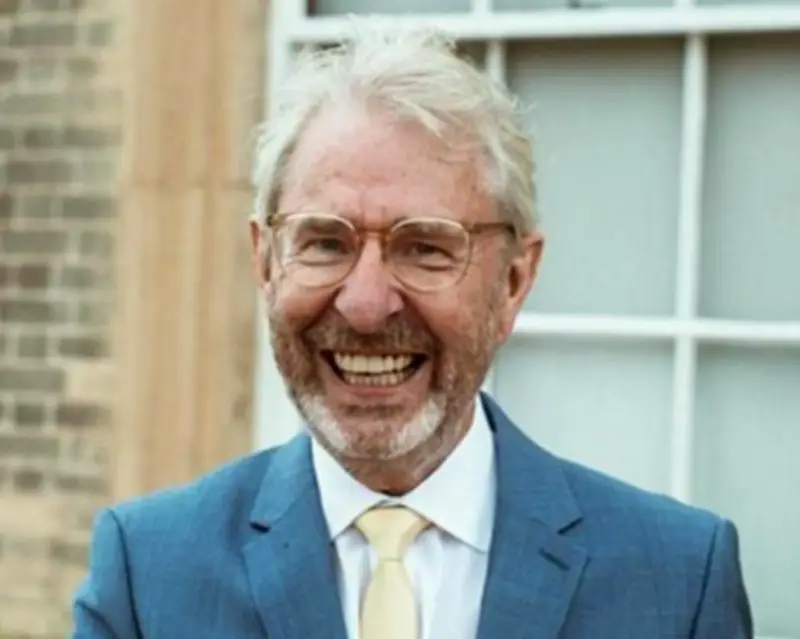
Paul Gerhardt, a television education pioneer who transformed the Open University's broadcasting and later founded a consultancy to help cultural organisations unlock the value of archived moving image and audio collections, has died aged 77.
Career in educational broadcasting
Born in London to Fred Gerhardt, a Remploy worker, and Freda (nee Canham), a sales representative, Paul attended Bromley grammar school before earning a degree in politics and sociology at Hull University in 1971. He completed a PhD in international studies at Oxford University in 1979. After working as a tutor organiser at the Workers' Educational Association until 1982, he joined the BBC as head of learning channels.
He later served as deputy director of the International Broadcasting Trust for five years, then as producer and network education officer at Thames TV from 1987 to 1991. In 1991 he was appointed managing editor of BBC Select, and by 1997 he became head of commissioning for the BBC's Open University content. In that role, he led the OU's transformation from an overnight television broadcast – often presented by men in woolly jumpers – into a modern multimedia educational institution.

Champion of archive access
In the early 2000s, Paul became the BBC's controller for adult education, then project director of the BBC's creative archive, an ambitious pilot that explored opening up the corporation's century of archived footage for public use. Although the project ended inconclusively after two years, it did lead to some material being released for free re-use and re-mixing, and was an important spur for later developments including the creation of BBC iPlayer. According to his family, his passion for opening up archives came from seeing that in the digital age, knowledge, facts and stories can be distorted, faked or monopolised – or instead be preserved for public use.
In 2007, Paul left the BBC to set up Archives for Creativity, a consultancy advising cultural organisations, broadcasters and artists on how to de-license and re-license archive material for use by artists, teachers and institutions. He finished his career at the British Film Institute (BFI) as director of education, a post he held from 2013 until retirement in 2019. At the BFI, he was also executive producer of The Stuart Hall Project (2013), a film that brought together many of his core passions: archived cultural media, progressive leftwing history, and the moving image.
Personal life and legacy
Outside work, Paul had a love of Shakespeare, Bob Dylan and stone letter carving. He was also a devoted family man. He is survived by his partner of the past 20 years, Patsy Youngstein; two sons, Joe and Dan, from his 1969 marriage to Chloe (nee Gilson), which ended in divorce in 1988; by me, from his second marriage in 1989 to Sue (nee Aspinall), which ended in divorce in 2004; and by his grandchildren, Lyra and Griffin.