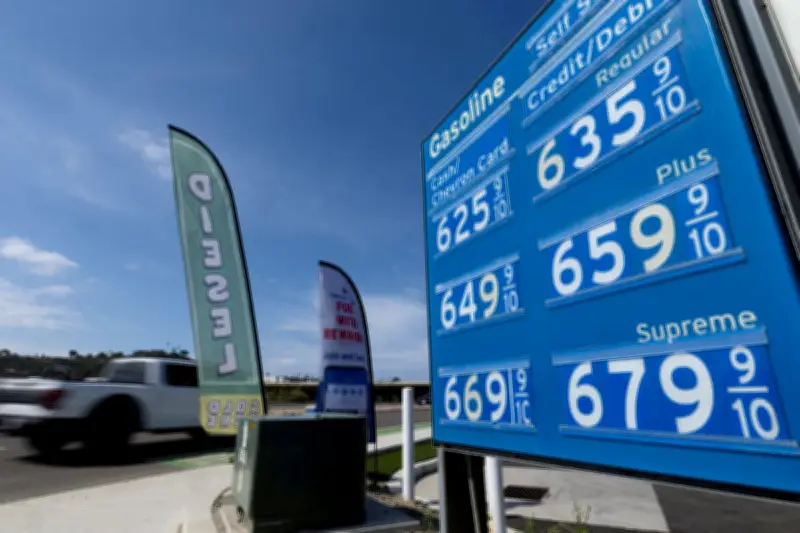
The price of gasoline is displayed at a gas station near the highway in Encinitas, California, on 30 April 2026. Photograph: Mike Blake/Reuters
US consumer sentiment improved in June due to easing gas prices, according to new survey data from the University of Michigan. However, sentiment remains at historically low levels amid the ongoing war in Iran and rising inflation.
The latest numbers come as SpaceX marks its historic stock market debut, making Elon Musk the world's first trillionaire. Yet many Americans still feel they are struggling, even as the stock market reaches record highs.

Sentiment rose four points since mid-May, when Americans were paying an average of $4.50 per gallon at the pump, according to AAA. Average gas prices have since dropped to $4.10 per gallon, which is $1 more per gallon than a year ago.
Despite the increase, sentiment is still lower than during the Covid-19 pandemic, including the high inflation periods that followed, and last year when Donald Trump introduced new tariffs.
“Views of the economy are still relatively dour,” said Joanne Hsu, director of the surveys of consumers at the University of Michigan. Consumers “feel burdened by the recent escalation in inflation and worry that higher inflation could remain stubborn going forward,” she added.
New US economic data from earlier this week showed inflation hit a three-year high in May, reaching over 4% for the first time since 2023. However, gas prices came down in May, providing some relief for American consumers, according to Hsu.
The recent uptick in consumer sentiment was widespread, seen across age groups, education levels, and political parties. Lower-income groups, most sensitive to gasoline price fluctuations, exhibited a particularly strong sentiment increase. Americans' expectations of their personal finances also improved this month.
Sinking sentiment on the economy is likely to play a crucial role in the midterm elections this November, which will determine whether Republicans retain control of Congress.
A Times/Siena poll published in late May found that US voters felt poorly about the direction of the country and its economy, with nearly 76% rating today's economic conditions as fair or poor. A little over half said they did not think the war in Iran would be worth the costs, and nearly two-thirds, including 73% of independent respondents, believed entering the Middle East conflict was the wrong decision.
The economy and rising cost of living have already proved prominent campaigning issues. Several candidates in key races have made it their marquee issue, including Graham Platner in Maine, James Talarico in Texas, and Roy Cooper in North Carolina. Democrats have especially tried to win back working-class voters, pushing forward a slate of former union leaders as candidates.
The White House applauded the latest consumer sentiment figures and took credit for the economy's resilience.
“Despite temporary disruptions from Iran's attempts to control the Strait, the American economy remains resilient thanks to this administration's pro-growth agenda,” Kush Desai, a White House spokesperson, said in a statement.