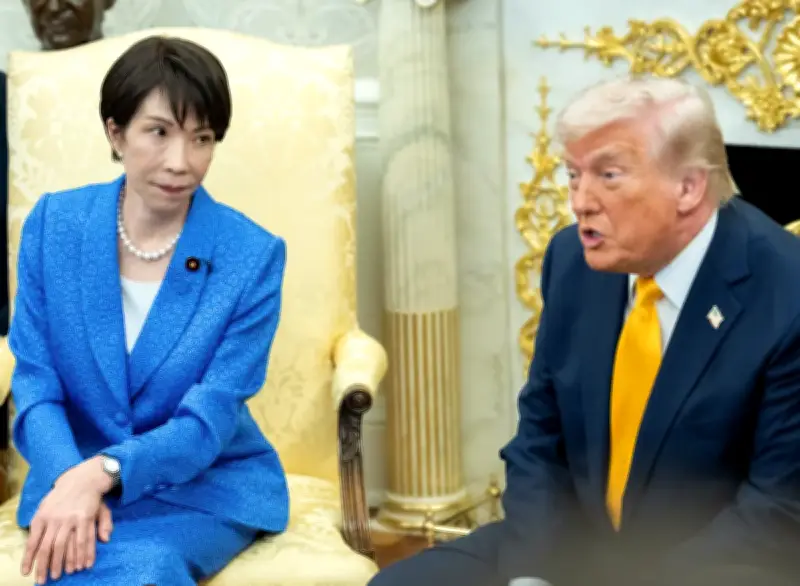
The yen has slipped back toward 160 to the dollar, despite last month’s extraordinary US-Japanese intervention. Traders are betting that its role as a cheap funding pipeline for global finance will continue. Earlier this month, the Trump administration stepped in to help Tokyo stabilize its currency. “Japan’s been very good to us, with the exception, of course, of Pearl Harbor,” Donald Trump explained. More help is likely to be on its way.
US Treasury’s Motive: A Cash Spigot for Wall Street
But this is less a rescue of the yen than an attempt by Scott Bessent, the US treasury secretary, to preserve a cash spigot that benefits the US. Japan’s ultra-cheap money has become a global funding utility: bankers borrow yen, sell them for dollars and buy higher-returning US assets, notably tech shares. Rising American stock markets support collateral and investment. Japan’s “carry trade” is one of the reasons Wall Street can lever hundreds of billions into AI. Research suggests AI sucks up more than 1% of US GDP.
Washington wants to keep this tap open, but not at the cost of a collapsing yen or US treasury sales. This column predicted this in April, warning that Tokyo’s monetary choices had bound US markets to the yen trade. What Mr Bessent did was to sell at least $10bn in euros and buy yen to arrest its slide to a 40-year low. Not telling the Europeans said it all: allies matter to Washington only when they are useful.
Traders Probe US Resolve Amid Oil and Rate Risks
Traders are probing US resolve. Rising oil prices, driven by US-Iran tensions, stoke Japan’s inflation and weaken the yen. Suppose it slides back to 164 yen to the dollar? Tokyo might respond with aggressive rate rises. This would be unlikely, as it would choke off the investment cycle that Japan is trying to create. It could also trigger a chaotic market unwind: higher rates shrink the gap between investors’ returns and yen borrowing; a stronger yen also makes yen-denominated debts costlier to repay; investors then sell US assets to buy the yen needed to close their positions. That strengthens the yen further, inflicting bigger losses and forcing more US asset sales. A currency correction could quickly become a Wall Street rout.
Bessent’s Strategy: Fed Facility to Avoid Treasury Sales
If Mr Bessent dislikes that option, he hates the alternative: Japan selling its $1.1tn treasury pile to buy yen. Dumping US debt would drive yields higher – and leave Washington with a costlier interest bill. Instead, Mr Bessent has allowed Japan to borrow dollars against its treasuries and use those dollars to buy yen. He has used a Federal Reserve lending facility to help – and wants its current $60bn daily limit substantially increased. This would give Tokyo room to stabilise the yen without having to choose between abandoning its reflationary programme and selling treasuries.
If Mr Bessent gets his way, the Fed could turn a substantial portion of Japan’s trillion-dollar hoard of US government securities into cash. Argentina showed Mr Bessent would put American firepower behind currencies, spending billions to prop up the peso. Japan is the bigger challenge. He is asking traders: are you sure that you want to return to 164 yen to the dollar? He has form as a currency trader. Mr Bessent made George Soros a billion dollars in 1992 by selling pounds and forcing sterling from the European exchange rate mechanism. In 2013, Mr Bessent helped George Soros make another billion dollars betting against the Japanese currency. Margaret Thatcher famously said that “you can’t buck the market”. Mr Bessent is saying you can – as long you rewrite its rules.