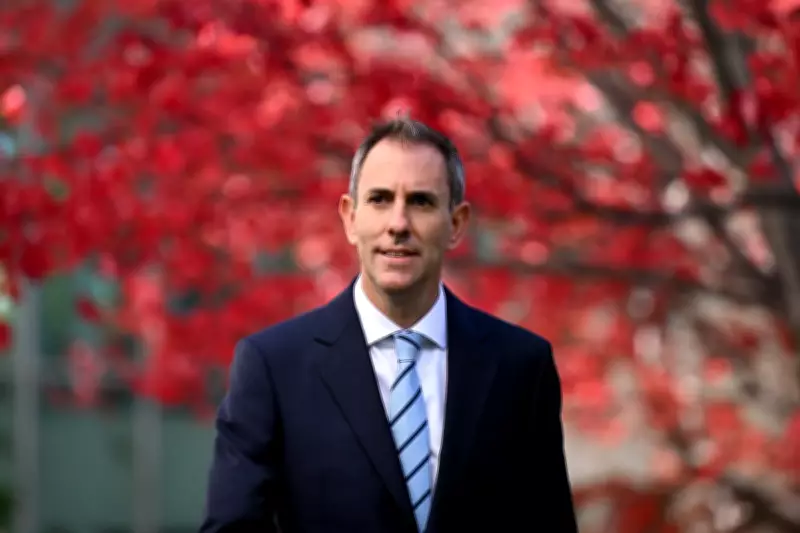
Australian Treasurer Jim Chalmers has pledged a 'substantial tax reform package' in the 2026 federal budget, aimed at addressing intergenerational inequality. The announcement comes as the government navigates global economic pressures and domestic challenges.
A Lean Figure, a Weary Look
Jim Chalmers cuts a lean figure in his Parliament House office, and, unusually for a man of such apparently limitless energy, a weary one. Days out from the most consequential Labor budget in a generation, he reflects on his personal discipline, having shed 17 kilograms since Christmas. 'I basically just, I woke up after Christmas and just thought, this is the year I'm going to get on top of it,' he says, attributing the loss to cutting out late-night work take-away food. He addresses assumptions about weight-loss jabs, stating, 'A lot of people assume wrongly that it was the jab. And no judgement at all about that.'
Ambitious Budget Amid Global Turmoil
Chalmers describes this budget as 'the most ambitious of the five that I've handed down, also the most responsible and with the highest degree of difficulty.' The US-Israel conflict with Iran has overshadowed Labor's agenda, sending fuel prices soaring in March. While panic buying has subsided, the government announced a $10 billion plan to expand fuel reserves. 'Every day there's been substantial volatility in the global oil price. So in lots of ways, we're hostage to decisions taken in DC and Tehran,' Chalmers says.

Reformist Legacy at Stake
The Albanese government aims to push forward with reforms despite criticism of incremental progress. Pre-announced 'hard decisions' include a major overhaul of the NDIS, saving an estimated $35 billion over four years, and a phased scaling back of the electric vehicle discount. 'We haven't used those international developments as an excuse not to do some of the bigger, harder reforms in the budget,' Chalmers asserts.
Tax Reform and Intergenerational Fairness
Chalmers promises a 'substantial tax reform package' under the banner of intergenerational fairness, addressing growing despondency that younger generations will be worse off. The package is headlined by mooted changes to the capital gains tax discount and negative gearing, and could include additional income tax relief. 'These intergenerational anxieties are well founded, and we take them seriously enough to take some difficult decisions to try to address them,' he says.
Housing Focus on Supply
With unaffordable homes at the heart of these anxieties, Chalmers flags further measures on budget night. 'We're concerned about the long-term decline of owner-occupiers in the market, particularly among younger people and families. We'll have more to say about housing in the budget, but overwhelmingly our focus is on supply, building more homes for more people, making sure that there are more affordable options.'
Productivity and Red Tape Reduction
In a pre-budget announcement, Chalmers reveals a raft of pro-growth reforms to slash red tape, delivering a $13 billion boost to the economy. The 'productivity package' includes measures like accelerating occupational licensing for migrant trade workers, simplifying building regulations, making the $20,000 instant asset write-off permanent for small businesses, and harmonizing product standards across states. The government estimates these reforms will reduce regulatory costs by $10.2 billion annually.
Will It Be Enough?
Independent economist Chris Richardson says he hasn't seen such a political or policy opportunity in his lifetime, but he doesn't believe the government is seizing it fully. 'To be fair, they are doing more than I thought they would do. But doing better than the last lot is too low a benchmark,' he says, noting that over the past two decades, Australia's living standards have grown only a third as much as the average in the rest of the rich world. 'Are we doing a bunch of necessary changes? Yes. Is that better than we have seen for many years? Also yes. Will history judge it enough? No.'
The treasurer is putting in the hard yards, but it remains to be seen how his budget will measure up to the challenge.