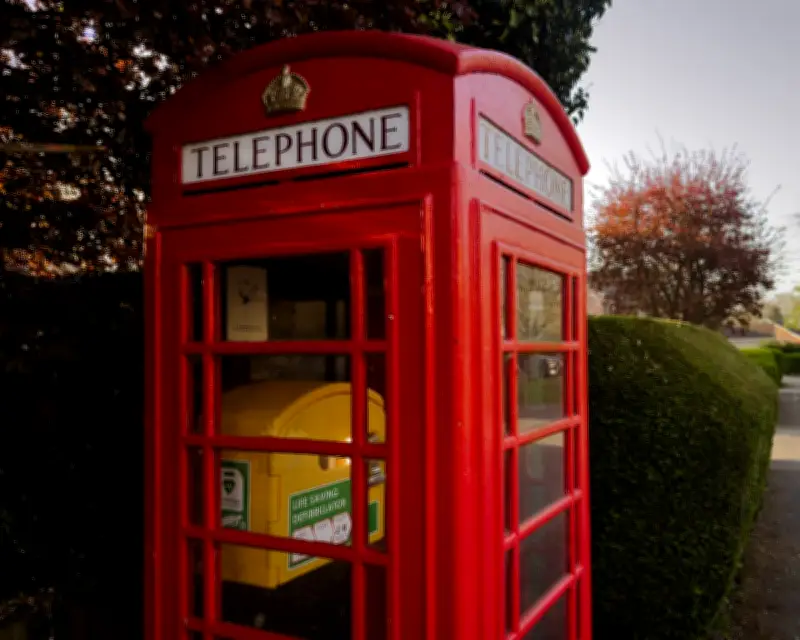
More than 16 million people in England and Wales face an elevated risk of dying from a cardiac arrest because they live farther than a 1km round trip from the nearest 24/7 accessible defibrillator, according to exclusive research by the Heart Restart campaign. The analysis of publicly available defibrillators reveals that 35 million people—more than half the population—do not reside within the recommended three- to five-minute brisk walk of a defibrillator. Of these, approximately half live more than a 1km round trip from a device available around the clock.
Survival rates and time sensitivity
In the UK, there are over 40,000 out-of-hospital cardiac arrests annually, but fewer than one in ten people survive. However, early cardiopulmonary resuscitation (CPR) and defibrillation can more than double the chance of survival. Patients in cardiac arrest who do not receive emergency treatment within ten minutes—equivalent to a 1km round trip to retrieve a defibrillator—are highly likely to die. Heart Restart’s researchers calculated that, with the exception of the City of London, all local authorities have at least some residents living at least ten minutes’ round trip from their nearest 24/7 defibrillator.
Regional disparities in access
The research uncovered significant inequalities in access. In 264 out of 318 local authority areas studied, more than half of councils’ residents were not within the recommended three- to five-minute reach of a defibrillator. In Harlow, over 70% of people are at least ten minutes away from their nearest publicly available, 24/7 accessible defibrillator. In Birmingham, nearly half a million people live more than 500 metres from the nearest 24/7 device. Conversely, every resident in the City of London and 77% of those in Hartlepool are within the recommended three to five minutes of a 24/7 defibrillator.

BHF campaign to address defibrillator deserts
The British Heart Foundation (BHF) has announced a community defibrillator campaign, inviting local areas throughout the UK to apply for 400 24/7 community defibrillators. The areas BHF identifies as having the biggest “defibrillator deserts”—the longest distances to a defibrillator, despite higher population density and deprivation levels—include Barking and Dagenham, Liverpool, Southampton, Nottingham, Wrexham, Newport, as well as parts of Scotland and Northern Ireland.
Expert and political responses
Sam Kennard, community defibrillator manager at the BHF, said: “When someone suffers a cardiac arrest, every second is critical. Survival chances drop by up to 10% for every minute without CPR and defibrillation, so not having a defibrillator close by can have devastating consequences. That’s why every community needs enough defibrillators so they can be ready when needed most.”
Adam Benson Clarke, clinical director at Resuscitation Council UK, stated: “A cardiac arrest is the most time-critical medical emergency, and quick access to a defib can make the difference between life and death. Nobody should be disadvantaged because of where they live – placing defibrillators in the communities that need them most gives everyone the best possible chance of survival.”
David Stockdale, chief executive of the British Healthcare Trades Association, commented: “Where you live can still determine whether you survive a cardiac arrest. Defibrillators save lives, yet millions of people remain too far from one when every minute matters.”
Luke Taylor, Liberal Democrat MP for Sutton and Cheam, who supports the campaign for better access to defibrillators, said: “It is shocking that millions across the country are in a defibrillator desert. Far too many people are simply too far from a lifesaving device when every second counts.” He added that the government should make it more affordable to install community defibrillators by scrapping VAT on defibrillators, pads, and batteries to “help communities put these lifesaving devices where they are needed most.”