
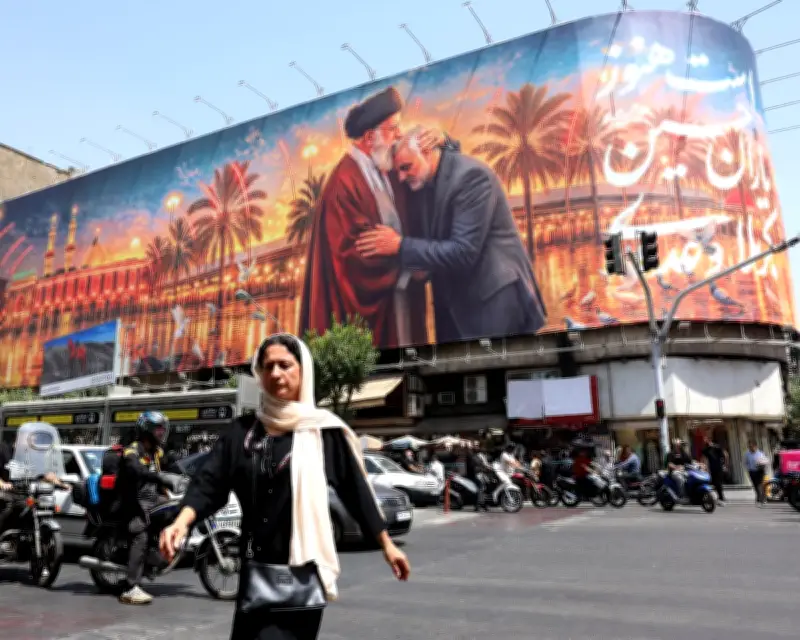
US President Donald Trump has claimed that Iran has agreed to hold peace talks in Doha after the two countries traded fire in the strait of Hormuz over the weekend, endangering a ceasefire meant to keep the waterway open and facilitate negotiations.
Trump announces talks on Truth Social
In a brief post on Truth Social, Trump wrote: “IRAN HAS REQUESTED A MEETING. IT WILL TAKE PLACE TOMORROW IN DOHA! President DJT.” The announcement came after Iran targeted a cargo ship in the strait with a drone attack on Saturday, prompting US Central Command (Centcom) to launch retaliatory strikes against Iranian military infrastructure, including surveillance systems, air defense sites, drone storage facilities, and minelayer capabilities.
The Iranian Islamic Revolutionary Guard Corps (IRGC) responded on Sunday with a joint missile and drone operation targeting eight US military sites in Kuwait and Bahrain. With the ceasefire faltering, the White House intervened to seek an off-ramp from the resuming hostilities.
Strait of Hormuz tensions escalate
Agence France-Presse reported that commercial ships had virtually stopped using the Omani southern corridor through the strait after civilian vessels were struck on Thursday and again on Saturday. Iran has warned ships that they must obtain approval from Tehran to transit the waterway, though vessels have continued using the Iranian-approved northern corridor.
Omani Foreign Minister Badr al-Busaidi said on Monday that Oman is in discussions with Iran about charging service fees for transit, including safety measures and navigation assistance, but would not explicitly impose tolls for using the strait.
US delegation to include Witkoff and Kushner
White House press secretary Karoline Leavitt told Fox News that the US delegation to Doha would include Trump’s envoy Steve Witkoff and his son-in-law Jared Kushner. Iranian negotiators are expected to meet them there. Axios reported that the talks would also involve “technical teams” to discuss Iran’s nuclear program, indicating that pre-planned negotiations may now focus on preventing a return to open conflict.
Vice President JD Vance last week credited new high-level contacts with Iran for preventing further violence. A US official told Axios that the US had “decided to stop all the kinetic activity” ahead of the talks.
Iranian assets and nuclear deal
Iranian President Masoud Pezeshkian told state media on Monday that Qatar would release $6 billion of nearly $12 billion in frozen Iranian assets. The interim US-Iran deal tied the release of frozen assets to a new nuclear agreement, but US officials have said no such assets have been released.
Lebanon and Hezbollah developments
Lebanese President Joseph Aoun said his country will deploy troops along its entire southern border as part of a framework agreement with Israel signed on Friday. The deal calls for Hezbollah, an Iranian-backed militia, to be disarmed before Israel withdraws from southern Lebanon. Israeli Defense Minister Israel Katz said the military will not withdraw “a millimetre” until Hezbollah is disarmed, though Israel will pull out of two locations as a “pilot programme” for Lebanese forces to replace them.
Katz claimed support from US Centcom chief Adm Brad Cooper, who he said agreed that Israeli forces would not withdraw from security zones in Lebanon, Syria, and Gaza. Hezbollah official Mahmoud Qmati said the accord was “effectively dead” and that the group would rely on Iran to represent its interests in upcoming US negotiations. “We will hold on to our weapons,” Qmati told the New Arab website.




