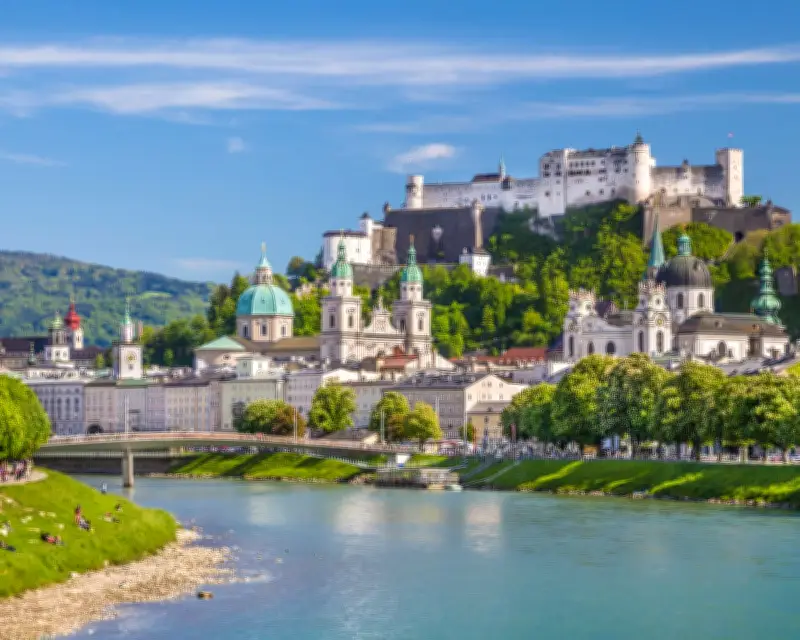
Salzburg has begun enforcing a summer ban on visitors driving into its historic centre, adopting a policy used by other car-choked European cities plagued by overtourism. The ban applies to drivers from outside the region entering the city’s old town, with fines of up to €80 for violators.
Details of the ban
Authorities in Austria’s fourth largest municipal area said they hoped the “less traffic, more city” restrictions in July and August would reduce the number of vehicle entries by 1,000 a day. As part of the campaign against gridlock, park-and-ride facilities are offering a day ticket including travel on local public transport for five people for €7.50 (£6.45).
“We don’t want chaotic traffic situations like we saw last year,” said the mayor, Bernhard Auinger, when he announced the measure in May. “It is aimed at day trippers who travel by car from farther afield. It is important to me that residents of the central Salzburg area and business-related traffic are not affected by this.”
Impact on residents and tourists
Auinger said tourists themselves, drawn to attractions such as Mozart’s birthplace and the baroque-style 17th-century cathedral, would also benefit from the policy. “It’s certainly much better than spending hours stuck in traffic. And it also makes life a lot easier for the people who live and work in the city of Salzburg.”
The mayor said mounting complaints by residents about traffic during the summer months had prompted the city to take action. “We basically allowed tourists to drive into our sitting room,” he told the news website Salzburg24.
Enforcement and exceptions
Patrolling police officers will impose fines of up to €80 on any drivers with numberplates from outside the Salzburg region entering the old town in the radius around the Staatsbrücke (state bridge) spanning the Salzach River. Exceptions will be granted to commuters, delivery vehicles, taxis and rental cars, as well as disabled visitors and hotel guests with a reservation confirmation in the restricted zone. German motorists from the neighbouring Bavarian areas of Berchtesgaden and Bad Reichenhall are also exempted.
Inspiration from other cities
Heidi Strobl, of the local tourism board, said Salzburg’s policy, approved by the city council in May, had taken a page from the zona a traffico limitato (limited traffic zones) in Italian cities such as Rome, Florence and Pisa as well as a ban in Dubrovnik, Croatia, after they had become inundated with tourist vehicles during the summer months.
Salzburg, whose historic centre is a Unesco world heritage site, has just over 158,000 residents but records more than 3m overnight stays each year. Last year’s celebrations of the 60th anniversary of The Sound of Music, the classic movie filmed in the Salzburg region, spurred an extra tourist boom.