
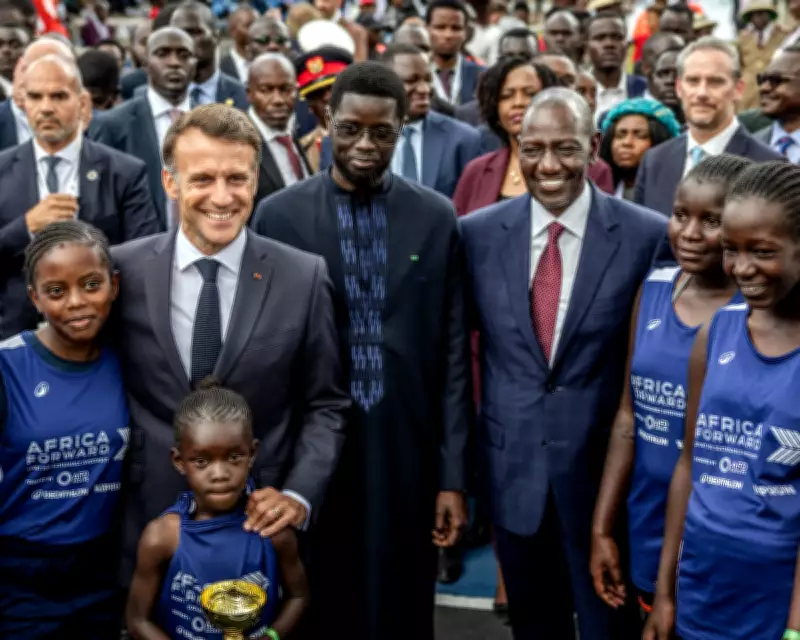
French President Emmanuel Macron's recent proposal to redefine France's relationship with its former African colonies has ignited a heated debate at the ongoing Africa Summit in Paris. Macron suggested a shift away from the traditional 'Francafrique' model, which has long been criticized for perpetuating neocolonial ties, towards a more equal partnership based on mutual respect and shared interests. The proposal, outlined in a speech on Wednesday, calls for a 'new contract' between France and African nations, focusing on economic cooperation, cultural exchanges, and joint efforts to address global challenges like climate change and security threats.
Mixed Reactions from African Leaders
While some African leaders welcomed Macron's initiative as a step in the right direction, others expressed skepticism. Senegalese President Macky Sall praised the 'courageous' move but emphasized that actions must follow words. 'We need concrete measures, not just rhetoric,' Sall said. Conversely, Burkina Faso's junta leader, Ibrahim Traoré, dismissed the proposal as 'a rebranding of the same old paternalistic policies.' Traoré accused France of continuing to interfere in African affairs under the guise of partnership.
Criticism of Neocolonial Undertones
Critics argue that Macron's proposal fails to address the root causes of inequality between France and its former colonies. 'The economic structures remain skewed in France's favor,' said Dr. Amina Diallo, a political analyst at the University of Dakar. 'The CFA franc, for instance, still ties West African economies to the French treasury.' Macron's speech did not mention any plans to reform the currency union, which many see as a symbol of continued French dominance.
Protesters gathered outside the summit venue, holding signs reading 'Stop Neocolonialism' and 'France, Pay Your Debts.' The demonstrations highlight growing frustration among African youth who feel that past promises of partnership have not materialized into tangible benefits.
Cultural and Linguistic Dimensions
Macron also emphasized the importance of the French language as a bridge between cultures. He proposed increasing funding for French-language education in Africa and promoting cultural exchanges. However, this aspect of the proposal has been met with mixed reactions. In countries like Mali and Niger, where anti-French sentiment is rising, Macron's emphasis on francophonie is seen as an attempt to maintain cultural influence.
'Language is not neutral,' said Professor Koffi Kouamé, a linguist at the University of Abidjan. 'Promoting French can be a tool of soft power, but it should not overshadow the promotion of African languages.'
Future of France-Africa Relations
The summit is expected to continue for two more days, with discussions on trade, security, and climate change. Macron's proposal will likely be a central topic in bilateral meetings. Whether his vision for a 'new francophone partnership' will gain traction remains uncertain, but the debate has already highlighted the deep divisions and aspirations that define contemporary France-Africa relations.




