
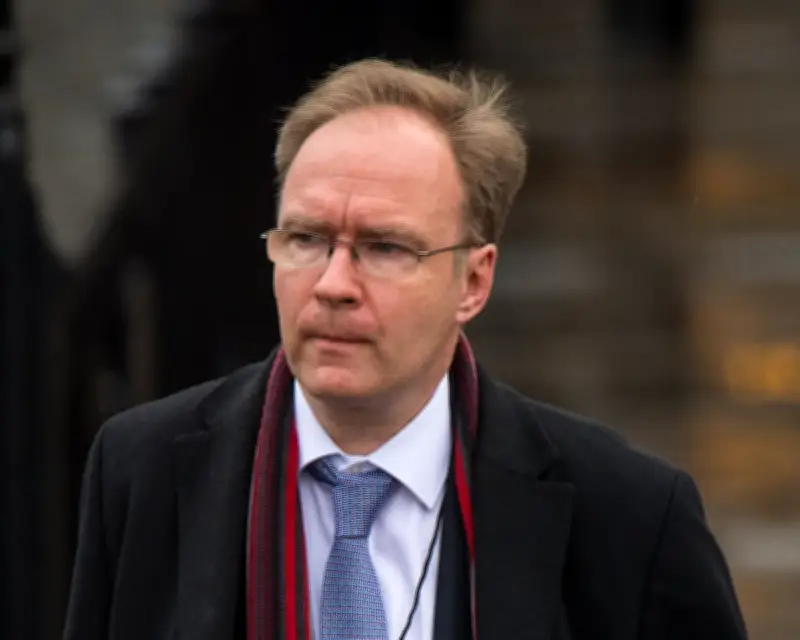
Labour came to power with no big idea for the UK's future relationship with the European Union, according to Ivan Rogers, Britain's EU ambassador from 2013 to 2017. Rogers stated that the party's manifesto presented "a ragbag of issues" on the EU, which did not "remotely measure up to the challenge of the times" and would "make no measurable difference to the UK macroeconomy."
Criticism of Labour's Approach
A decade after the Brexit vote, Rogers expressed disbelief that Prime Minister Keir Starmer, a former shadow Brexit secretary, sought a single market for goods—an option the EU would always reject as it crosses well-established red lines. The Guardian revealed last month that the UK government sent a senior official to Brussels to propose a single market for goods without free movement of people, an approach likened to Theresa May's failed Chequers plan.
Rogers remarked, "The EU is no more going to agree to 'pick and choose' alignment and divergence for Labour than it was for the previous government."
Rogers' Background and Criticism
Rogers, one of the UK's most experienced European diplomats, resigned in January 2017 after a Conservative backlash over his advice on Brexit realities. He later criticized Theresa May's government for failing to explain "the real constraints and trade-offs" of Brexit and Boris Johnson's "diplomatic amateurism."
In an interview, Rogers said Labour came to power "unprepared" without "a serious, thought-through set of propositions" to fix what it called "a botched Brexit." He referenced Chancellor Rachel Reeves' comments on Brexit's "deep damage" and similar remarks by Starmer, noting, "They are further talking up the severe damage... but there is then no coherent punchline to that analysis."
Labour's Promises and EU Response
Labour campaigned on a veterinary agreement to ease border checks, help for touring artists, and mutual recognition of professional qualifications. Rogers dismissed these as "worthy technocratic fare" but "irrelevant" to the question European leaders ask: "Where does the UK truly see itself in the coming decade or two, and is the Labour vision really any different from a Sunak-type one?"
Labour's red lines—no single market or customs union—were "massively constraining what you could ever deliver with your key trading and investment partners," Rogers said. The EU has offered to consider UK membership of the European Economic Area, which includes non-EU Norway.
Political Challenges
Acknowledging difficult options, Rogers noted that free movement of people is "hugely complex," and British financial institutions would oppose becoming a rule taker. "The Treasury and the Bank of England would die in a thousand ditches rather than agree to a Norwegian model, where financial services provisions would essentially be set by the European Union without us present," he said.
Rogers, who warned EU counterparts of Brexit risk as early as 2011-12, recalled that after the leave vote, the EU was "ready to roll" with its response, but Whitehall was in shock. He felt "enormous sympathy" for David Cameron, who had to attend an EU summit days after losing the vote and resigning. At that 2016 summit, EU leaders set red lines that remain a decade later.
Rogers concluded, "I find it quite depressing that we're still here after 10 years and still going around the same loops with the same level of misunderstandings."




