
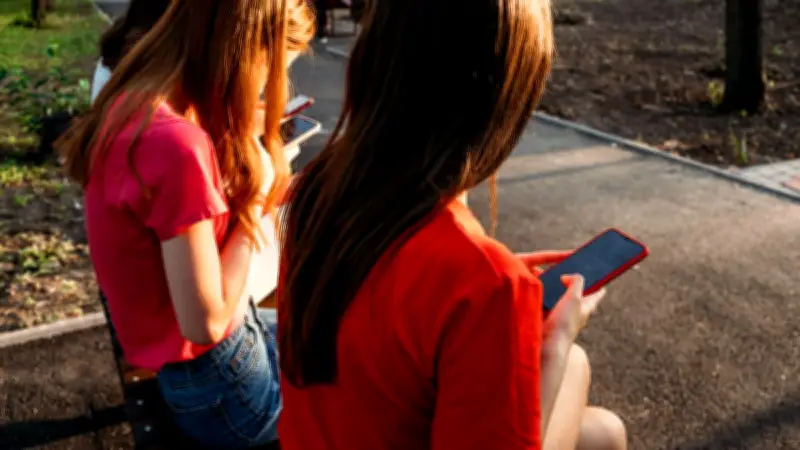
Australia will double the penalty for breaches of its youth social media ban to $99 million, with Prime Minister Anthony Albanese accusing tech companies of "not doing enough" to keep children off harmful platforms. The eSafety commissioner is investigating potential violations by Facebook, Instagram, Snapchat, TikTok, and YouTube, and will gain strengthened information-gathering powers under proposed reforms.
Over 5 Million Accounts Removed, But Many Children Still Accessing Platforms
The government reported that more than 5 million accounts held by under-16s have been removed, deactivated, or restricted since the ban took effect on 10 December. However, research indicates that most under-16s are bypassing age restrictions and continuing to use social media. A study by the University of Newcastle, published in the BMJ, found that over 80% of under-16s were still using social media three months after the legislation came into force.
Penalty Increase and Regulatory Powers
The proposed new laws would raise the maximum penalty for systematic breaches from $49.5 million to $99 million, aligning it with penalties under competition and consumer law. The eSafety commissioner would also gain the authority to compel social media companies to provide evidence of measures taken to prevent under-16s from opening or using accounts, including information from third-party age assurance or app store providers.
"Australia is leading the world in our efforts to keep kids and young people safe online," Albanese said. "These changes reflect the seriousness with which we take any failure by social media companies to comply with our world-leading law."
International Momentum for Similar Reforms
Since Australia became the first country to legislate a social media ban for under-16s, global interest has grown. The French National Assembly has passed legislation to prohibit social media access for children under 15, subject to parental consent. The UK government announced plans for an "Australia-plus" ban for under-16s from 2027, with additional restrictions. Similar proposals are being considered in Slovenia, Poland, Spain, Denmark, and Malaysia.
Effectiveness of the Ban Questioned
The University of Newcastle study of over 400 12- to 17-year-olds concluded that the legislation has resulted in "limited implementation, incomplete compliance, and substantial circumvention." While two-thirds of teenagers reported being asked to complete age verification checks, only 5% of 12- to 13-year-olds and 11% of 14- to 15-year-olds had to provide a photo of official ID. Most checks simply asked age or required uploading a selfie.
About 15% of 12- to 13-year-olds and 19% of 14- to 15-year-olds used a fake account, and 3% used a VPN to bypass restrictions. The researchers suggested the ban may be more effective for children under eight than for adolescents already using social media.
Government Response and Next Steps
Communications Minister Anika Wells stated that after six months, she does not believe big tech companies are doing enough. "Based on the regular updates I receive from the eSafety commissioner, it is clear to me that social media platforms are adopting tricks straight out of the big tech playbook and doing the bare minimum to get by," she said. "In response, I am making sure the regulator has stronger tools to get the job done and doubling the fines for non-compliance."
Wells emphasized that the government will not be deterred: "These tough new penalties and powers show we will not back down. Instead, we are doubling down on our efforts to hold big tech to account."




