At least 1,430 people died when back-to-back earthquakes struck Venezuela's Caribbean coast last Wednesday, toppling hundreds of buildings and leaving tens of thousands missing. The Bello Monte mortuary in Caracas has been overwhelmed by the influx of victims and their grieving relatives, who gather there hoping to identify loved ones.
Mortuary overwhelmed as families seek answers
Camila Rodríguez, a psychology student offering emotional support at the mortuary, described the scene: "[Yesterday], the entire street was packed with people arriving with deceased relatives." Bodies have been arriving by motorcycle, in the backs of cars, and in pickup trucks.
Marjorie Cedeño lost her mother, father, and brother when their four-floor building, Residencias Obelisco, collapsed in the Los Palos Grandes neighborhood. By Friday evening, she had only identified her brother, José Ruiz, 44, through a photograph. Her mother, Zoila Cedeño, 72, and father, Jacinto Ruiz, 74, remain buried under debris. "It's horrible in there. You can't imagine how overwhelmed it is … This is something you wouldn't wish on anyone. It's an unimaginable tragedy," she said.
False tsunami alert adds to chaos
Belkis Cedeño came to the mortuary seeking her sister-in-law, María Elena Moreno, 56, from La Guaira, the worst-affected coastal region. Their 10-story building was reduced to the ground floor. Moreno was rescued alive at about 2 a.m. Thursday, but a false tsunami alert on social media caused panic, and she was left exposed outside. "When they finally transferred her to the hospital, she arrived dead," Belkis said.
Edgar Hernández, former president of Venezuela's National Funeral Homes Association, said undertakers donated more than 200 coffins, body bags, and supplies. "Many people have recovered bodies and transported them in their private vehicles to Bello Monte because it's less congested and easier to access than the … mortuary [in La Guaira], which has completely collapsed under the pressure of the emergency."
Government response criticized
On Saturday, acting leader Delcy Rodríguez tried to comfort citizens, announcing 33 survivors had been rescued, including an 11-year-old boy found alive in Caraballeda. "Every life means hope for Venezuela," she tweeted. The communications ministry posted videos of rescue teams using sledgehammers and stretchers.
But on the streets, anger grows over the sluggish official response. Rodríguez was heckled while touring a hard-hit area: "The government isn't doing anything for the people!" shouted one critic. Volunteers offering water, coffee, and trauma counseling contrasted with the lethargic official reaction, which experts blame on years of underinvestment in emergency services.
Volunteers step up as families camp outside
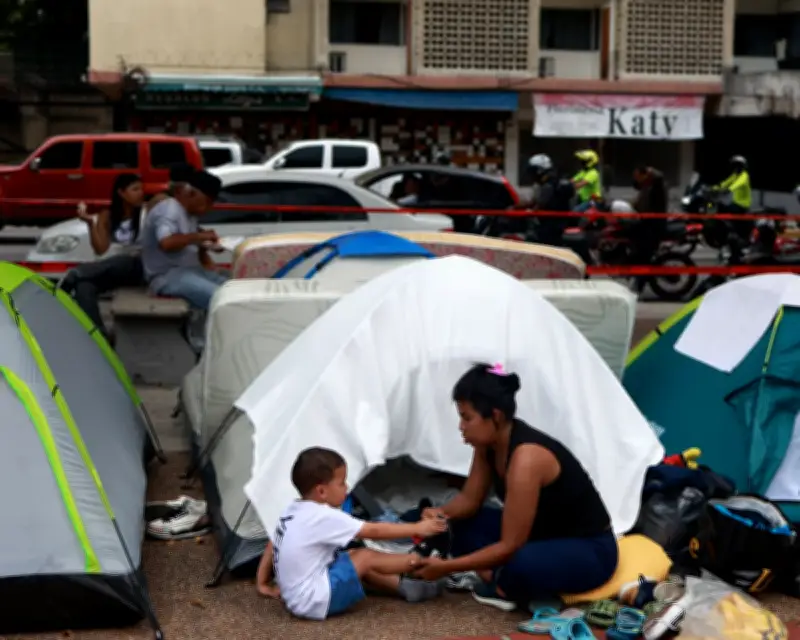
Hundreds of families have been camping on the streets in Caracas, too scared to return home. Tents, mattresses, and food are delivered by volunteers. "I thank God because Venezuelans have such enormous hearts … The people have been extraordinary," Marjorie Cedeño said. "There may be no government response, but there are so many good people helping."