
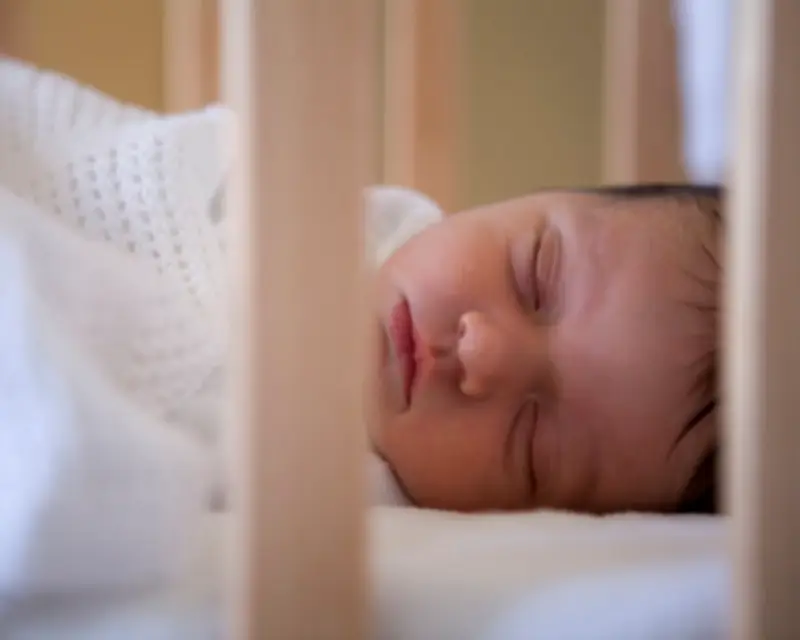
More than 70,000 babies in England are living in overheated homes, according to new analysis by the National Housing Federation (NHF) and the Chartered Institute of Housing (CIH). The study found that one in every six babies across the country is exposed to excessive indoor heat, posing serious health risks including sleep disruption and increased danger of sudden infant death syndrome (SIDS).
Record temperatures and health risks
A rare red warning for extreme heat was issued for parts of England and Wales this week, with hundreds of schools closing as temperatures were expected to hit record levels. The analysis of English Housing survey data estimates that 1.6 million children in total are living in overheated properties. Babies under five are especially vulnerable because they are less able to regulate their body temperature and manage dehydration. Parents are advised to keep rooms between 16C and 20C, but during heatwaves this can be impossible.
Jackson Bylett, who lives in a new-build flat in Newham with his five-month-old daughter, said the baby’s room has reached over 30C. “Everything you read about safe sleeping for newborns says you want to keep the room between 16C and 20C, and the thermostat on the wall is slowly creeping up as the day goes on and there’s nothing you can do,” he said. “It’s getting up to 30C-35C, and the risk we’re talking about here is your child dying.” He added that parents in the UK are not given enough advice about keeping babies cool during heatwaves.
Impact on sleep and health
A YouGov poll found that nearly three-quarters (71%) of parents experiencing overheating in their home said it disrupts their children’s sleep, affecting an estimated 1.1 million children. Nearly a third (31%) said it harms their children’s physical health, and 49% said it affects their ability to concentrate. James Grant, who lives in a 1930s house in east London with his one-year-old son, said he had boarded up windows to keep the heat out. “Every time I wake up in the night, my first thought is to look at the temperature on the baby monitor. It has got over 30C in there at night,” he said. The heat has disrupted the baby’s sleep and exacerbated dehydration.
Homes not built for heat
Most of England’s homes are designed to retain heat and lack cooling features common in warmer countries, such as shutters or air-conditioning. The Met Office said the likelihood of 40C temperatures has tripled since 2000, and future heatwaves could last a month or more. By 2050, more than nine in 10 homes in the UK are projected to overheat, with heat-related deaths potentially rising to 10,000 per year without adaptations.
Kate Henderson, chief executive of the NHF, said: “It’s now clear that increasingly extreme heatwaves are making it impossible for parents to make their homes completely safe and comfortable. As heatwaves become more frequent and more intense, we need urgent action to ensure homes can be kept at safe temperatures and are fit for the future.”
Calls for government action
The NHF said housing associations and local authorities are using shading and ventilation to retrofit homes, and even opening free cool spaces for residents. But more support is needed to do this at scale. Gavin Smart, chief executive of the CIH, said the statistics were a “worrying reality” and children’s education would suffer if they’re sleeping in bedrooms that are too hot. He said the government needed to think carefully about whether the 1.5 million homes it is committed to building this parliament will be able to cope with hotter temperatures. “We need to strengthen building regulations around overheating and start to consider policies that will support people with the energy costs of keeping cool during future heatwaves,” he said.




