
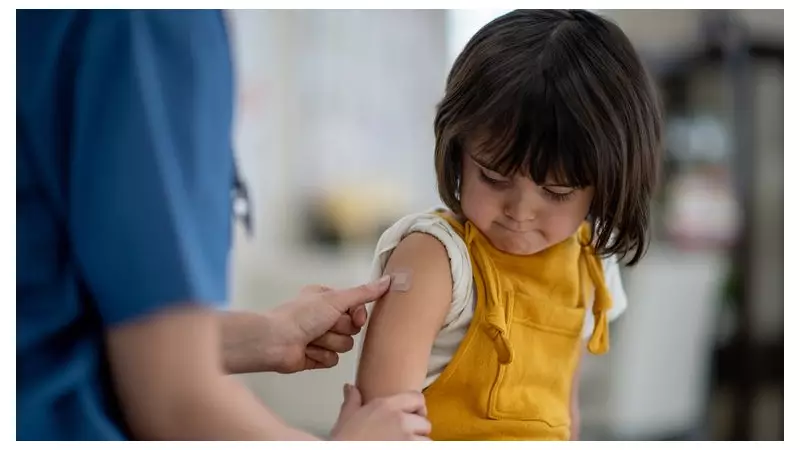
The UK government is launching a new £2 million pilot scheme to vaccinate children from struggling families in their own homes, in a direct response to concerning drops in childhood immunisation rates across England.
Targeting Families "Fallen Through the Cracks"
From mid-January 2026, specialist health visitors will administer routine childhood jabs during home visits to families with children under five in selected regions. The initiative explicitly targets households who have "fallen through the cracks" of the traditional healthcare system.
A government statement outlined the barriers the scheme aims to overcome, including families not registered with a GP, those struggling with travel costs or childcare, and those facing language barriers or other difficult circumstances. The service is not intended to replace GP vaccinations but to supplement them for hard-to-reach groups.
A Response to Falling Immunisation Rates
The urgent need for the pilot is underscored by stark official figures. Data shows that not a single childhood vaccine in England met the World Health Organisation's (WHO) 95% herd immunity target in 2024.
The statistics reveal a worrying decline:
- Only 91.9% of five-year-olds had received one dose of the MMR vaccine, the lowest level since 2010/11.
- Just 83.7% of five-year-olds had received both MMR doses, the lowest level since 2009/10.
- Uptake of the four-in-one pre-school booster (protecting against polio, whooping cough, tetanus, and diphtheria) stood at a mere 81.4% among five-year-olds in 2024/25.
Health officials warned last year that these gaps mean almost one in five children started primary school without full protection against serious diseases.
New Vaccine and Nationwide Ambitions
Coinciding with the pilot announcement, the government confirmed that from 2 January 2026, all children in England will be offered a chickenpox vaccine for the first time on the NHS.
They will receive the new MMRV vaccine, which protects against measles, mumps, rubella, and varicella (chickenpox), replacing the current MMR jab.
The twelve home-visitation pilot schemes will run for a year across London, the Midlands, North-East England, Yorkshire, the North West, and the South West. They will be evaluated ahead of a potential nationwide rollout from 2027.
Health visitors involved will receive additional training to handle conversations with parents who may be hesitant about vaccinations. The NHS will identify eligible families using GP records, health visitor notes, and local databases.
Government Commitment to Tackling Inequality
Health Secretary Wes Streeting framed the pilot as a core part of fixing the NHS and tackling health inequalities. "Every parent deserves the chance to protect their child from preventable diseases," he said, acknowledging that complex family circumstances can lead to missed vaccinations.
He emphasised the trusted role of health visitors, stating: "By allowing them to offer vaccinations, we're using the relationships and expertise that already exist to reach families who need support most."
Mr. Streeting concluded that meeting families where they are represents a step towards "building a health service that works for everyone."




