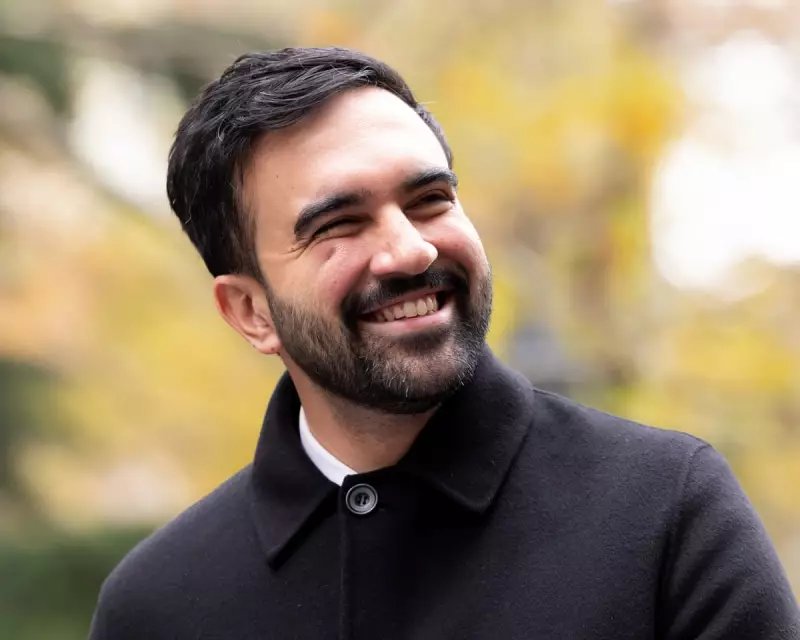
In a unique personal experiment, Guardian columnist Arwa Mahdawi dedicated an entire month to mastering the art of the permanent, unflappable smile sported by New York's incoming mayor, Zohran Mamdani. What began as a curiosity about the politician's unshakeable grin evolved into a deeper exploration of the smile as a tool of political defiance and emotional regulation.
The Mamdani Grin: A Political Shield
Since rising to prominence, Mamdani has become known for his consistent, beaming expression in the face of intense criticism and provocation. Detractors have labelled him a "jihadist", he has met with Donald Trump, and Republican lawmakers have launched campaigns to investigate his citizenship. Through it all, his smile remains steadfast. Mahdawi notes that this relentless cheerfulness is profoundly subversive; it denies critics the spectacle of an angry reaction from a brown man in the public eye, a reaction they might use to reinforce negative stereotypes.
The Science and Sociology of Smiling
Mahdawi's experiment led her to examine the broader context of enforced emotional expression. Scientific studies on whether smiling can induce happiness offer mixed results, with recent research suggesting only a slight, limited mood improvement. The sociological angle, however, is stark. Racialised individuals and women often face intense pressure to police their emotions. Research from the American Psychological Association indicates that black children are more likely to be misperceived as angry than white children. Women, particularly women of colour like Serena Williams, constantly battle tropes like the "Angry Black Woman." In this light, Mamdani's smile and Mahdawi's imitation of it become acts of conscious resistance, reclaiming joy and composure.
The Personal Experiment: Cheeks Ache, Heart Rate Slows
For Mahdawi, maintaining the Mamdani-level perma-smile was no easy task. With a naturally neutral expression that leans toward a scowl, the deliberate grinning felt unnatural and left her cheeks aching. However, she found practical utility in the technique. During challenging situations, such as panel discussions on Gaza where she faced provocative questions, consciously "channelling Mamdani" and smiling helped her stay composed and even lowered her heart rate, serving as an emotional reset button. Her conclusion? While the smile is a valuable tool for difficult moments, it's not a sustainable full-time expression, and it certainly doesn't replace the need to address deeper societal issues of racial and gender bias.
The experiment underscores a complex truth: in a world that often demands certain demographics suppress justified rage, choosing joy can be a powerful political statement. Yet, as Mahdawi discovered, it's a physically taxing one that highlights the uneven burdens of public perception.