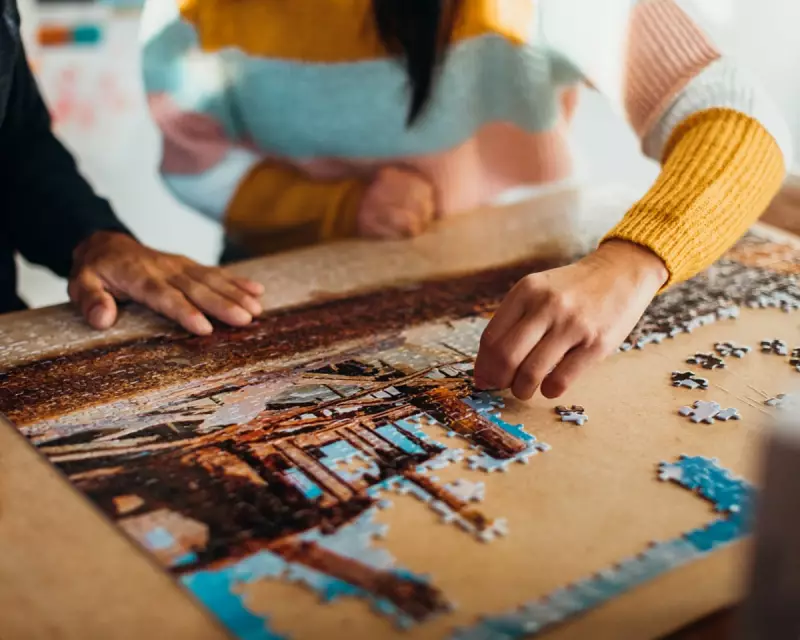
For author Nova Weetman, the path to an unexpected form of relaxation and mental clarity was rediscovered through a simple, childhood activity: the humble jigsaw puzzle. What began as a fascination observed in her young daughter evolved into a vital coping mechanism following a profound personal loss.
A Legacy of Logic and Calm
Weetman recalls how her daughter, from her first days in kindergarten, would bypass toys and balls to head straight for the puzzle table. The child had an innate, methodical approach: corners first, then edges, followed by blocks of colour or pattern. Witnessing this focused delight inspired Weetman to begin collecting second-hand puzzles from garage sales, embracing the risk of missing pieces for the joy of the process. The family hobby peaked with a personalised 500-piece puzzle of her daughter's face, a Christmas gift that saw them lying on the floor, engrossed in its completion.
As teenage years arrived, the sparkly unicorn and dragon puzzles were passed on. The household dining table was too small for larger projects, and the family's focus shifted to fast-paced card games. The quiet, patient art of puzzling faded into the background, seemingly outgrown.
A Table for Feasts and Healing
This changed abruptly last year following the sudden death of Weetman's father. Struggling with a racing mind, an inability to relax, and difficulty finishing creative projects, she found herself inheriting his long dining table—a piece full of childhood memories. While clearing out her own cupboards, she rediscovered an unopened, 1,000-piece puzzle her daughter had gifted her one Christmas, depicting a lush garden and stream.
Drawn by its perceived difficulty, Weetman sat at her father's table and began. She mirrored her daughter's technique: corners, edges, then patches of colour. Hours drifted by with only breaks for tea or to change a record. For over a week, she would start her days in pyjamas at the puzzle table, the family cat often plonking itself defiantly in the middle of her work zone.
The Meditation of Completion
In this simple, goal-oriented task, Weetman found a powerful mental reset. "Soon I realised that it was the first time in months that I’d felt in my body," she reflects. The overwhelming loops of worry were replaced by a singular, peaceful mission: searching for the right-shaped piece to fill a gap. The final image was almost secondary to the act of fitting each piece into its correct place.
This simplicity, of doing something that existed solely to be completed, became a form of meditation. Upon finally smoothing her hands across the fully assembled 1,000-piece scene, she experienced a calm that had eluded her for months. The conclusion was telling: minutes after finishing, she broke the puzzle apart, boxed it up, and headed to an op shop to find her next challenge, hoping fervently it wouldn't be missing any pieces.
Nova Weetman's experience underscores a powerful truth: sometimes, the most profound tools for managing grief and anxiety are not complex therapies, but the rediscovery of simple, absorbing joys from our past or from those we love.