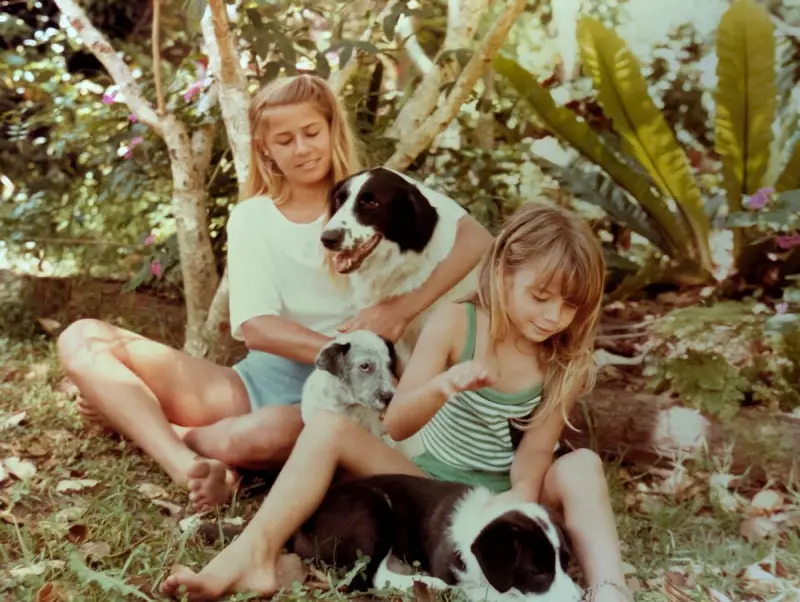
In the dense, subtropical forest of her childhood home, author Jessie Cole has forged a life defined by intricate, interspecies kinship. This tight-knit ecosystem, shared with her mother, adult sons, grandchildren, pets, and the land itself, stands as a testament to resilience. Yet this profound sense of connection was not inherited from tradition, but painstakingly built upon the foundation of devastating loss.
The Foundations of a Family and the Onset of Tragedy
In the late 1970s, Jessie's parents moved to a new plot of land, erected a house, and planted a garden destined to become a forest. With no nearby grandparents, they created their own chosen family on a fresh slate. For a decade, life flourished. Then, when Jessie was a child, her adolescent sister took her own life. The family's world derailed. Six years later, her father died by suicide. The tight-knit unit tumbled headlong into darkness.
The family home, however, remained. It became their anchor. Today, Jessie lives in that same house, surrounded by constant, physical reminders of the past. She sits in the lounge where she learned of her sister's death, passes the garage where her mother found her father, and uses the bathroom sink where he once attempted to take his life. The blood is gone, but the memory remains. The site of wreckage is also the site of ongoing life.
Rebuilding from the Rubble: The Metaphor of the Folly
The process of rebuilding mirrored the natural world surrounding them. In their forest, change is constant—incremental growth punctuated by cataclysmic floods and fires. The family learned to tend to it: clearing debris, propping up saplings, planting new seeds. This act of tending became a central philosophy.
This was exemplified by the family's Japanese-style pavilion, a decorative, open-aired structure built nearly 50 years ago that her mother calls "our folly". Last year, its central wooden pin rotted and fell out, feeling like a metaphor for collapse. Yet when the original builder assessed it, he found the structure was sound. The intricate pieces of the ceiling and roof were wedged so tight they held each other in space. They replaced the pin, and Jessie began restoring it, oiling wood and painting furniture. The folly, like the family, needed tending, and its strength came from interconnectedness.
The Legacy of Loss and the Unspoken Home Truth
Jessie was 18 when her father died. By 22, she had given birth to two sons back-to-back, gestating them in a body steeped in grief. She has often wondered what legacy this troubled start bestowed upon her children. Recently, she broached the subject with her eldest, now a father himself, suggesting his inclination to support others might stem from their beginning.
His response was revelatory: "Mum, I don't think there's a single person out there who doesn't need support." In that moment, Jessie felt the profound truth of their family's legacy. The unspoken, intuited home truth forged through the deaths of her sister and father was not one of brokenness, but of fundamental human need. "We need each other" is ours, she writes.
Her conclusion is a powerful call for interdependence. You cannot opt out of needing others, so you must lean in. Tend to the things and people you love, for everything turns on affection. Start small if your world feels full of broken things—a pot plant on a windowsill, learned and cared for. Intricate kinship webs can be woven from rubble. We can, like the pieces of the pavilion roof, hold each other in space.
Jessie Cole is the author of four books, including the memoir 'Desire, A Reckoning'. In Australia, the crisis support service Lifeline is 13 11 14. In the UK and Ireland, Samaritans can be contacted on freephone 116 123, or email jo@samaritans.org. In the US, call or text the 988 Suicide & Crisis Lifeline at 988.